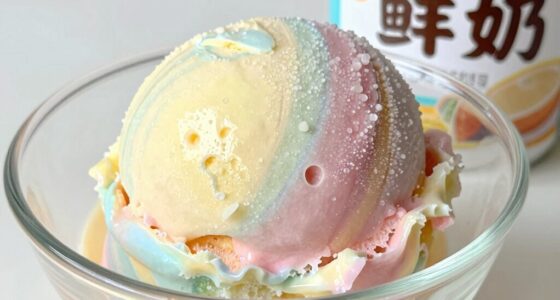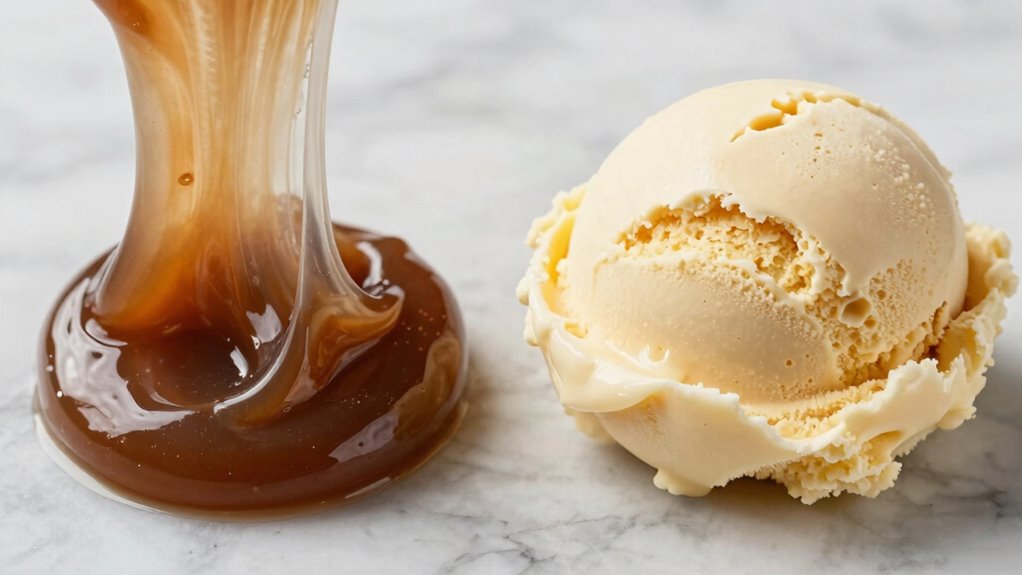

You’ll notice booza feels elastic because it contains ingredients like mastic resin and sahlab, which give it a chewy, stretchy texture through traditional methods of freezing and stirring. In contrast, gelato feels dense and smooth because it’s churned slowly at low speeds, trapping tiny ice crystals and emphasizing creaminess. These differences in ingredients and techniques shape each dessert’s unique texture. To understand more about how their textures develop, keep exploring these fascinating culinary stories.

Get baking supplies delivered free with Prime
- Fast, free delivery on millions of items
- Prime Video, Amazon Music and more included
- Member-only deals all year
Key Takeaways
- Booza’s elasticity results from ingredients like mastic and sahlab, which promote stretchiness and chewy texture.
- The traditional freezing and stirring process in booza maintains its elastic, rubbery consistency.
- Gelato’s density is achieved through slow churning, which creates small ice crystals and a smooth, compact texture.
- Gelato contains more milk and less cream, emphasizing density and velvety smoothness over elasticity.
- Booza’s elastic texture reflects cultural techniques, while gelato’s density showcases Italian artisanal craftsmanship.
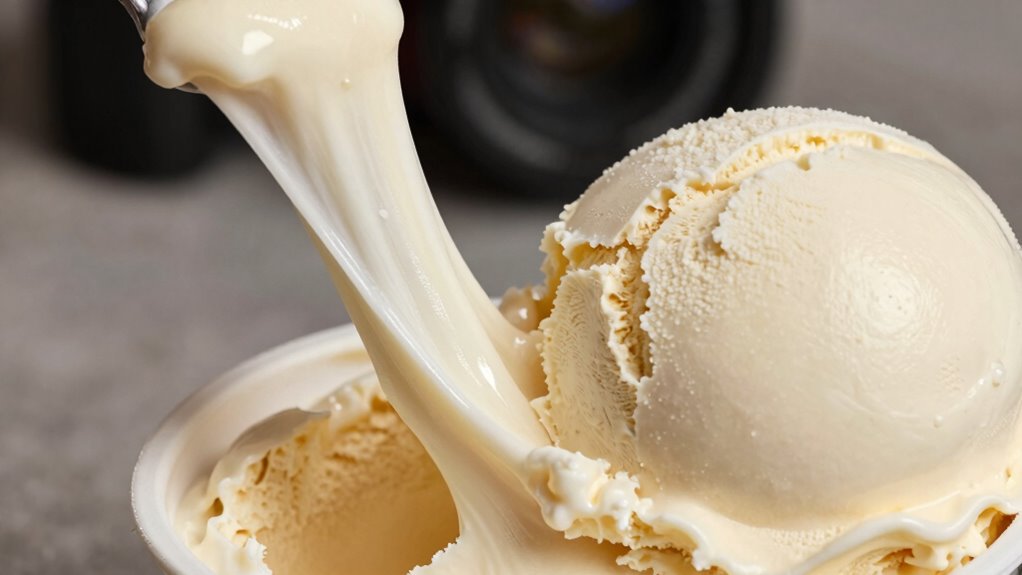
If you’ve ever sampled both booza and gelato, you might have noticed their contrasting textures—booza feels elastic and chewy, while gelato is dense and smooth. These differences aren’t just about the ingredients but also rooted in their cultural origins and traditional preparation methods. Booza, with its unique chewy quality, comes from Middle Eastern and Levantine culinary traditions. It’s been enjoyed for centuries, often associated with celebrations and street food. Its elastic texture is a hallmark of its cultural identity, shaped by specific ingredient choices and techniques passed down through generations.
On the other hand, gelato hails from Italy, renowned for its rich history and artisanal craftsmanship. Its dense and creamy consistency is a result of specific ingredient variations and churning techniques that emphasize smoothness and flavor intensity. The cultural origins of gelato influence its ingredients—primarily milk, sugar, and flavorings—used in precise proportions to achieve its signature texture. Unlike booza, gelato’s ingredients are often more refined, with less emphasis on elasticity and more focus on creating a velvety mouthfeel. Additionally, the techniques used in preparation play a crucial role in achieving the desired density and smoothness. These methods often include careful temperature control and slow churning to create the perfect texture.
Gelato’s smooth, dense texture results from refined ingredients and slow churning for a velvety, flavorful experience.
Ingredient variations play a crucial role in defining these contrasting textures. Booza typically contains milk, sugar, and a key ingredient: mastic or sahlab, which contribute to its elasticity. Mastic, a resin from the mastic tree, adds a chewy, elastic quality, while sahlab (a flour made from orchid tubers) thickens the mixture and enhances its stretchiness. These ingredients give booza its iconic chewy texture, which is further developed through lengthy freezing and stirring processes that incorporate air while maintaining its elasticity. The specific combinations of these ingredients are carefully balanced to preserve the traditional chewy consistency.
Gelato, however, relies on a different set of ingredient variations. It uses more milk than cream and is churned at a slower speed than traditional ice cream, resulting in smaller ice crystals. This slow churning process, combined with a higher proportion of milk and lower fat content, produces a dense, smooth consistency. Flavorings like fruit purees, nuts, or chocolate are carefully blended in, emphasizing rich taste without compromising the velvety texture. Unlike booza, which is designed to be chewy and elastic, gelato’s ingredients and techniques prioritize creaminess and density. The focus on specific ingredient ratios and churning techniques is what creates the distinct texture that distinguishes gelato from other frozen desserts.
In essence, the cultural origins and ingredient variations of booza and gelato give each their distinctive textures. Booza’s chewy elasticity is a reflection of Middle Eastern traditions and specific ingredients like mastic and sahlab. Meanwhile, gelato’s dense, smooth quality stems from Italian artisanal practices, ingredient proportions, and churning methods. Each tells a story—one of tradition, geography, and culinary innovation—shaping the delightful textures you experience with every scoop.
As an affiliate, we earn on qualifying purchases.
Frequently Asked Questions
How Does the Fat Content Affect Ice Cream Elasticity?
Higher cream fat content can make ice cream more elastic because it interacts with the protein structure, creating a softer, more flexible texture. Fat molecules coat the proteins, preventing them from forming a dense network. When fat levels are lower, the protein structure becomes more rigid, resulting in a denser, less elastic ice cream. So, increasing cream fat generally enhances elasticity, while decreasing it makes the texture denser and firmer.
Can Ingredient Substitutions Change Ice Cream Texture?
Yes, ingredient substitutions can change ice cream texture. For example, swapping cream for coconut milk creates a dairy-free version with a different mouthfeel. Adjusting sugar levels affects creaminess and firmness, while adding stabilizers or gelatin can enhance elasticity or density. Your flavor variations and serving temperature also influence texture—serving ice cream colder makes it firmer, while warmer temperatures yield a softer, more scoopable consistency.
What Role Does Air Incorporation Play in Elasticity?
Air incorporation directly affects elasticity by creating air bubbles that enhance stretchability factors. When you add more air, the ice cream becomes lighter and more elastic, as the bubbles allow it to stretch without breaking. Booza, for example, contains more air bubbles, giving it a chewy, elastic texture, while gelato has fewer, resulting in a denser feel. So, the amount of air influences how stretchy or dense your ice cream feels.
Does Freezing Temperature Influence Ice Cream Density?
Freezing temperature does influence ice cream density, shaping its texture contrast and flavor preservation. Lower temperatures create a firmer, denser ice cream with smaller ice crystals, which enhances flavor retention and gives a smooth, dense feel like gelato. Conversely, slightly warmer freezing results in a softer, more elastic texture like booza. So, controlling freezing temperature lets you tailor the ice cream’s density and overall sensory experience.
How Do Different Churning Methods Impact Texture?
You’ll notice churning methods markedly impact ice cream texture, influencing flavor variations and serving temperature. For example, slow churning creates a denser, creamier texture, ideal for rich flavors, while rapid churning introduces air, making the ice cream lighter and more elastic. Serving temperature also alters perception—colder ice cream feels firmer, while slightly warmer versions offer a softer, more flavorful experience. Adjusting these methods lets you customize your ice cream’s texture perfectly.
Conclusion
So, next time you savor booza and gelato, notice how their textures surprise you. Booza’s elasticity comes from the stretchy gum arabic and sphenopalin, giving it that unique chewiness. Gelato’s density, on the other hand, results from its slow churning and higher air content, creating a smooth, creamy bite. Isn’t it fascinating how simple ingredients and techniques craft such contrasting textures? These differences remind us how science shapes our favorite frozen treats.
Fall Picks
fall essentials
As an affiliate, we earn on qualifying purchases.