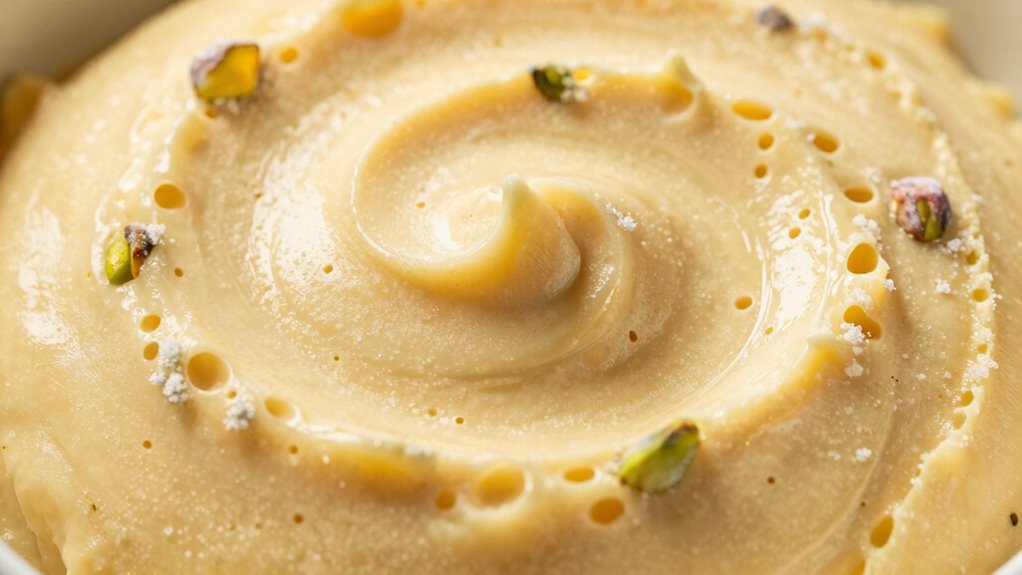
Kulfi stays dense and creamy without churning because of the ingredients and cooking process. Using full-fat milk, condensed milk, and nuts adds richness and structure. Slow simmering helps evaporate excess water, concentrating flavors and thickening the mixture naturally. This method, combined with the natural crystallization of sugar as it cools, creates a smooth, dense texture. If you keep exploring, you’ll discover how traditional techniques guarantee authentic, luscious kulfi every time.
Key Takeaways
- Condensed milk and full-fat ingredients create a thick, velvety base that resists large ice crystal formation.
- Slow simmering and reduction concentrate flavors and moisture, resulting in a dense, rich texture.
- Nuts release oils and flavors, adding crunch and enhancing creaminess without churning.
- The absence of churning allows ingredients to naturally develop a smooth, dense structure during freezing.
- Gradual cooling and slow freezing produce finer ice crystals, contributing to the kulfi’s dense and melt-in-the-mouth feel.
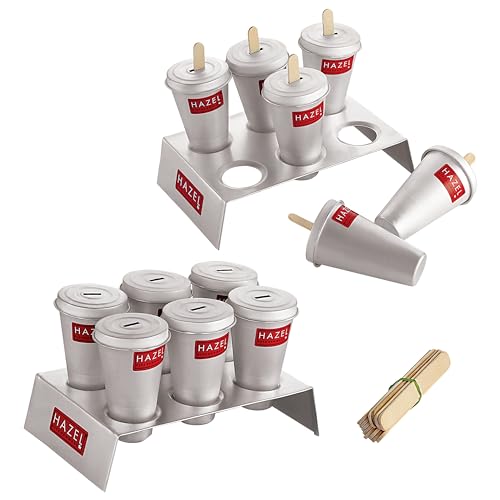
HAZEL Aluminium Kulfi Mould Set of 12 with 2 Stands & 24 Sticks | Reusable Ice Cream & Popsicle Maker | DIY Kulfi Molds for Homemade Frozen Treats, Ice Pops & Desserts
- Material: Food-grade aluminium for safety and durability
- Set Includes: 12 moulds, 2 stands, 24 sticks
- Capacity: 130 ML per mould
As an affiliate, we earn on qualifying purchases.
As an affiliate, we earn on qualifying purchases.
What Ingredients and Techniques Make Kulfi Dense and Rich?
To achieve a dense and rich kulfi, the key lies in selecting the right ingredients and mastering specific techniques. Use full-fat milk and a good quality condensed milk base to enhance creaminess. Incorporate flavor combinations like saffron with pistachios or cardamom with almonds for depth and complexity. Reducing the milk mixture slowly over low heat concentrates flavors and thickens the consistency without churning. Incorporate thickened milk and evaporated milk to boost richness, and avoid over-agitating the mixture to maintain density. Additionally, understanding the chemical reactions that occur during cooking can help you achieve the perfect texture. Recognizing how heat impacts milk proteins can guide you to avoid curdling and ensure smoothness. For serving suggestions, opt for small molds or traditional earthenware to preserve its dense texture. Serve chilled, garnished with nuts or fruit, to complement the intense flavors and ensure each bite is as luscious as possible.
How Do Slow Simmering and Reduced Liquids Thicken Kulfi?
Slow simmering plays an essential role in thickening kulfi by gradually reducing the liquid content and intensifying flavors. As you gently cook the milk and other ingredients, moisture evaporates, leading to a denser, creamier texture without churning. This slow process allows flavors to deepen, making the kulfi more flavorful and rich. The reduction also helps create a concentrated base, which enhances traditional flavor pairings like cardamom, saffron, and pistachios. Culturally, this technique reflects the importance of patience and tradition in Indian desserts, emphasizing the depth of flavor and texture. By simmering slowly, you preserve the authenticity and cultural significance of kulfi, resulting in a dense, luscious treat that’s rooted in time-honored methods. Additionally, understanding precious metal investment options can help appreciate the value of patience and strategy, similar to traditional kulfi preparation. A slow simmer technique also minimizes the risk of burning or overcooking, ensuring a smooth and consistent outcome. Moreover, mastering cooking techniques like this can elevate the overall quality of homemade desserts and deepen your culinary skills. Developing culinary patience is key to achieving the perfect texture in traditional recipes like kulfi.
How Do Condensed Milk and Nuts Contribute to Kulfi’s Creaminess?
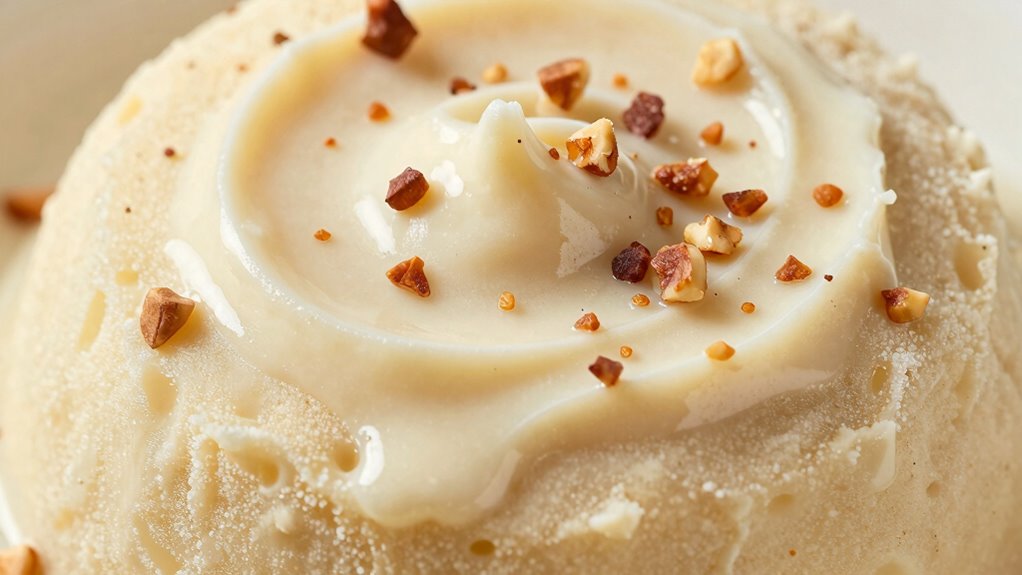
Condensed milk adds a rich, velvety texture that makes kulfi irresistibly creamy without needing churning. Nuts not only provide a satisfying crunch but also enhance the overall richness and depth of flavor. Together, these ingredients create a luscious kulfi that’s smooth and indulgent from start to finish. Incorporating natural ingredients like nuts and condensed milk ensures a wholesome and authentic taste experience. Additionally, the use of vetted quality ingredients guarantees the best possible flavor and texture in your kulfi. For a stable and consistent texture, proper handling of storage conditions is essential to prevent spoilage and maintain freshness.
Richness From Condensed Milk
Condensed milk plays a essential role in creating the rich, velvety texture of kulfi by adding concentrated sweetness and creaminess. This ingredient enhances kulfi’s flavor profiles, giving it a deep, luscious taste that balances traditional spices and subtle notes. Its thick consistency naturally contributes to the dense, fudgy texture without the need for churning. When you incorporate condensed milk, you ensure the kulfi remains creamy and smooth, even as it freezes. This method aligns with traditional serving methods, where the focus is on a rich, indulgent experience. The sweetness from condensed milk also helps amplify the flavors of added ingredients, making each bite satisfyingly rich and satisfying. Overall, condensed milk is the secret to achieving kulfi’s signature dense creaminess.
Nuts’ Textural Contribution
Nuts markedly enhance kulfi’s creamy texture by adding a pleasant crunch and a rich, buttery flavor that contrasts beautifully with its smoothness. Their nuts’ crunch provides a delightful textural variation, making each bite more interesting and satisfying. When you include chopped almonds, pistachios, or cashews, they distribute evenly throughout the kulfi, offering small bursts of crunch that elevate the overall experience. This texture enhancement balances the dense, fudgy consistency of kulfi, preventing it from feeling overly soft or monotonous. Additionally, nuts introduce subtle flavor nuances, enriching the dessert’s taste profile. Their natural oils also contribute to a slight richness, complementing the condensed milk’s sweetness. Overall, nuts play a vital role in delivering a multi-dimensional texture that makes kulfi uniquely enjoyable.
Creaminess Without Churning
Have you ever wondered how kulfi achieves its rich, velvety texture without traditional churning? The secret lies in how condensed milk and nuts contribute to creaminess through sugar crystallization and flavor infusion. Condensed milk adds a smooth, thick base that naturally resists the formation of large sugar crystals, creating a dense, creamy consistency. As the mixture cools, tiny sugar crystals develop gradually, giving kulfi its signature velvety mouthfeel. Nuts, when blended into the mixture, release their oils and flavors, enhancing the overall smoothness and richness. This process of sugar crystallization, combined with the infusion of nut flavors, ensures kulfi remains creamy and dense without the need for churning. It’s a clever technique that delivers a luscious texture with minimal effort.
Why Does Kulfi Achieve a Dense Texture Without Churning?
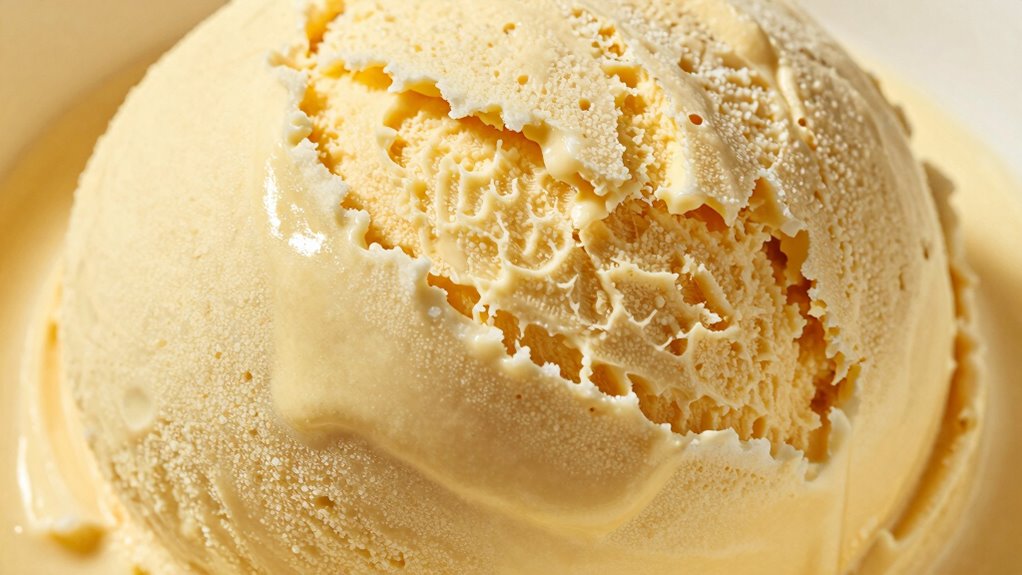
You might wonder how kulfi becomes so dense without churning. It’s the use of condensed milk and a slow freezing process that helps achieve this rich texture. By skipping churning and controlling the freezing time, you get that signature dense kulfi consistency. Additionally, traditional methods often incorporate live music elements in some regional recipes, which can add a cultural layer to the dessert experience.
Use of Condensed Milk
Condensed milk plays a crucial role in giving kulfi its signature dense and creamy texture without the need for churning. Its rich, thick consistency adds moisture and sweetness, contributing directly to the kulfi’s smoothness. When you use condensed milk, you’re harnessing ingredient synergy—combining its properties with other ingredients like milk and flavorings creates a cohesive, velvety base. The high sugar content in condensed milk also aids in stabilizing the mixture, preventing ice crystal formation and ensuring an even, dense consistency. This effortless blend of ingredients simplifies the process, eliminating the need for churning while still delivering that classic, luscious kulfi texture you crave. Its natural richness is key to achieving that dense, melt-in-the-mouth quality. Additionally, the stabilizing effect of sugar in condensed milk helps maintain the kulfi’s texture during freezing. The inherent thickening properties of condensed milk further enhance the overall richness and density of the kulfi.
Absence of Churning Process
The absence of a churning process in making kulfi might seem surprising, but the ingredients and techniques used guarantee a dense, creamy texture naturally develops. Unlike ice cream, kulfi doesn’t rely on churning to incorporate air, which results in a lighter, aerated structure. Instead, you use ingredients like condensed milk, khoya, and heavy cream, which are naturally rich and thick. These ingredients help achieve a dense consistency without needing to introduce air through churning. Additionally, slow evaporation during cooking concentrates the mixture, further reducing the need for air incorporation. This slow evaporation process allows excess moisture to escape, enhancing the dense texture of kulfi. As a result, kulfi remains dense and luscious, with a smooth texture that’s distinct from ice cream. This method emphasizes richness and depth, creating a unique frozen treat without the need for churning. The use of natural ingredients and careful cooking techniques ensures the desired dense texture is achieved without additional processing. Moreover, the absence of aeration preserves the intense flavors and creamy mouthfeel characteristic of authentic kulfi.
Slow Freezing Technique
Slow freezing plays a crucial role in giving kulfi its dense, creamy texture without churning. Unlike other frozen desserts that require constant agitation, slow freezing allows ice crystals to form gradually, resulting in a finer structure. This process helps trap the flavors and ingredients more effectively, enhancing the overall flavor profile of the kulfi. As the mixture cools slowly, it prevents large ice crystals from developing, ensuring a smooth, velvety consistency. The gradual freezing process also allows the flavors, such as saffron, cardamom, or pistachio, to meld better, creating a richer taste experience. By controlling the freezing rate, you achieve a dense, luscious texture that’s characteristic of authentic kulfi, setting it apart from other frozen desserts that rely on churning.
What Variations in Ingredients and Methods Affect Kulfi’s Density?
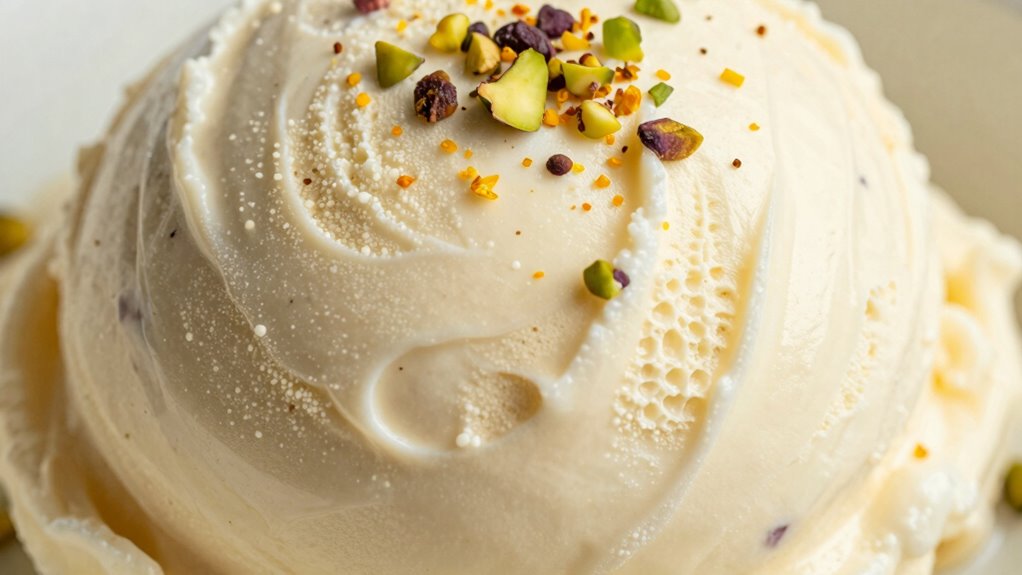
Variations in ingredients and methods directly influence the density of kulfi, making each batch uniquely textured. Using different fruit flavors can add moisture or sweetness, subtly changing how dense your kulfi turns out. Spice variations, like cardamom or saffron, can enhance flavor without affecting density much, but some spices may alter the mixture’s consistency due to their moisture content. Additional factors include the type of milk used—full-fat or skim—and whether you incorporate condensed milk or cream, which can make kulfi creamier and denser. The order of adding ingredients also matters; layering fruit chunks or spice infusions impacts the overall texture. These tweaks help you customize kulfi’s density without churning, resulting in a rich, traditional treat tailored to your preferences. Traditional methods can also influence texture, often resulting in denser kulfi due to slow cooling and natural setting techniques. Employing slow cooling techniques and natural setting methods can further enhance the density of your kulfi, giving it an authentic, traditional consistency. Eco-friendly practices during preparation, such as using sustainable ingredients and minimizing waste, can also contribute to a more environmentally conscious approach to enjoying traditional desserts like kulfi.
Tips for Making Authentic, Dense Kulfi at Home
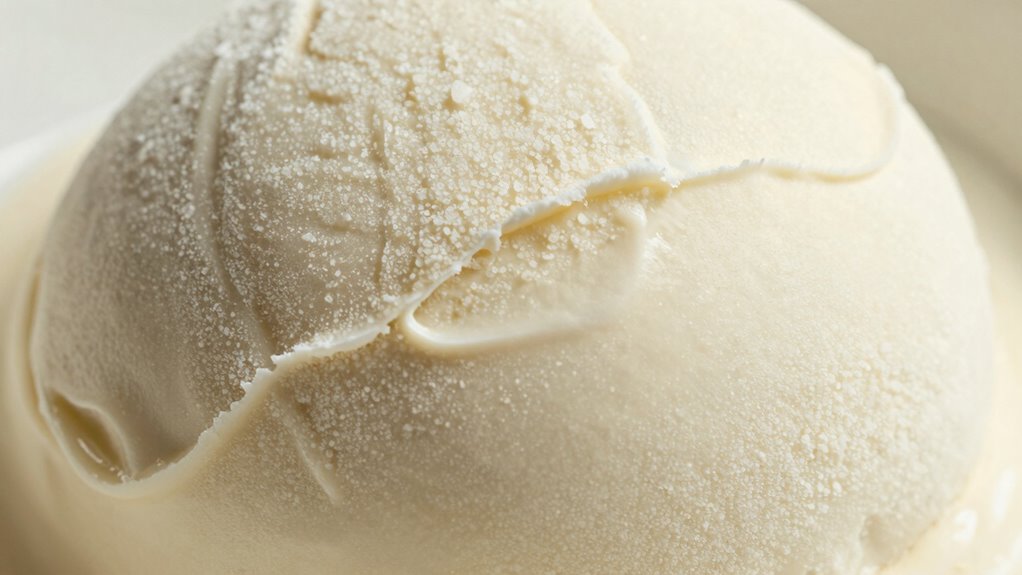
To achieve authentic, dense kulfi at home, focus on simmering the milk slowly to reduce it thoroughly, which concentrates flavors and creates a thicker, creamier base. Use full-fat milk and stir constantly to prevent burning. Incorporate traditional ingredients like condensed milk or khoya for added richness. When pouring the mixture into molds, consider the dessert presentation—using earthenware or classic kulfi molds enhances authenticity. Keep in mind the cultural significance of kulfi; its dense texture is a hallmark of traditional recipes, so avoid over-churning. Proper cleaning and maintenance of your equipment ensures the best results and preserves the quality of your kulfi. Once frozen, serve directly from the mold, garnished with nuts or saffron. This method ensures your kulfi maintains its signature density, honoring its heritage while impressing with authentic taste and appearance.
Frequently Asked Questions
Can Different Milk Types Alter Kulfi’s Density?
Yes, different milk variations can influence kulfi’s density. For example, using full-fat milk results in a richer, denser kulfi, while skim or low-fat milk produces a lighter texture. The density influence comes from the fat and water content in the milk; higher fat levels make the kulfi creamier and denser, whereas lower fat content leads to a less dense, more porous kulfi. So, your choice of milk directly impacts its final consistency.
How Does Freezing Affect Kulfi’s Texture Over Time?
Freezing affects kulfi’s texture by making it firmer and denser over time. As it freezes, ice crystals form, which can cause a crumbly or icy texture if left too long. To preserve its creamy consistency, you should cover kulfi tightly and consume it within a few days. Proper freezing helps maintain texture preservation, but extended storage risks compromising its smoothness and richness.
Do Flavorings Impact the Density of Kulfi?
Sure, adding flavorings might seem innocent, but they actually impact kulfi’s density through flavor infusion and ingredient interactions. When you mix in intense flavors or liquids, they can alter the ice crystal formation, making your kulfi either denser or more airy. So, next time you’re experimenting, remember that flavorings don’t just add taste—they subtly influence the kulfi’s texture, turning your frozen treat into a science experiment.
Is There a Difference Between Homemade and Store-Bought Kulfi Density?
You’ll notice homemade variations of kulfi tend to be denser than store-bought ones because they often use less air and more traditional ingredients, giving it a richer, firmer texture. Store-bought differences arise from commercial churning processes and additives that make kulfi lighter and more uniform. If you prefer a dense, authentic feel, homemade kulfi is your best bet, but store-bought offers convenience and consistency.
Can Alternative Sweeteners Change Kulfi’s Texture?
Think of sweetener variations as painters adding new colors to a canvas, subtly changing the scene. Alternative sweeteners can indeed modify kulfi’s texture, making it creamier or firmer, depending on their properties. These texture modifications happen because different sweeteners interact with the milk differently, affecting how it freezes and sets. So, if you’re experimenting, expect your kulfi’s consistency to reflect your chosen sweetener’s unique touch.
Conclusion
By understanding the ingredients and techniques behind kulfi’s legendary density, you can craft a dessert that’s richer than a treasure chest! Slow simmering, reduced liquids, and wholesome nuts work together to create that irresistible, creamy texture without churning. With a few simple tips, you’ll impress everyone with authentic kulfi so dense and luscious, it could hold its own against the weight of a mountain. Get ready to delight in a dessert that’s truly a frozen masterpiece!