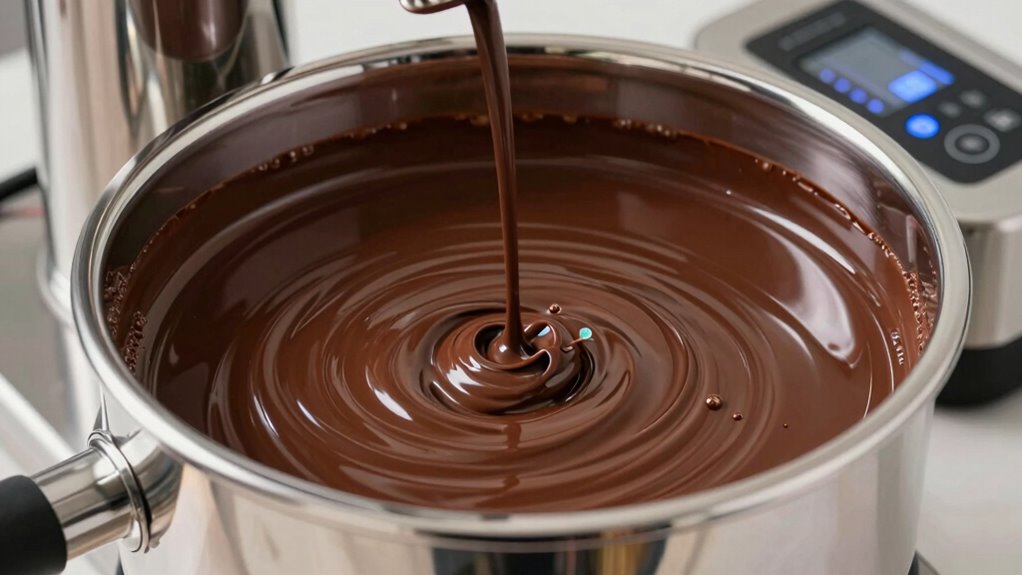
A chocolate tempering machine automates precise temperature control, guiding your chocolate through heating, cooling, and re-heating to create stable, glossy crystals. Simply melting chocolate doesn’t guarantee the right crystal structure, which leads to a dull, soft, or bloom-covered finish. Proper tempering guarantees your chocolate develops a shiny appearance and firm snap, making it ideal for coatings and decorations. To understand how it transforms melted chocolate into perfectly tempered treats, keep exploring the process.
Key Takeaways
- Melting chocolate alone doesn’t control the crystal formation needed for a glossy, firm finish.
- Proper tempering involves precise heating, cooling, and re-heating, which machines automate for consistent crystal development.
- Without tempering, chocolate can develop bloom, resulting in dullness and a soft texture.
- Tempering machines ensure stable, shiny crystals, preventing issues like streaks or mottling.
- Simply melting chocolate lacks the controlled process that ensures professional-quality, glossy, and crisp coatings.
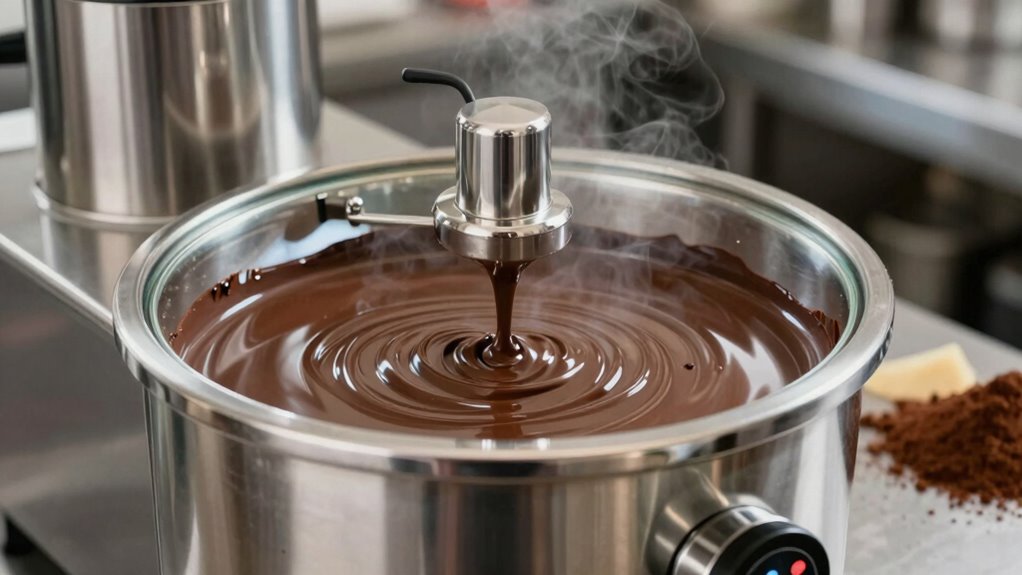
Chocolate tempering machines are essential tools for achieving smooth, glossy, and perfectly tempered chocolate every time. If you’re working with candy coating or making chocolates, you’ve probably noticed that melted chocolate alone isn’t enough to give you that professional finish. Simply melting chocolate and pouring it onto your treats can lead to issues like chocolate bloom, where a whitish film develops on the surface. This bloom isn’t mold or spoilage; it’s caused by fat or sugar crystallizing due to improper tempering. To prevent this, you need more than just melted chocolate—you need controlled temperature processes, which is where tempering machines come into play.
When you use a chocolate tempering machine, you’re not just melting chocolate; you’re carefully controlling its temperature and crystal formation. Tempering involves heating chocolate to specific temperatures to break down unstable crystals, then cooling it to encourage the formation of stable, glossy crystals. This process ensures your chocolate hardens with a shiny finish and a firm snap, making it ideal for coating candies or creating decorative pieces. Without proper tempering, your candy coating may look dull, feel soft, or develop that unsightly bloom over time.
A tempering machine automates this delicate process, so you don’t have to guess or manually monitor temperatures. It heats, cools, and re-heats the chocolate at precise intervals, guiding it through the necessary crystal transformations. This precision is vital because inconsistent tempering can lead to uneven coating or a matte appearance. It’s especially important if you’re working with high-quality chocolate or aiming for a professional look in your confections.
Many beginners assume that melting chocolate is enough for good results. However, melted chocolate that isn’t properly tempered will often develop bloom or won’t set with the desired hardness. Candy coating, for example, may look appealing at first but can become sticky or dull if not tempered properly. Proper tempering ensures your coating remains shiny and crisp, which is essential for both aesthetics and texture. Using a tempering machine helps you achieve that consistent, professional finish, preventing issues like chocolate bloom and ensuring your treats look as good as they taste.
In addition, proper tempering enhances the overall flavor and mouthfeel of your chocolates, making them more enjoyable. Without the precise temperature control that a chocolate tempering machine provides, your chocolate won’t develop the ideal crystal structure needed for a smooth, glossy, and durable finish. Investing in a good tempering machine means you’re setting yourself up for success, whether you’re coating candies, making truffles, or crafting decorative chocolate pieces. It’s the key to turning melted chocolate into stunning, professional-quality treats that stand out.
Frequently Asked Questions
How Long Does It Take to Properly Temper Chocolate Using a Machine?
You can expect the tempering duration with a machine to take about 15 to 30 minutes, depending on its efficiency. The process involves carefully controlling temperature and agitation to achieve proper crystal formation. A more efficient machine heats and cools the chocolate quickly, shortening the overall tempering time. Be patient and monitor the temperature closely to guarantee your chocolate is perfectly tempered and glossy.
Can Tempering Machines Handle Different Types of Chocolate?
Think of your tempering machine as a skilled chef’s versatile toolkit, ready to craft perfect chocolate every time. Yes, it can handle different types of chocolate—dark, milk, or white—thanks to its adjustable settings. This guarantees the chocolate’s consistency remains smooth and glossy, no matter the variety. You can confidently switch between chocolates, knowing your machine adapts seamlessly, delivering that ideal temper with precision and ease.
What Maintenance Is Required for Chocolate Tempering Machines?
To keep your chocolate tempering machine running smoothly, follow a regular maintenance routine. Stick to lubrication schedules by applying food-grade lubricants to moving parts to prevent wear. Additionally, implement thorough cleaning routines after each use to remove residual chocolate and prevent buildup. Regular inspections help identify issues early, ensuring your machine operates efficiently and consistently produces perfectly tempered chocolate. Proper maintenance extends its lifespan and guarantees high-quality results.
Are There Portable or Compact Tempering Machines Available?
Yes, portable options and compact designs are available for tempering machines. You can find small, lightweight units perfect for home use or on-the-go chocolate work, making them highly versatile and convenient. While some claim larger machines are necessary for professional quality, recent innovations prove that compact designs can efficiently temper chocolate without sacrificing performance, enabling you to achieve professional results anywhere.
How Does Ambient Temperature Affect the Tempering Process?
Ambient temperature profoundly impacts your tempering process. If the environment is too warm or cold, it can cause temperature fluctuations, making it harder to achieve the perfect temper. To maintain consistent results, use a tempering machine with reliable temperature control and keep your workspace cool and stable. This way, ambient effects won’t disrupt the chocolate’s crystal structure, ensuring a glossy finish and proper snap every time.
Conclusion
Think of tempering as guiding your chocolate through a delicate dance, where each step matters. A good tempering machine is like a skilled choreographer, ensuring every movement is precise and harmonious. Without it, your chocolate might stumble, losing its shine and snap. By understanding this process, you’re not just melting chocolate—you’re orchestrating a perfect performance that turns simple ingredients into a glossy, irresistible masterpiece. Embrace the dance, and your treats will always shine.