If you’re concerned about animal welfare in the dairy industry, you should know that cows often face crowded housing, limited outdoor access, and routine hormone use to boost milk production. Milking practices can cause stress, discomfort, or infections like mastitis, especially if poorly managed. Ethical issues also arise from the treatment of cows throughout their lives, from birth to culling. To understand how these concerns impact animals and what you can do, keep exploring this important topic.

Get baking supplies delivered free — and shop member deals
- Fast, free delivery on millions of items
- Access to Prime Big Deal Days deals on October 6–7
- Prime Video, Amazon Music and more included
Key Takeaways
- Use of hormones like rbST can cause animal health issues and discomfort, raising ethical concerns about unnecessary suffering.
- Confinement and restricted natural behaviors in dairy cows compromise their physical and psychological well-being.
- Routine practices such as frequent milking and handling may lead to stress, injury, and infections like mastitis.
- Ethical farming involves providing adequate space, pasture access, and humane treatment throughout the cow’s life cycle.
- Consumer choices can influence industry standards by supporting farms that prioritize animal welfare and humane practices.
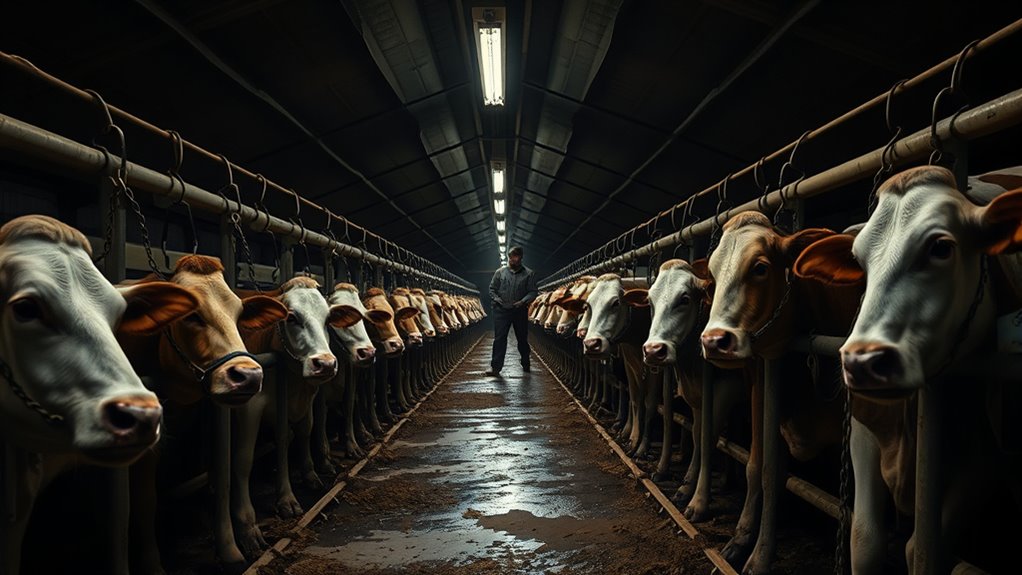
The dairy industry plays a significant role in providing milk and dairy products worldwide, but it also raises important concerns about animal welfare. As you explore the industry, you might notice that some of the practices used in dairy farming impact the well-being of the animals involved. One key issue is hormone use, which farmers sometimes administer to increase milk production. While hormones like recombinant bovine somatotropin (rbST) can boost yield, they also raise questions about animal health and safety. You might wonder if these hormones cause discomfort or long-term health problems for dairy cows, as some studies suggest they can lead to issues like udder infections, reproductive problems, or increased susceptibility to illness. This raises ethical questions about prioritizing production over animal comfort.
In addition to hormone use, milking practices play a vital role in animal welfare. Modern dairy farms often employ automated milking systems designed for efficiency, but these can sometimes compromise the animal’s comfort if not managed carefully. Cows are typically milked multiple times a day, and if the process is rushed or not handled gently, it can cause stress or injury. Proper milking involves ensuring the cows are comfortable and relaxed, which reduces the risk of mastitis and other infections. Unfortunately, in some operations, animals are kept in confined spaces with limited access to pasture, which can lead to restricted movement, boredom, and physical discomfort. When milking routines become overly mechanical or neglect the natural behaviors of the animals, their well-being suffers. Additionally, animal welfare standards vary widely across farms, impacting the overall quality of life for dairy cows.
You should also consider that the ethical concerns extend beyond just hormone use and milking practices. The overall treatment of dairy cows, from early life on the farm to eventual culling, influences their quality of life. Many farmers keep cows in crowded conditions, depriving them of social interactions or natural grazing opportunities, which can cause stress and frustration. The industry’s focus on maximizing production sometimes overshadows the importance of providing animals with a humane environment. As a consumer, you can influence these practices by choosing dairy products from farms that prioritize animal welfare, such as those practicing sustainable and humane farming methods.
dairy cow humane treatment products
As an affiliate, we earn on qualifying purchases.
As an affiliate, we earn on qualifying purchases.
Frequently Asked Questions
Are There Humane Alternatives to Traditional Dairy Farming?
Yes, there are humane alternatives to traditional dairy farming. You can choose plant-based options like almond, soy, or oat milk, which don’t involve animal exploitation. Look for ethical certifications to guarantee your choices are sustainably produced and cruelty-free. These alternatives often have a lower environmental impact and promote animal welfare, allowing you to enjoy dairy-like products without supporting harmful practices.
How Do Dairy Farms Address Animal Mental Health?
Imagine you’re on a dairy farm, and you see how they address cow stress and mental well-being. Farmers often provide spacious, comfortable environments, reduce loud noises, and *guarantee* cows have social interactions, which help ease their mental stress. They also monitor behavior for signs of distress and give cows time outside to graze. These efforts aim to support the cows’ mental well-being, making their lives less like a dystopian novel and more humane.
What Are Consumer Rights Regarding Dairy Product Transparency?
You have the right to clear dairy labeling that accurately shows how products are made, including whether they’re organic, hormone-free, or cruelty-free. Consumer awareness is essential, so look for certifications and detailed labels to make informed choices. By understanding dairy labels, you can support brands that prioritize transparency and animal welfare, ensuring your purchasing decisions align with your values. Always stay informed to exercise your rights effectively.
How Do Different Countries Regulate Animal Welfare in Dairy Industry?
Did you know over 50 countries have implemented legal policies on animal welfare in dairy farming? You’ll find that regulations vary widely due to cultural practices; some nations enforce strict standards, while others have minimal oversight. Countries like the UK and EU nations prioritize animal welfare through extensive laws, whereas regions with different cultural views may rely on informal guidelines. These differences reflect each country’s approach to balancing tradition, ethics, and industry needs.
What Are the Long-Term Environmental Impacts of Dairy Farming?
You might not realize it, but dairy farming can have significant long-term environmental impacts, including greenhouse gas emissions and water pollution. By adopting sustainable practices and supporting strong environmental policies, you can help mitigate these effects. Implementing eco-friendly methods like rotational grazing and waste management not only protects ecosystems but also ensures the industry remains viable for future generations. Your choices directly influence the environmental footprint of dairy farming.
Conclusion
As you consider the dairy industry’s impact, remember that behind every glass of milk, there’s an animal whose well-being matters. Imagine a cow kept in cramped conditions, deprived of natural behaviors, just like in a real case where neglect led to suffering. Your choices can drive change—support farms that prioritize humane treatment or advocate for stricter regulations. Together, you can help guarantee animals are treated with the compassion they deserve, fostering a more ethical dairy industry.
Fall Picks
fall essentials
As an affiliate, we earn on qualifying purchases.