
When you scrape rolled ice cream into thin layers, you’re physically breaking the frozen sheet into smaller pieces, which improves its texture. This process exposes fresh, rapidly frozen surfaces that maintain the creamy consistency and prevent large ice crystals from forming. The scraping also creates those iconic, smooth rolls, making the dessert melt softly in your mouth. If you’re curious about how this technique influences the overall quality, there’s a lot more behind the science to explore.

Get baking supplies delivered free — and shop member deals
- Fast, free delivery on millions of items
- Access to Prime Big Deal Days deals on October 6–7
- Prime Video, Amazon Music and more included
Key Takeaways
- Scraping exposes newly frozen surfaces, maintaining rapid cooling and preventing large ice crystal growth.
- The physical act of scraping breaks the ice sheet into thin layers, influencing texture and mouthfeel.
- Rapid freezing creates tiny ice crystals, resulting in a smooth, velvety texture; scraping preserves this by refreshing the surface.
- Slower freezing causes larger crystals, leading to a grainy texture; scraping helps manage and optimize crystal size.
- The combination of freezing dynamics and scraping techniques produces the signature creamy, melt-in-your-mouth quality of rolled ice cream.
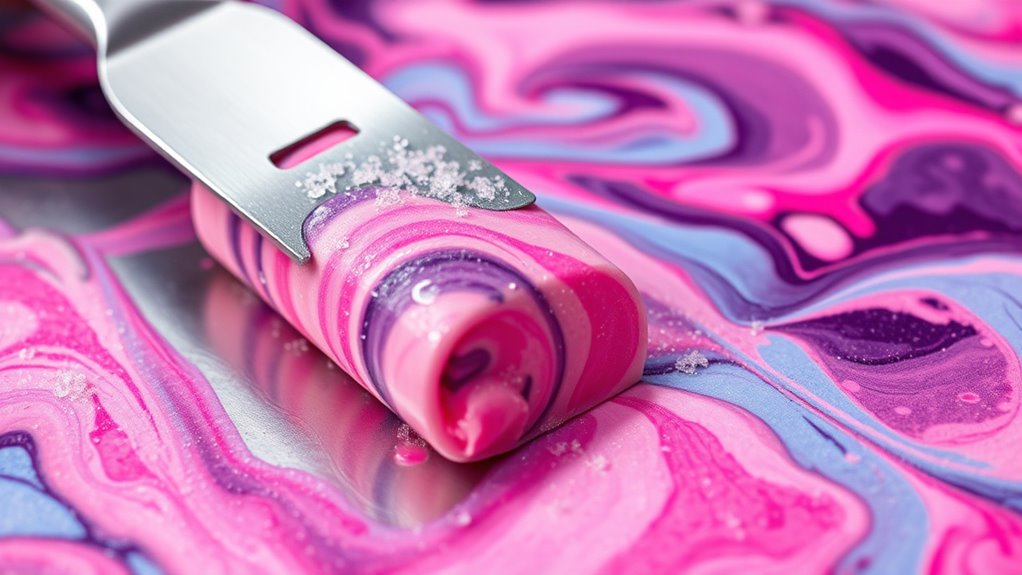
Rolled ice cream combines science and artistry to create a unique dessert experience. When you watch the process, you notice how the liquid ice cream base is poured onto a freezing metal surface, where its texture begins transforming. This is where the magic of texture transformation and freezing dynamics come into play. As the mixture cools rapidly, it solidifies into a firm, yet pliable sheet. The key to this process is how quickly the surface pulls heat away from the liquid, causing the mixture to freeze uniformly. The rapid freezing prevents large ice crystals from forming, resulting in a smooth, creamy consistency that’s unlike traditional scooped ice cream.
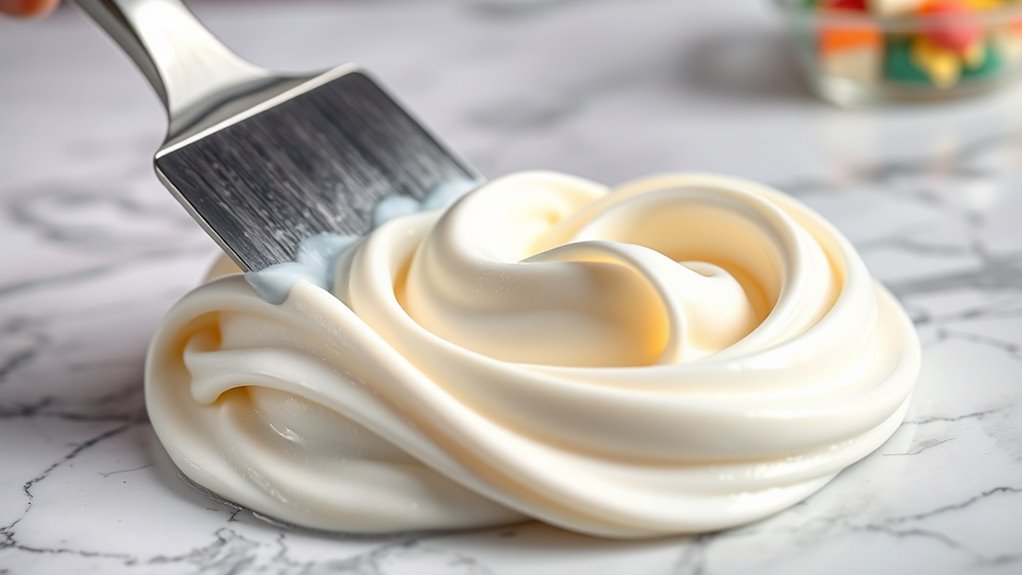
When you scrape the frozen sheet into rolls, you’re actually manipulating its structure through a physical process. The scraping isn’t just for shaping; it’s a deliberate step that influences the dessert’s texture. As you run the spatula across the surface, you break the sheet into smaller sections, each with a fine, layered appearance. This scraping activity exposes fresh, rapidly cooled surfaces, which helps maintain the desired creamy texture. The cold metal surface plays an integral role here: its thermal conductivity ensures quick heat removal, its freezing dynamics control the process and prevent the formation of large ice crystals that could make the ice cream grainy.
The texture transformation during rolling is deeply tied to the freezing process. As the mixture freezes quickly, the ice crystals are tiny, which means the final product is smooth and velvety. When you scrape, you’re fundamentally refining this frozen matrix, creating thin, uniform rolls that are satisfying to bite into. This process highlights how freezing dynamics are vital: the speed of freezing determines the size of ice crystals, directly affecting mouthfeel. Slow freezing allows larger crystals to develop, resulting in a gritty texture, but rapid freezing keeps the ice crystals small, producing that desirable silky finish.
The artistry in rolling ice cream is matched by the science behind its texture. Through precise control of freezing dynamics, chefs can craft a dessert that’s not only visually appealing but also delightfully smooth. Your role in scraping isn’t just aesthetic; it’s a functional step that influences the final texture. By understanding these scientific principles, you can appreciate how each roll is a product of rapid cooling, fine ice crystal formation, and careful handling. The end result is a dessert that combines the visual appeal of rolled layers with the gratifying, melt-in-your-mouth sensation of perfectly frozen ice cream.
As an affiliate, we earn on qualifying purchases.
Frequently Asked Questions
How Does Temperature Affect the Rolling Process?
Temperature affects the rolling process because proper temperature control guarantees the ice is just firm enough to scrape smoothly. If it’s too cold, the ice becomes overly hard, making scraping difficult and affecting ice consistency. If it’s too warm, the ice melts too quickly, ruining the shape and texture. Maintaining ideal temperature allows you to achieve the perfect consistency, making the rolling process easier and resulting in better-tasting, visually appealing ice cream rolls.
Can Different Ingredients Alter the Texture of Rolled Ice Cream?
You can definitely alter the texture of rolled ice cream by changing ingredients. Flavor combinations like fruits, nuts, or cookies impact ingredient stability and how well they freeze. Fresh fruits may make the texture softer, while stable ingredients like chocolate chips or candies hold their shape better. Experimenting with different ingredients allows you to achieve various textures, from creamy and smooth to chunkier or firmer, enhancing your ice cream experience.
Is There an Optimal Scraping Technique for Perfect Rolls?
Think of crafting perfect rolled ice cream like tuning a musical instrument. You want just the right scraping pressure—too hard, and you risk damaging the ice cream; too gentle, and the consistency remains uneven. For the best ice cream consistency, use steady, even pressure as you scrape. This ensures smooth, uniform rolls, creating that ideal texture every time. Practice makes perfect, so find your rhythm and enjoy the sweet symphony!
How Does the Thickness of the Mixture Influence Texture?
You should consider how the mixture viscosity affects your ice cream’s freezing consistency. Thicker mixtures tend to freeze faster and create a creamier, denser texture, while thinner ones may result in a softer, less structured roll. Adjust the thickness by modifying ingredient ratios, like reducing liquid or adding stabilizers. Achieving the right mixture viscosity guarantees your ice cream retains a firm, smooth texture suitable for perfect rolling.
What Role Does Air Incorporation Play During Scraping?
Did you know that during scraping, air incorporation increases by up to 50%, markedly impacting texture? When you scrape the ice cream, you trap tiny air bubbles that improve creaminess and volume. This process not only enhances the texture but also makes each roll lighter and fluffier. So, your vigorous scraping actively creates a more enjoyable, smooth experience, showcasing how air incorporation plays a key role in texture enhancement.
Conclusion
Now that you know how scraping transforms ice cream’s texture, you’re practically a scientist yourself. Every roll is like a tiny experiment, shaping the perfect treat. Remember, even in the age of smartphones, the art of crafting rolled ice cream remains a delightful blend of science and skill. So next time you watch it being made, you’ll appreciate the magic behind each silky, luscious curl—truly a modern-day marvel, just like the inventions of your great-grandparent.
Fall Picks
fall essentials
As an affiliate, we earn on qualifying purchases.