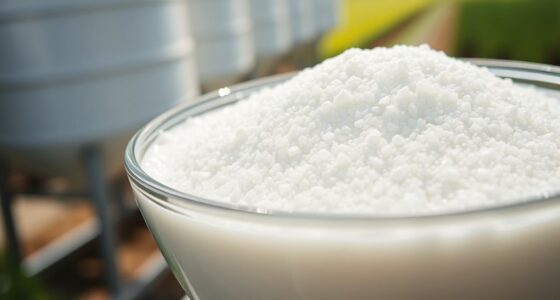
Some ice creams don’t melt easily because manufacturers use additives like stabilizers and emulsifiers to improve their structure and heat resistance. Stabilizers, such as guar gum or carrageenan, help prevent the ice from melting quickly and keep the texture stable. Emulsifiers like lecithin improve the dispersion of fats and water, giving the product a smoother, more resilient form. Understanding these ingredients can reveal how these specialty ice creams stay solid longer, and there’s more to discover if you continue exploring.

Get baking supplies delivered free — and shop member deals
- Fast, free delivery on millions of items
- Access to Prime Big Deal Days deals on October 6–7
- Prime Video, Amazon Music and more included
Key Takeaways
- Non-melting ice creams contain stabilizers like guar gum or carrageenan that prevent ice crystal growth and maintain texture.
- Emulsifiers such as lecithin improve fat-water dispersion, creating a more stable and heat-resistant structure.
- These additives form a resilient matrix that holds shape and resists melting even in warm temperatures.
- Ingredient modifications slow down heat transfer and reduce the rate of melting, extending shelf life.
- The combined effect of stabilizers and emulsifiers results in ice creams that stay solid longer outdoors or during transportation.
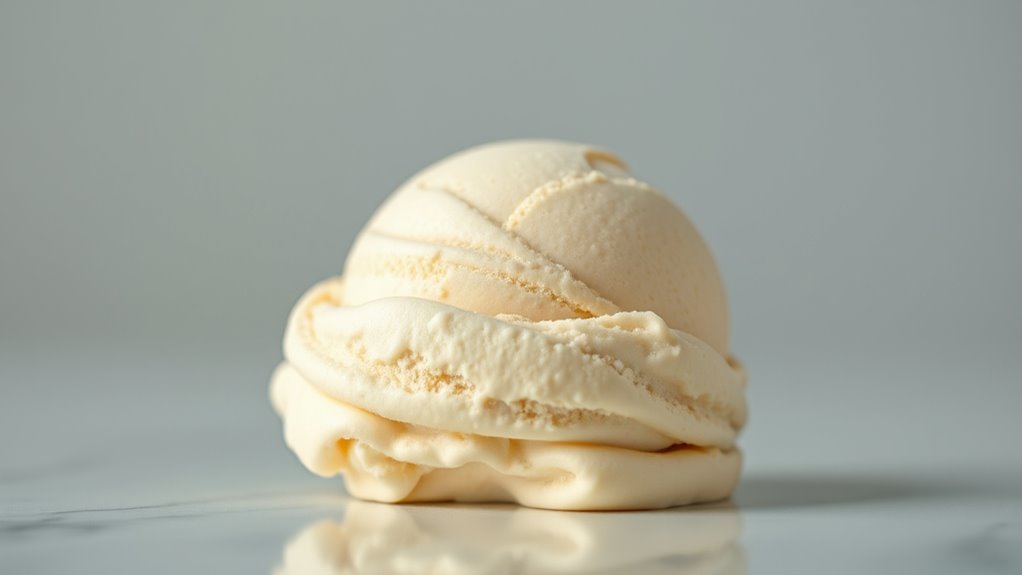
Imagine enjoying a scoop of ice cream on a hot day without worrying about it melting all over your hands. It might sound like a dream, but thanks to certain additives, some ice creams are designed to resist melting longer than usual. The secret lies in how these treats are formulated to improve shelf stability, allowing them to maintain their shape and texture even in warm environments. This innovation is especially useful for convenience stores, outdoor events, and fast-food outlets where refrigeration might be limited or inconsistent.
Non-melting ice creams stay firm longer, perfect for outdoor treats and on-the-go enjoyment.
The key to these non-melting ice creams is ingredient modifications. Manufacturers incorporate specific additives that alter the physical properties of the ice cream, making it less prone to melting. These additives work by modifying the structure of the fat and ice crystals, creating a more stable matrix that holds the product’s shape. Stabilizers and emulsifiers are common ingredients used to achieve this effect. Stabilizers, such as guar gum or carrageenan, help prevent the ice cream from becoming too icy or losing its creamy texture. Emulsifiers, like lecithin, improve the dispersion of fats and water, resulting in a smoother consistency that’s less likely to collapse when exposed to heat.
By adjusting these ingredients, producers can also enhance shelf stability, which means the ice cream remains appealing for longer periods without melting or developing ice crystals. This is particularly important for products that need to be transported over long distances or stored for extended periods. Understanding the science behind stabilizers can help consumers make more informed choices about the products they enjoy. The modifications ensure that the ice cream retains its flavor, texture, and appearance regardless of external temperature fluctuations, offering consumers a more resilient dessert option.
However, it’s worth noting that these ingredient modifications sometimes come with trade-offs. The texture might differ slightly from traditional ice cream, and some purists argue that the taste can be affected by the additives. Nonetheless, the convenience and practicality of non-melting ice creams make them increasingly popular, especially in situations where keeping a perfect scoop intact is challenging.
non-melting ice cream with stabilizers
As an affiliate, we earn on qualifying purchases.
As an affiliate, we earn on qualifying purchases.
Frequently Asked Questions
Are There Health Risks Associated With These Additives?
You might wonder if these additives pose health concerns. While many additives are approved for safety, some people worry about potential long-term effects or allergic reactions. It is crucial to check additive safety, as not all ingredients are free from controversy. Generally, regulatory agencies monitor these substances carefully, but if you’re concerned, limiting consumption of products with artificial stabilizers can help minimize any health risks.
Can These Additives Be Used in Homemade Ice Cream?
You might wonder if you can use these additives in homemade ice cream. While it’s possible, you’ll want to contemplate homemade alternatives or natural substitutes, like gelatin or agar-agar, to replicate their effects. These options help slow melting without added chemicals, making your treat safer. Just remember, experimenting with natural ingredients can yield delicious, healthier ice creams that stay firm longer without relying on commercial additives.
Do All Brands Use the Same Additives?
Not all brands use the same additives, so you might notice differences in their formulations. Brand consistency varies because companies follow additive regulation standards differently, influencing what ingredients they include. Some brands prioritize natural ingredients, avoiding certain additives, while others use specific stabilizers to prevent melting. If you’re concerned about additives, check labels carefully, as regulations guide what can be used, but practices still differ across brands.
How Do Additives Affect Ice Cream Flavor and Texture?
Imagine your taste buds dancing with delight—additives play a subtle role in that experience. They can gently enhance flavors, making each bite more satisfying, or modify textures, creating a smoother or creamier feel. These tweaks help maintain consistency and improve enjoyment. So, when you notice a richer flavor or velvety texture, it’s often thanks to carefully chosen additives working behind the scenes to elevate your ice cream experience.
Are These Additives Environmentally Sustainable?
You might wonder if these additives are eco-friendly. Many companies are now exploring eco-friendly alternatives to reduce environmental impact, such as biodegradable packaging and natural ingredients. While some additives can be sustainable, others may pose environmental concerns due to their production or disposal. By choosing brands that prioritize eco-friendly options, you support more sustainable practices, helping to lessen pollution and conserve resources for future generations.
Conclusion
So, next time you enjoy ice cream that refuses to melt instantly, remember it’s the additives working behind the scenes—keeping it solid even in the heat. It’s almost like a magic trick, defying what you’d expect from a typical scoop. While traditional ice cream surrenders quickly, these special versions stand firm, blending science with your favorite treat. It’s a surprising twist, turning something familiar into a cool, lasting delight you can savor longer.
Evergreen bestsellers Picks
bestsellers
As an affiliate, we earn on qualifying purchases.