Ice cream melts faster when exposed to higher temperatures, as heat quickly breaks down its crystals. Using shallow bowls or warm containers increases surface contact, speeding up melting, especially with metal that conducts heat well. Smaller portions melt more rapidly due to their increased surface area, while larger scoops stay solid longer. Ambient conditions and how long ice cream is left out also play a role. Keep exploring to discover more factors that influence how quickly your ice cream drips.
Key Takeaways
- Higher ambient temperatures increase heat transfer, causing faster melting of ice cream.
- Containers made of metal conduct heat more quickly, accelerating melting compared to insulated options.
- Larger surface area exposure from shallow bowls or small portions speeds up melting.
- Leaving ice cream out of cold storage raises its temperature, leading to quicker melting.
- External heat sources and environmental conditions amplify the melting process.
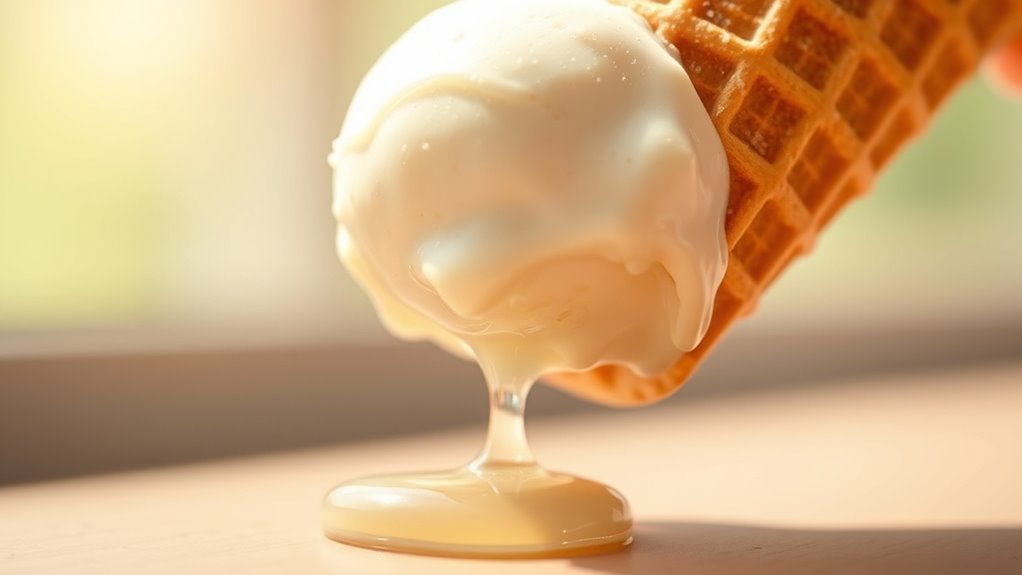
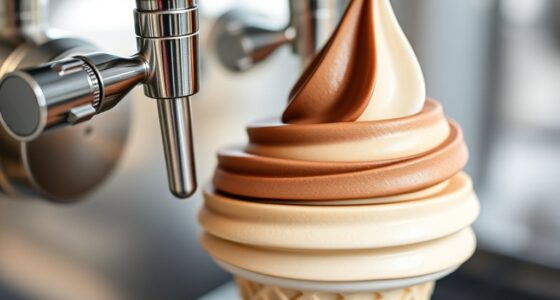
When ice cream is exposed to warmth, it quickly begins to melt, transforming from a solid into a liquid. This process is driven largely by temperature effects—when the surrounding environment’s temperature rises above the ice cream’s freezing point, the ice crystals start to break down. The higher the temperature, the faster your scoop loses its structure. If it’s a hot day or you’re holding your ice cream outside for a while, expect it to melt rapidly. The temperature difference between the ice cream and its environment is key; the greater the gap, the quicker the melting happens. That’s why, during summer, ice cream doesn’t last long once out of the freezer.
But your choice of container plays a significant role in how fast your ice cream melts. If you serve it in a shallow bowl or on a warm plate, surface area exposure increases, and heat transfer accelerates. Shallow containers expose more ice cream surface to the warmer air, speeding up melting. Conversely, a deeper, insulated container helps slow this process. For example, a thick plastic or metal container can insulate your ice cream better than a flimsy paper cup. The container influence extends beyond just insulation; it also impacts how heat conducts from the environment into your scoop. Metal tends to conduct heat more quickly than plastic, which might cause the ice cream to melt faster if it’s in a metal dish. On the other hand, ceramic or insulated containers can keep ice cream colder longer, reducing the rate of melting.
Temperature effects aren’t just about external heat; the temperature of the ice cream itself matters, too. If your scoop is left out for a while, it warms up from the ambient temperature, increasing the rate at which it melts. That’s why small, tightly packed portions tend to melt faster than larger ones—they have more surface area relative to volume, exposing more of the ice cream to heat. Additionally, if you leave the ice cream out for an extended period, the temperature of the scoop approaches room temperature, making it even more susceptible to melting. Proper storage in cold chain management helps maintain optimal temperature and slows down melting during transportation and display.
In essence, understanding how temperature effects and container influence work together can help you keep your ice cream from dripping too quickly. Using an insulated container and serving your ice cream in a way that minimizes surface area exposure can buy you extra time before it turns into a puddle. So, next time you’re about to indulge, think about how these factors are impacting your scoop’s stay-cool performance.

IMEEA 15oz Small Ice Cream Bowl Double-Wall 304 Stainless Steel Bowl for Kids, Yogurt, and Small Snacks
Perfect Single-Serve Size: Max capacity 15oz/450ml, recommended use 10–12oz/300–350ml. Ideal for single servings of ice cream, yogurt, side…
As an affiliate, we earn on qualifying purchases.
As an affiliate, we earn on qualifying purchases.
Frequently Asked Questions
How Does the Type of Ice Cream Affect Melting Speed?
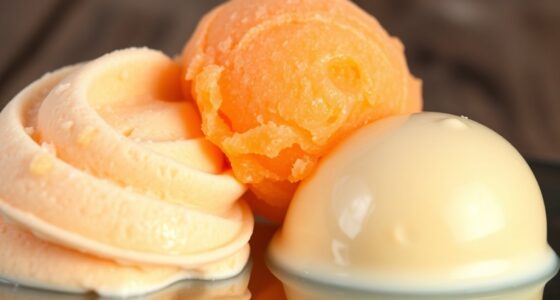
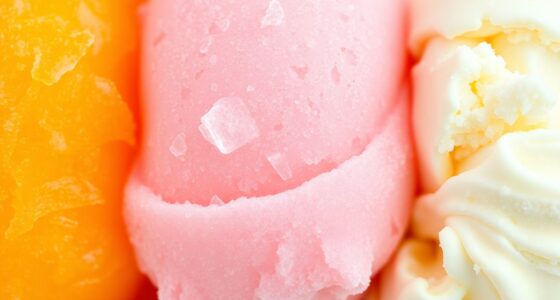
You’ll notice that the type of ice cream impacts how quickly it melts because of its ice cream composition and flavor chemistry. Richer, cream-based varieties tend to melt slower due to higher fat content, which resists melting. Meanwhile, sorbets or lower-fat options melt faster, as their composition contains more water. Your choice of flavor chemistry also influences melting, since some ingredients change how heat interacts with the ice cream, affecting its melting rate.
Does Altitude Impact How Quickly Ice Cream Melts?
Imagine enjoying your ice cream on a mountain top versus at sea level. Altitude effects can change melting dynamics, making your scoop melt faster or slower. At higher elevations, lower air pressure and increased exposure to sunlight speed up melting. So, when you’re at altitude, your ice cream’s melting rate shifts, and you might need to eat it quicker before it turns into a puddle. Keep this in mind for outdoor adventures!
Can Adding Toppings Change the Melting Rate?
Adding toppings can change the melting rate of your ice cream. If you choose toppings with a higher topping temperature, like warm caramel or hot fudge, they’ll melt quickly and cause the ice cream to melt faster. Topping composition also matters; ingredients like chocolate chips or nuts with lower topping temperatures won’t speed up melting as much. Overall, warmer toppings or those with certain compositions can make your scoop drip sooner.
How Does Packaging Influence Ice Cream’s Melting?
Your ice cream’s packaging plays a key role in how quickly it melts. Packaging insulation helps keep the cold in longer, slowing the melting process, while the container material matters too—thicker, insulated options prevent heat transfer better than thin, flimsy ones. So, by choosing containers with good insulation and durable materials, you can keep your ice cream colder longer and enjoy it without it melting too fast.
Does Ice Cream Flavor Affect Its Melting Process?
You might wonder if flavor affects melting, and it does, to some extent. Different flavors have varying flavor consistency and ingredients, which can influence melting speed. For example, darker colors like chocolate or caramel can absorb more heat, leading to faster melting due to color influence. Lighter flavors with more water content might melt slower. So, yes, flavor and color can subtly impact how quickly your ice cream turns to goo.

2Pcs Stainless Steel Ice Cream Containers , 40oz Metal Tubs with Lids for Freezer, Reusable Sorbet Gelato Keeper Box, Small Food Tins for Homemade Storage Kitchen Use and Dessert Food Preservation
Homemade Freezer Storage: 1200ml/40oz, Perfectly sized ice cream storage containers for freezer use, this stainless steel ice cream…
As an affiliate, we earn on qualifying purchases.
As an affiliate, we earn on qualifying purchases.
Conclusion
Now that you know what makes ice cream melt, you can beat the heat or enjoy your scoop longer. Remember, heat, sunlight, and warm surroundings are like sneaky thieves that steal your cold treat away. So, next time you indulge, think of yourself as a detective guarding your delicious treasure. Keep it cool, stay sharp, and let your ice cream stay a little longer—because nobody wants their dessert to turn into a puddle before the fun even begins.

Heated Ice Cream Scoop, Rechargeable Electric Ice Cream Scoop with LED Display, 3 Heat Levels 122°F/140°F/158°F, Nonstick Ice Cream Scooper for Hard Ice Cream, Gelato, Frozen Yogurt & Sorbet (Black)
🍨【158°F HEATED SCOOPING POWER】:This heated ice cream scoop features 3 adjustable heat levels of 122°F, 140°F, and 158°F…
As an affiliate, we earn on qualifying purchases.
As an affiliate, we earn on qualifying purchases.
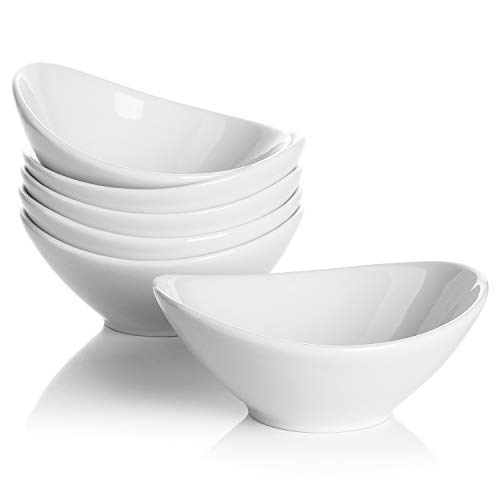
Teocera 5 Inch Porcelain Small Bowls Set, 6 Ounce small serving bowls for Dessert, Ice Cream, Snack, Dipping, Side Dishes, Microwave & Dishwasher Safe- White
OVAL SHAPE WITH CLEAN LINES DESIGN – Teocera small dessert bowls are slightly oval with wave rims. They…
As an affiliate, we earn on qualifying purchases.
As an affiliate, we earn on qualifying purchases.