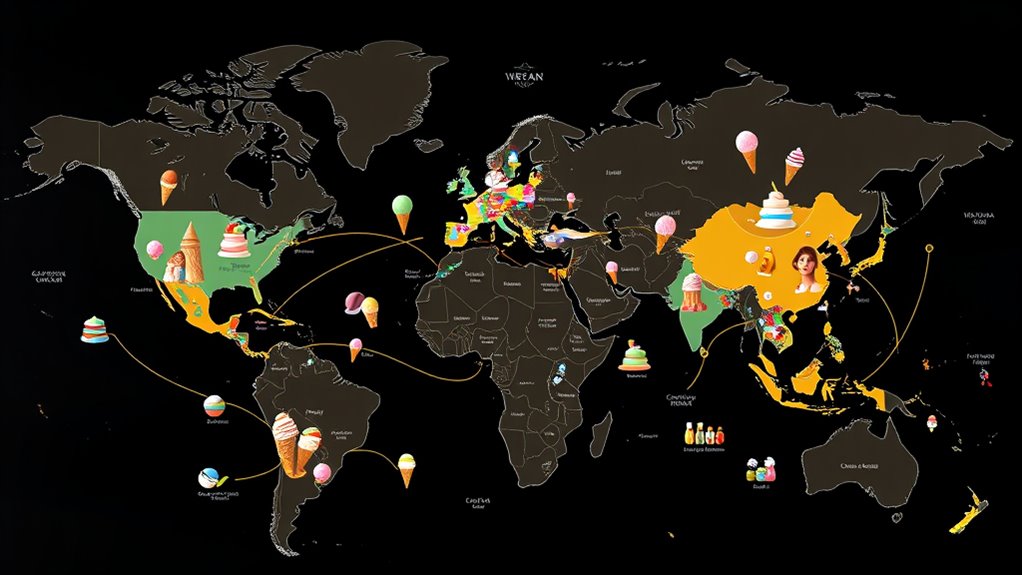

Ice cream’s journey begins thousands of years ago in ancient China, Persia, and Rome, where early versions used snow, fruit, and spices. Over time, innovations in refrigeration and trade spread these frozen treats across cultures, with Europeans adding rich custards and Italians creating gelato. Mass production and modern techniques made ice cream a global sensation, enjoyed in countless forms worldwide. To discover how this delightful dessert conquered every continent, keep exploring its fascinating timeline.

Get baking supplies delivered free — and shop member deals
- Fast, free delivery on millions of items
- Access to Prime Big Deal Days deals on October 6–7
- Prime Video, Amazon Music and more included
Key Takeaways
- Ancient civilizations like China, Persia, and Rome first created snow-based frozen desserts thousands of years ago.
- Arab innovations in milk and cream-based treats spread through trade routes during the Renaissance.
- European aristocracy popularized rich, custard-based ice creams, further enhancing its status across courts and royalty.
- Advances in refrigeration technology in the 19th century made ice cream accessible worldwide, leading to regional variations like gelato and kulfi.
- 20th-century mass production and marketing propelled ice cream into global cultural significance and everyday consumption.

Ice cream, once a luxurious treat enjoyed mainly by royalty, has now become a beloved dessert enjoyed around the world. Its journey from a rare delicacy to a common pleasure is fascinating, rooted in its rich historical origins and shaped by diverse cultural adaptations. Originally, the concept of frozen desserts can be traced back thousands of years, with early versions appearing in ancient China, Persia, and Rome. These civilizations created mixtures of snow or ice combined with fruit, honey, and spices, designed to cool and delight the palate. Over time, the technology and ingredients evolved, leading to more refined recipes. In the Middle Ages, Arab cooks pioneered the use of milk and cream in frozen treats, laying the groundwork for what we now recognize as ice cream. This innovation spread through trade routes, especially during the Renaissance, when European aristocracy began to indulge in frozen confections as symbols of wealth and status. The development of refrigeration technology in the 19th century revolutionized ice cream production, making it more accessible to the masses. As ice cream traveled across continents, it was adapted to fit local tastes and ingredients, leading to a variety of cultural adaptations. In Italy, gelato emerged, characterized by its dense, creamy texture and intense flavors, reflecting the Mediterranean’s love for fresh, local ingredients. Meanwhile, in France, the development of custard-based ice creams added richness and sophistication, often served at royal courts. In the United States, ice cream became more accessible with advances in refrigeration technology in the 19th century, transforming it from a luxury to a popular, everyday treat. The invention of hand-cranked ice cream makers and later electric freezers made it easier for households to produce their own flavors, fueling its widespread popularity. Throughout the 20th century, ice cream’s cultural significance continued to grow, with unique flavors and styles emerging worldwide. From Japanese mochi ice cream to Indian kulfi, each culture infused traditional ingredients and customs into their frozen desserts. The globalization of food culture, combined with mass production and marketing, helped ice cream reach even remote regions, making it an integral part of celebrations, street food, and family traditions. Today, you can find countless varieties, from classic vanilla and chocolate to innovative vegan and artisanal options, all bearing the mark of a dessert that has evolved through centuries of historical influence and cultural adaptation. The journey of ice cream reflects humanity’s desire for innovation, comfort, and shared experiences—an enduring symbol of global unity in dessert form. The evolution of frozen desserts has further contributed to its widespread popularity and cultural significance worldwide.
As an affiliate, we earn on qualifying purchases.
Frequently Asked Questions
How Did Ice Cream Recipes Evolve Across Different Cultures?
You see how ice cream recipes evolved through cultural fusion and ingredient adaptation. Different cultures added local flavors, spices, and ingredients, creating unique variations. For example, Asian cultures incorporated green tea or red bean, while Latin American regions used tropical fruits. These adaptations reflect local tastes and available ingredients, enriching the global ice cream tradition. You can appreciate how this cultural exchange shaped the diverse flavors enjoyed worldwide today.
What Are the Environmental Impacts of Global Ice Cream Production?
Imagine a giant cone melting under the sun—that’s your ice cream’s environmental impact. Global ice cream production strains resources, but sustainable sourcing and waste management can help. By sourcing ingredients responsibly and reducing packaging waste, you lessen pollution and conserve water. Your choices matter; supporting eco-friendly brands promotes healthier ecosystems. Think of it as protecting the environment just like you’d protect a cherished treat—delicate, valuable, worth preserving.
How Has Technology Influenced Ice Cream Manufacturing Worldwide?
Technology has revolutionized ice cream manufacturing by enabling dairy innovations and advanced flavor technology. You benefit from improved production methods that increase efficiency and consistency, ensuring high-quality products worldwide. New dairy innovations, like better refrigeration and pasteurization, extend shelf life and safety. Flavor technology allows you to enjoy a wider variety of tastes, from classic to exotic, making ice cream more appealing and accessible across different markets, all driven by technological progress.
Are There Regional Variations in Ice Cream Flavor Preferences?
You might think all ice cream flavors are the same worldwide, but regional palate truly shapes flavor diversity. Different cultures favor unique tastes, like green tea in Asia or dulce de leche in Latin America. These regional variations enrich the global ice cream scene, proving that local preferences influence flavor choices. So, yes, regional differences exist, and they make enjoying ice cream around the world a diverse and exciting experience.
What Role Has Marketing Played in Ice Cream’S International Popularity?
Marketing has played a vital role in boosting ice cream’s international popularity through branding strategies and advertising campaigns. You see, clever branding makes products memorable, while targeted ads appeal to diverse cultures and tastes. These campaigns create excitement and desire, encouraging people worldwide to try new flavors and brands. By effectively using marketing, companies turn ice cream into a global sensation, transcending regional differences and fostering universal enjoyment.
Conclusion
As you savor each scoop, remember it’s more than just a treat—it’s a symbol of connection and joy that travels across borders. Ice cream’s journey mirrors our shared desire for comfort and celebration, uniting people in moments of happiness. Just like the melting ice cream, let these sweet memories remind you that, no matter where you’re from, the simple pleasure of a cool, creamy bite can bring us all closer together.
Fall Picks
fall essentials
As an affiliate, we earn on qualifying purchases.