
You’ve probably enjoyed gelato, but its history goes back centuries, starting with ancient Egyptians and Romans experimenting with ice and fruit. It truly evolved during Italy’s Renaissance, where artisans perfected recipes using high-quality ingredients like milk, sugar, and seasonal flavors. Italy’s craftsmanship turned simple frozen treats into the sophisticated gelato we love today. If you’re curious about how Italy’s tradition shaped this beloved dessert, there’s plenty more to discover.
Key Takeaways
- Gelato’s origins date back to ancient civilizations like Romans and Egyptians experimenting with frozen fruit and ice.
- It developed during the Italian Renaissance, emphasizing high-quality ingredients and refined techniques.
- Traditional gelato is crafted with natural flavorings, seasonal ingredients, and regional variations.
- Industrialization made gelato more accessible, but artisans continue to preserve traditional methods.
- Gelato reflects Italy’s rich culinary heritage and regional diversity, solidifying its cultural significance.
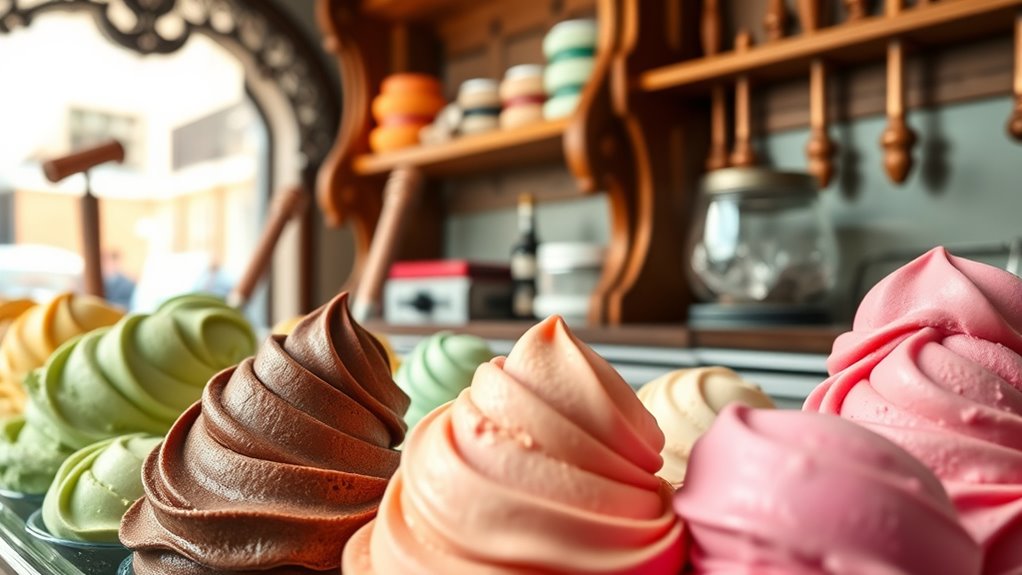
Gelato, the rich and creamy Italian frozen dessert, has a fascinating history that dates back centuries. As you explore its origins, you’ll see how the gelato evolution reflects Italy’s deep-rooted dessert traditions. Unlike other frozen treats, gelato’s unique texture and flavor profile result from centuries of refinement by Italian artisans. Its journey begins in ancient times when civilizations like the Romans and Egyptians experimented with ice and fruit to create invigorating cold desserts. However, it was in Italy during the Renaissance that gelato truly began to take shape. Italian dessert traditions emphasize high-quality ingredients, meticulous craftsmanship, and a balance of flavors—all of which are central to authentic gelato.
Throughout history, Italian chefs and merchants sought ways to improve upon existing frozen confections. They experimented with milk, sugar, and natural flavorings, gradually developing a product that was richer and silkier than earlier icy desserts. By the 16th century, the concept of using milk instead of water to create a creamier texture became popular, laying the groundwork for modern gelato. The Italian passion for culinary excellence pushed artisans to perfect their craft, and over time, gelato became a staple in local markets and royal courts alike. This period marked a significant phase in the gelato development, where techniques were refined and recipes passed from generation to generation. Additionally, the use of natural ingredients and seasonal flavors further distinguished authentic gelato from other frozen treats.
You’ll notice that Italian dessert traditions played an essential role in shaping gelato. The emphasis on seasonal ingredients, regional flavors, and artisanal craftsmanship helped establish gelato as a symbol of Italian culture. Each region brought its own twist, incorporating local fruits, nuts, and spices that still define regional gelato varieties today. As industrialization progressed in the 19th and 20th centuries, gelato shifted from a handcrafted delicacy to a more accessible treat, but many artisans still uphold the traditional methods that give gelato its authentic character. Today, the gelato evolution continues, blending traditional techniques with modern innovations to satisfy global tastes while preserving its Italian roots. You can see how this dessert embodies Italy’s dedication to culinary artistry, making gelato not just a frozen sweet but a cultural icon rooted in centuries of Italian dessert traditions.

Cuisinart Ice Cream Maker Machine, Fully Automatic, Stainless Steel, 2 qt
- Large 2-Quart Freezer Bowl: Holds ample frozen desserts
- Fully Automatic Operation: Makes desserts in under 30 minutes
- Stainless Steel Design: Durable and stylish construction
As an affiliate, we earn on qualifying purchases.
As an affiliate, we earn on qualifying purchases.
Frequently Asked Questions
What Are the Key Differences Between Gelato and Ice Cream?
You’ll notice that gelato has a denser, silkier texture than ice cream, thanks to less air whipped in during churning. Ingredient differences also matter—you use more milk and less cream, plus natural flavorings, making gelato richer and more intense. In contrast, ice cream often contains stabilizers and artificial flavors. So, when you enjoy gelato, you’re experiencing a creamier, more flavorful treat with a smoother texture.
How Has Gelato Evolved in Modern Culinary Trends?
You’ve noticed gelato evolving with modern culinary trends by embracing fusion flavors that blend diverse ingredients, creating unique, exciting tastes. You also see health-conscious options gaining popularity, with many gelato shops offering low-sugar, dairy-free, or plant-based varieties. This evolution keeps gelato fresh and relevant, appealing to a broader audience seeking innovative flavors and healthier choices while maintaining its beloved creamy texture and rich taste.
Are There Regional Variations of Gelato Within Italy?
You’ll find regional variations of gelato across Italy, each reflecting local flavors and ingredients. In Sicily, you might enjoy pistachio or cannoli flavors, while in Tuscany, chestnut or olive oil gelato is popular. These regional flavors highlight local ingredients, giving each area a unique taste. Exploring Italy’s gelato means savoring these local ingredients, which create diverse and authentic experiences tailored to each region’s culinary traditions.
What Are the Traditional Ingredients Used in Authentic Gelato?
Imagine tasting an explosion of flavor with every spoonful! Authentic gelato uses traditional ingredients like fresh milk, sugar, and egg yolks, creating rich, creamy textures. You’ll often find pure, natural flavor profiles from ingredients like fresh fruit, nuts, and real chocolate. These simple, high-quality components are what make gelato irresistibly smooth and intensely flavorful, giving you a true taste of Italy’s artisanal mastery in every bite.
How Do Gelato-Making Techniques Influence Flavor and Texture?
You can influence gelato’s flavor and texture by mastering artisanal techniques and prioritizing ingredient quality. Using slow churning methods creates a smooth, dense consistency, while incorporating fresh, high-quality ingredients enhances rich, authentic flavors. By paying attention to temperature control and avoiding over-aeration, you guarantee your gelato remains creamy and flavorful. These techniques highlight the natural taste and texture, making your gelato a truly artisanal experience.
Conclusion
Now that you know how gelato evolved, it’s clear Italy truly nailed it with this frozen delight. From humble beginnings to a worldwide favorite, gelato’s journey shows that patience and passion pay off. When you indulge in a scoop, remember you’re tasting centuries of mastery. It’s proof that Rome wasn’t built in a day, and neither is a perfect dessert. So next time you enjoy gelato, savor every bite—you’re part of an Italian tradition that’s stood the test of time.