
If your no-churn ice cream base separates before freezing, it’s usually due to improper emulsion or ingredient ratios. You might not be whipping the cream enough or gently folding ingredients, causing fats and water to separate. Using stabilizers, ensuring even mixing, and cooling quickly help prevent this issue. Maintaining proper temperature and agitation during freezing also reduces separation. Keep these tips in mind to improve your creamy texture—there’s more to discover that can make a big difference.

Get baking supplies delivered free — and shop member deals
- Fast, free delivery on millions of items
- Access to Prime Big Deal Days deals on October 6–7
- Prime Video, Amazon Music and more included
Key Takeaways
- Improper ingredient ratios can destabilize the emulsion, causing separation before freezing.
- Insufficient whipping or gentle folding can lead to an unstable mixture prone to separation.
- Using too much water or large ice crystals damages the emulsion structure.
- Inadequate chilling or slow freezing allows fats to separate before solidification.
- Lack of stabilizers or improper mixing prevents proper emulsion stabilization.
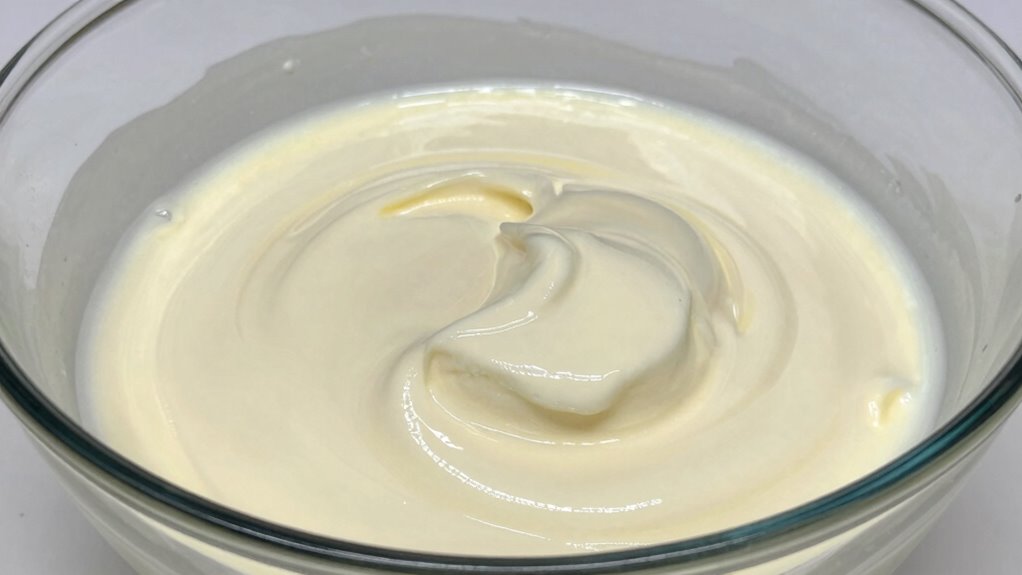
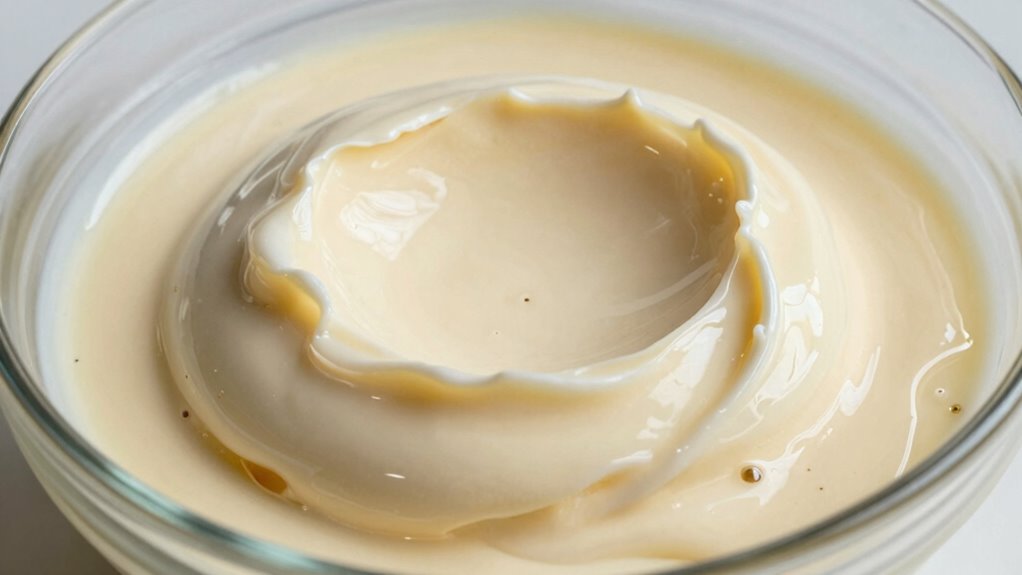
If your no-churn ice cream base separates before it freezes, it’s often due to improper ingredient ratios or mixing techniques. When this happens, you might notice a watery layer on top or a grainy texture after freezing. The root cause usually relates to how well your ingredients emulsify and how ice crystal formation progresses during freezing. Understanding these factors helps you prevent separation and achieve a smooth, creamy consistency.
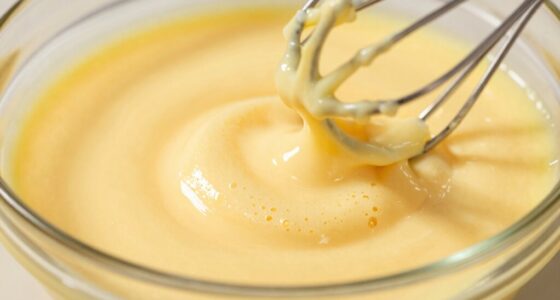
One common reason for separation is insufficient emulsification stability. When you combine heavy cream, sweetened condensed milk, and flavorings, you need to ensure they mix thoroughly to form a stable emulsion. If the fats in the heavy cream aren’t evenly distributed or if you don’t whip the cream properly, the mixture can become unstable. This instability can cause the fats to separate out as the mixture freezes, creating a greasy layer or uneven texture. To improve emulsification stability, whip the heavy cream until stiff peaks form, then gently fold it into your other ingredients. This process incorporates air and creates a more stable emulsion, reducing the risk of separation. Additionally, incorporating stabilizers like gelatin or cornstarch can further help maintain the mixture’s integrity during freezing. Properly incorporating stabilizers is crucial for maintaining consistency. Using the right stabilizer and understanding its role can significantly improve the texture and prevent separation. Ensuring the stabilizers are well-dispersed and properly activated can also enhance the overall stability of your base. Properly managing ingredient ratios is also essential; imbalanced ratios can upset the emulsion and lead to separation.
Whip heavy cream to stiff peaks and gently fold for a stable, creamy no-churn ice cream base.
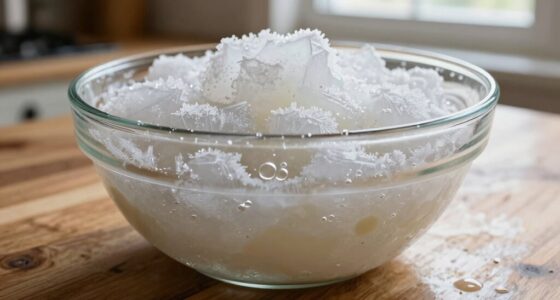
Ice crystal formation during freezing also plays a significant role. If your mixture contains too much water or if it’s not cooled quickly enough before freezing, large ice crystals form. These crystals can damage the emulsion, causing fats and other components to separate out. Rapid cooling helps in forming smaller ice crystals, which are less disruptive to the mixture’s structure. To avoid this, chill your base thoroughly in the fridge before freezing, or use a metal container that conducts cold more efficiently. Consistently stirring or agitating the mixture during the initial stages of freezing can also help prevent large ice crystals from forming, maintaining a smoother texture. Proper temperature management and quick freezing techniques can make a noticeable difference in preventing separation. Ensuring the mixture is at the right temperature before freezing is also a key factor in preventing separation. Additionally, using rapid freezing methods can help lock in the emulsion and reduce ice crystal size, further preventing separation.
As an affiliate, we earn on qualifying purchases.
Frequently Asked Questions
Can Ingredient Substitutions Cause Separation in No-Churn Ice Cream?
Yes, ingredient substitutions can cause separation in no-churn ice cream. If you swap out ingredients like cream or sweeteners, it might affect the texture and lead to separation. Flavor variations and ingredient freshness also play roles; using fresh, compatible ingredients helps maintain a smooth consistency. When you experiment with substitutions, stick to similar textures and flavors to prevent separation and guarantee your ice cream stays creamy.
How Does Overmixing Affect the Base’s Stability Before Freezing?
They say too much of a good thing can be bad, and that’s true for overmixing your no-churn base. Overmixing can cause texture alteration, making your ice cream base unstable before freezing. It creates air bubbles and disrupts the proper emulsification, leading to separation. Use gentle mixing techniques, stopping when ingredients are just combined, to maintain stability and prevent separation, ensuring a smooth, creamy final product.
Does the Type of Cream Influence Separation?
Yes, the type of cream influences separation. Cream texture varies—full-fat cream offers better ingredient stability and creaminess, reducing the risk of separation. Meanwhile, lighter or lower-fat creams may lack the same stability, making your no-churn base more prone to separating before freezing. Using the right cream guarantees a smooth, stable mixture, so opt for high-quality, full-fat cream for better results and fewer issues with separation.
Can Temperature Fluctuations During Storage Cause Separation?
Did you know that inconsistent temperatures can cause up to 40% of homemade ice creams to separate? Temperature fluctuations during storage definitely impact your no-churn base, leading to separation. When storage conditions lack temperature stability, the fats and liquids can separate, ruining texture and consistency. To prevent this, keep your ice cream at a steady temperature, ideally just below freezing, and avoid frequent opening or moving the freezer to maintain ideal storage conditions.
Is Separation a Sign of Spoiled or Bad Ingredients?
Separation isn’t necessarily a sign of spoiled ingredients, but it can affect flavor consistency and texture preservation. If your no-churn base separates, it might indicate uneven mixing or temperature changes, not spoilage. As long as it smells normal and looks fresh, it’s safe to use. To prevent this, guarantee thorough mixing and consistent storage temperatures, which help maintain the desired flavor and texture in your frozen treat.
Conclusion
So, here’s the sweet irony: you spent all that time perfecting your no-churn base, only to watch it separate before freezing. It’s almost poetic—your effort to avoid churning ends up causing the very problem you tried to dodge. But don’t worry; a little tweak in your ingredients or technique can turn this mishap around. After all, sometimes the best lessons come from the bits that don’t quite come together.
Fall Picks
fall essentials
As an affiliate, we earn on qualifying purchases.