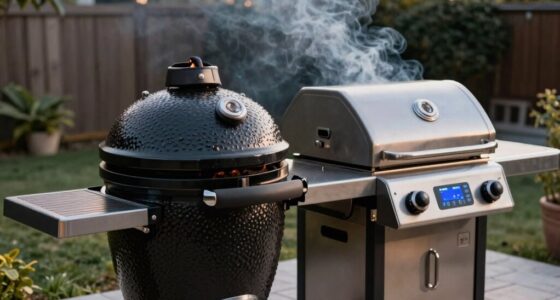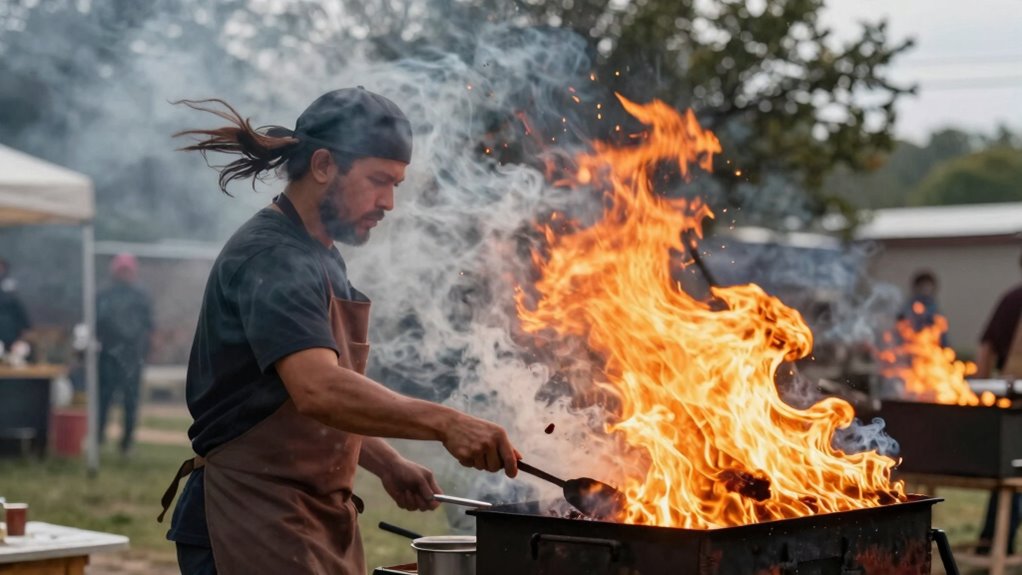

When you cook outdoors in wind, it disrupts your flames, making it hard to keep a steady heat. Wind whips flames around, dispersing heat and causing inconsistent cooking, while forcing you to use more fuel. This not only raises costs but also increases safety risks like flare-ups. To avoid these problems, you need effective wind protection and proper setup. Keep going to discover strategies that help you stay in control despite the breeze.
Key Takeaways
- Wind disrupts flame stability and disperses heat, making outdoor cooking less efficient and harder to control.
- Proper windbreaks and sheltered spots are essential to minimize heat loss during outdoor cooking.
- Wind increases fuel consumption as more energy is needed to maintain consistent cooking temperatures.
- Fluctuating flames due to wind heighten safety risks, including flare-ups and accidental fires.
- Recognizing and managing wind patterns helps prevent heat loss and ensures successful outdoor cooking.

Have you ever tried cooking outdoors on a windy day? If so, you’ve likely noticed how the wind impact can drastically change your cooking experience. Wind can whip around your grill or stove, dispersing heat and making it harder for your flames to stay steady. It’s more than just a nuisance; it’s a real obstacle that affects how efficiently your equipment works. When the wind blows strongly, your heat source struggles to maintain consistent temperature levels, forcing you to use more fuel to keep your food cooking evenly. That’s because the wind steals heat away from your flame or burner, forcing you to burn more fuel to compensate. This increased fuel consumption isn’t just inconvenient—it’s costly, especially if you’re out camping or cooking in an area where fuel supplies are limited.
The impact of wind on your outdoor cooking isn’t just about fuel efficiency, either. It can lead to uneven cooking, where some parts of your meal are overdone while others remain undercooked. You might find yourself constantly adjusting the grill lid or repositioning your stove, trying to shield the flame from gusts. All of these efforts are attempts to counteract the heat loss caused by the wind. But despite your best efforts, the wind often wins, sapping heat and making it harder to reach and sustain the desired cooking temperature. Recognizing heat loss mechanisms and understanding the effects of wind can help you better prepare for outdoor cooking challenges and improve your overall experience. Knowing how to manage these factors can also help you maximize fuel efficiency and ensure your meals turn out just right. Additionally, understanding wind patterns can assist in choosing the best location and setup for cooking outdoors.
Moreover, the wind’s effect goes beyond just heat loss—it can also influence your safety. Fluctuating flames and unpredictable gusts increase the risk of flare-ups or accidental fires. That’s why it’s crucial to find ways to minimize wind impact, like setting up windbreaks or choosing a sheltered spot to cook. Not only will this help you maintain better control over your heat source, but it will also improve your fuel efficiency. When your flames stay steady, you use less fuel and get better results in less time. So, if you’re planning an outdoor cooking session, keep the wind in mind. Preparing for its effects can mean the difference between a successful meal and a frustrating, fuel-draining ordeal.

Grill Cover, 58 inch BBQ Gas Grill Cover for Outdoor Grill, Waterproof, Anti-UV, Rip-Proof, Fade Resistant Material, Barbecue Cover with Hook-and-Loop Straps & Adjustable Hem Drawstring, Black
- Waterproof and Weather Resistant: Protects against rain, dust, and UV
- Secure Fit and Windproof: Adjustable straps and drawstring ensure snug fit
- Universal Size Fit: Fits grills up to 58 inches wide
As an affiliate, we earn on qualifying purchases.
As an affiliate, we earn on qualifying purchases.
Frequently Asked Questions
How Can I Prevent Wind From Extinguishing My Outdoor Flame?
To prevent wind from extinguishing your outdoor flame, use windproof cookware designed to shield the flame and improve flame stabilization. Position your stove or grill in a sheltered spot, like behind a windbreak or natural barrier. Adjust the flame gently to keep it steady, and consider using a windscreen to block gusts. These steps help maintain consistent heat, ensuring your outdoor cooking stays efficient despite windy conditions.
What Types of Outdoor Stoves Are Most Wind-Resistant?
Think of wind-resistant outdoor stoves as castles with sturdy walls. Cast iron and stainless steel stoves are your best bet because their materials handle wind better. Look for design features like wind shields, wind guards, or enclosed chambers that block gusts, turning your cooking adventure into a cozy indoor feast outdoors. These features help retain heat, making your stove a reliable partner even when the weather tries to play rough.
Does Wind Affect Cooking Times Significantly?
Yes, wind can considerably affect cooking times by increasing heat dissipation and creating wind chill. When wind blows, it strips away the heat around your cookware, causing your food to cook slower. You might notice longer cooking times and uneven heating. To minimize this, shield your stove with windbreaks or use wind-resistant cookware, which helps retain heat and guarantees more consistent cooking despite the breeze.
Are There Specific Clothing Items to Protect Against Wind Heat Loss?
Yes, wearing windproof clothing helps prevent heat loss, keeping you warmer during outdoor cooking in windy conditions. Opt for windproof jackets or pants to block the chill. Layer insulating clothes underneath, like thermal shirts or fleece, to trap heat. These insulating layers work together with windproof gear to maintain your body warmth, making it more comfortable and safer while cooking outside in gusty weather.
How Can I Create a Windbreak for Outdoor Cooking Areas?
You can create a windbreak by using natural barriers like bushes or trees, or setting up portable screens made of fabric, wood, or metal. These materials offer wind resistance, shielding your cooking equipment from gusts that sap heat. Setting up a barrier close to your cooking area guarantees consistent heat, making outdoor cooking more enjoyable and efficient. Just make sure your windbreak is sturdy and properly positioned.
Conclusion
So next time you fire up your outdoor grill, remember wind’s sneaky dance. It’s like trying to light a candle in a breeze—your flames flicker and dance, stealing away heat like thieves in the night. With a little planning, you can tame the wind’s mischief, turning chaos into cozy warmth. Embrace the challenge, and soon you’ll be savoring perfectly cooked bites, even when the wind tries to play tricks on your culinary adventure.