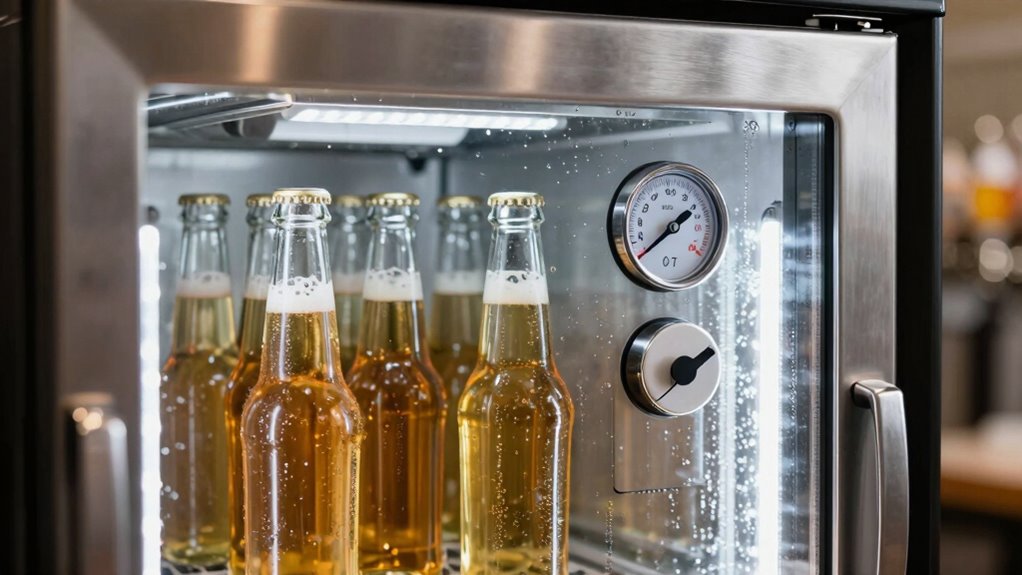

You need to accurately match your kegerator’s temperature with the right CO₂ pressure to keep your beer fresh and well-carbonated. As temperature rises, CO₂ becomes less soluble, so you must adjust the pressure accordingly—don’t guess. Properly balancing these settings ensures your beer won’t go flat or become overly fizzy. Paying close attention to this relationship helps prevent off-flavors and maintains quality from first to last pour. Keep going to discover how to fine-tune your setup for perfect drafts.
Key Takeaways
- Proper temperature and pressure settings ensure consistent carbonation and prevent over- or under-carbonation issues.
- CO₂ solubility decreases as temperature rises, requiring pressure adjustments to maintain optimal carbonation levels.
- Guessing settings can lead to flat or overly fizzy beer, compromising flavor and overall quality.
- Regularly monitoring and fine-tuning temperature and pressure preserves beer freshness and flavor profile.
- Accurate matching enhances the draft experience by ensuring proper aroma, mouthfeel, and carbonation stability.
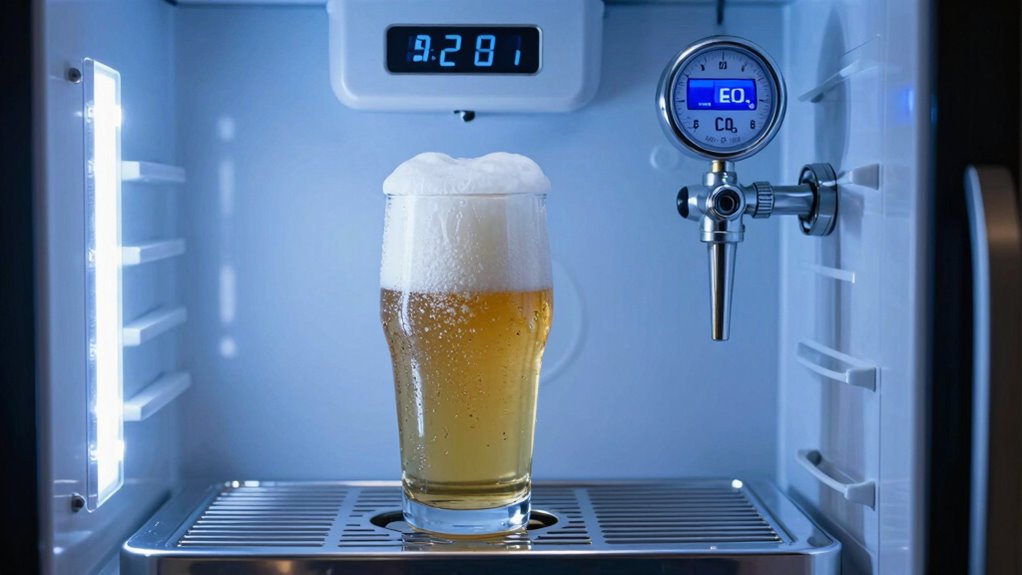
Have you ever wondered how to keep your beer perfectly fresh and flavorful in your kegerator? The key lies in matching the right temperature with the correct CO₂ pressure. If you get these settings wrong, you risk compromising your beer flavor and disrupting carbonation stability, which are essential to a great draft experience. The temperature inside your kegerator influences how your beer tastes, how it maintains its carbonation, and how long it stays fresh. If it’s too cold, the beer can become over-carbonated or develop off-flavors. If it’s too warm, the beer may lose its carbonation, becoming flat and dull. Finding that perfect balance means understanding how temperature and CO₂ pressure work together.
Your CO₂ pressure needs to be adjusted based on the temperature inside your kegerator. As the temperature rises, CO₂ becomes less soluble, so you’ll need to increase the pressure to keep the beer properly carbonated. Conversely, if you lower the temperature, you may need to decrease the pressure to prevent over-carbonation. This matching process isn’t guesswork; it’s based on the relationship between temperature and pressure specified for your keg system. Using a regulator with precise adjustments allows you to fine-tune these settings, ensuring your beer maintains its intended carbonation level. Properly matched temperature and pressure keep the beer’s natural flavors in balance, preserving its profile from the first pour to the last. Understanding the relationship between temperature and pressure is crucial for maintaining optimal carbonation and flavor integrity. Additionally, knowing how to adjust settings correctly can help prevent common issues and improve your overall draft system performance. Regularly monitoring these parameters helps you optimize the carbonation process, ensuring consistent quality.
When you set the right temperature and CO₂ pressure, you’re not just maintaining carbonation stability—you’re also protecting the beer’s flavor integrity. Proper carbonation enhances the taste profile, releasing aroma compounds and delivering a smooth, satisfying mouthfeel. If the pressure is too high or too low for the temperature, you’ll notice inconsistencies: overly fizzy beer or flat, dull brews. Both situations diminish the quality and enjoyment of your draft. Additionally, understanding the relationship between temperature and pressure is crucial for optimal beer serving. By carefully adjusting your kegerator’s temperature and pressure settings, you ensure your beer remains at its freshest, most flavorful state. Regularly monitoring and adjusting these settings helps prevent common issues like over-carbonation or flat beer, ensuring a consistently enjoyable experience.
As an affiliate, we earn on qualifying purchases.
Frequently Asked Questions
How Often Should I Recalibrate My Kegerator’s Thermostat?
You should recalibrate your kegerator’s thermostat every six months to guarantee accurate temperature control. Check your temperature sensors regularly for any signs of malfunction or drift. Calibration frequency depends on usage and environmental conditions; if you notice inconsistent temperatures, calibrate sooner. Proper calibration helps maintain ideal beer quality and prevents spoilage. Use a reliable thermometer during calibration, and follow your kegerator manufacturer’s instructions for best results.
Can Incorrect Co₂ Pressure Cause Beer Foaming Issues?
Incorrect CO₂ pressure can definitely cause beer foaming issues. If the pressure’s too high, you’ll get excessive foaming, while too low causes flat beer. CO₂ leaks or poor kegerator insulation can lead to inconsistent pressure, worsening foaming problems. Regularly check for leaks and guarantee good insulation. Proper pressure regulation keeps beer carbonated correctly, preventing foaming and maintaining ideal freshness and taste.
What Are Signs of Improper Temperature and Pressure Balance?
You’ll notice signs of improper temperature and pressure balance that feel like a rollercoaster—constant foaming, inconsistent pour, or flat beer. Temperature imbalance causes the beer to either be too warm or too cold, while pressure mismatch leads to excessive foaming or flatness. If your beer isn’t pouring smoothly or there’s persistent foaming, it’s a clear sign you need to check and adjust both temperature and CO₂ pressure to match perfectly.
Is It Necessary to Adjust Pressure When Changing Beer Styles?
Yes, you should adjust pressure when changing beer styles to maintain ideal beer flavor and carbonation stability. Different styles require different carbonation levels, so tweaking the CO₂ pressure ensures the beer’s taste stays consistent and prevents over or under-carbonation. By adjusting pressure accordingly, you help preserve the intended flavor profile and keep the beer fresh, guaranteeing a better drinking experience every time you switch styles.
How Do Ambient Room Temperature Fluctuations Affect Pressure Settings?
Ambient room temperature fluctuations can impact your kegerator’s pressure settings because higher temperatures increase CO₂ pressure, while cooler temps lower it. Changes in humidity levels and insulation effectiveness also influence how well your kegerator maintains stable conditions. To keep your beer tasting perfect, regularly monitor temperature shifts, and adjust the pressure accordingly. Proper insulation helps minimize temperature swings, ensuring consistent pressure regardless of room temperature changes.
Conclusion
Think of your kegerator as a finely tuned orchestra, where temperature and CO₂ pressure are the musicians that must play in harmony. When you match these settings correctly, you create a symphony of perfect pour and fresh flavor. Don’t guess or leave it to chance—adjust with intention. When everything’s in tune, you’ll enjoy a steady stream of cold, crisp beer, making every sip a well-composed masterpiece worth savoring.