To make your ice cream more scoopable without “magic” additives, focus on proper freezing techniques, storage, and natural stabilizers. Keep your freezer at around 0°F and store your ice cream in airtight containers to prevent large crystals. Incorporate ingredients like cornstarch, egg yolks, or gelatin to improve texture naturally. Using gentle mixing during freezing and softening before serving also helps. For practical tips that get your ice cream perfectly scoopable, learn the key adjustments and tricks ahead.
Key Takeaways
- Store ice cream at around 0°F (-18°C) to prevent large ice crystal formation and maintain a softer, scoopable texture.
- Use natural stabilizers like cornstarch, egg yolks, or gelatin to improve creaminess without artificial additives.
- Chill the mixture thoroughly before freezing and stir regularly during initial freezing to break up ice crystals.
- Keep ice cream in airtight containers with space for expansion to prevent freezer burn and texture hardening.
- Slightly soften ice cream with warm water or a spoon before scooping for easier serving without melting.
Why Does Ice Cream Harden in the Freezer?
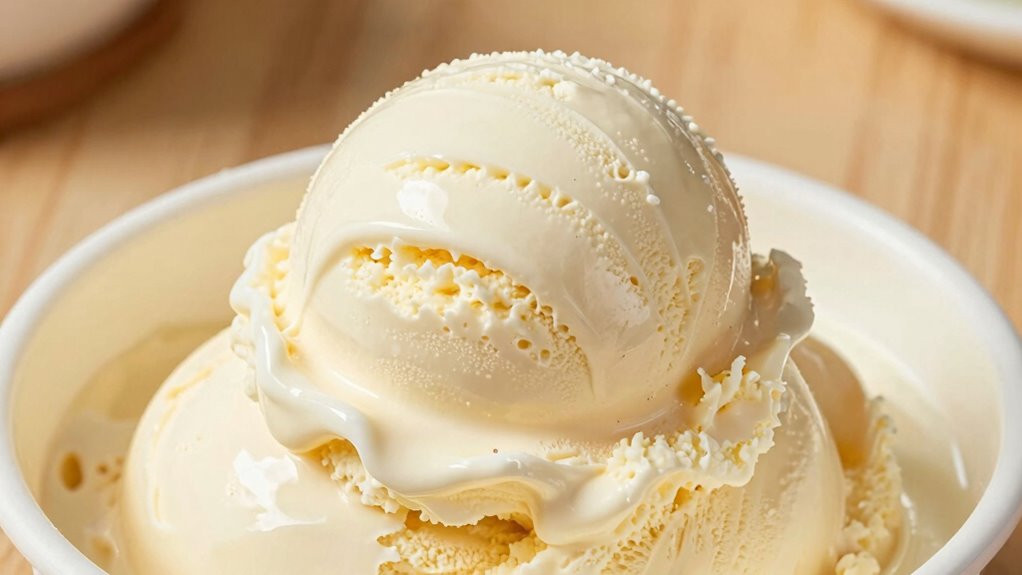
Have you ever wondered why ice cream becomes so hard after it’s been in the freezer? The main reason is the ice cream texture changes as it cools, mainly due to freezer temperature. When the freezer gets too cold, typically below 0°F (-18°C), ice crystals grow larger, making the ice cream firmer and harder to scoop. This happens because lower temperatures cause the fat and water in the mix to freeze more completely, creating a dense, icy structure. If you want softer ice cream, keeping your freezer temperature slightly higher—around 0°F or just below—helps prevent these large ice crystals from forming. As a result, you get a creamier, more scoopable texture straight from the freezer.
How to Freeze and Mix for Softer Ice Cream
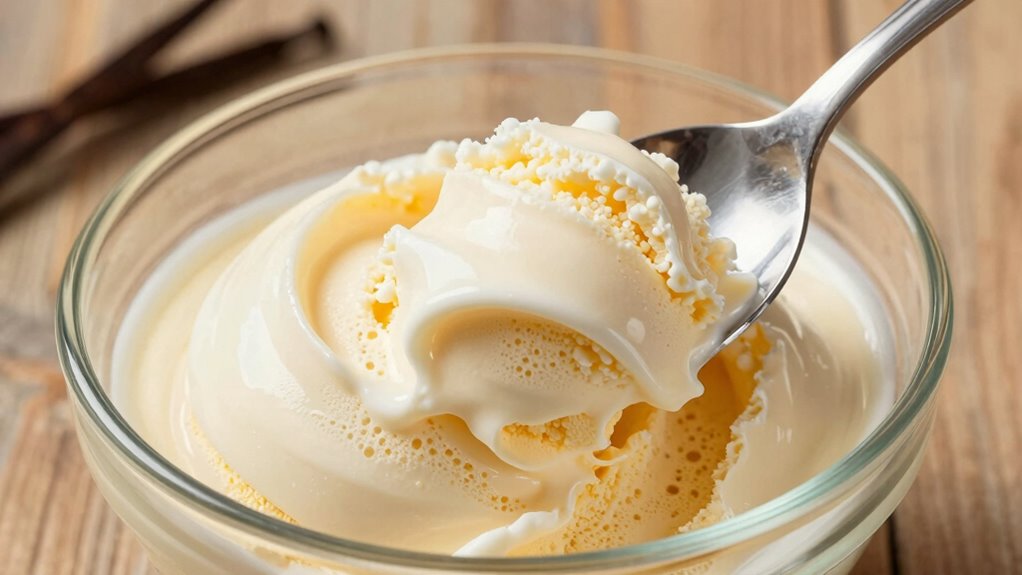
To keep your ice cream soft and scoopable, use proper freezing techniques that prevent it from becoming too hard. Gentle mixing during the freezing process helps create a smoother texture without incorporating air or causing ice crystals. Following these methods to enjoy ice cream that’s easy to serve and deliciously creamy. Additionally, maintaining the correct temperature settings during storage ensures optimal softness and prevents the formation of ice crystals. Using a consistent freezer temperature helps maintain a stable environment, which is essential for achieving a scoopable consistency over time. Incorporating energy-efficient cooling methods can also contribute to better control over the freezing process, ensuring your ice cream remains perfectly soft. Proper freezing techniques are vital for preserving the ideal texture and preventing unwanted ice crystal development. Understanding nanotechnology can lead to innovative solutions for improving ice cream texture through advanced materials and coatings that influence ice crystal growth.
Proper Freezing Techniques
Proper freezing techniques are essential for achieving scoopable, creamy ice cream. To enhance flavor infusion, avoid overfilling your container, leaving space for expansion and easier scooping. Use an airtight container to prevent freezer burn and guarantee consistent texture. When making ingredient substitutions, consider the fat and sugar content, as they influence freezing point and creaminess. Chill your mixture thoroughly before freezing to promote even freezing and a smoother texture. Stir the ice cream at regular intervals during the initial freezing phase to break up ice crystals and keep it softer. Properly managing temperature and incorporating flavor infusion strategies, like adding fruit purees or extracts, helps you achieve a more scoopable consistency without sacrificing flavor. Additionally, understanding sound vibrations can enhance overall health and well-being, indirectly benefiting your patience and precision in the kitchen.
Gentle Mixing Methods
Gently blending your ice cream during freezing helps prevent large ice crystals from forming, resulting in a softer, more scoopable texture. Using slow churning methods encourages even distribution of air and ingredients, enhancing creaminess. Regular gentle mixing breaks up ice crystals and keeps the mixture uniform, so your ice cream stays soft. Incorporating temperature control during freezing can also make a significant difference in achieving optimal softness. Additionally, maintaining consistent freezing temperatures minimizes the formation of large ice crystals, contributing to a smoother texture. Proper equipment maintenance ensures that your freezer and mixing devices operate efficiently, aiding in the production of high-quality ice cream. Understanding insulation of your freezer can further help maintain steady temperatures, preventing temperature fluctuations that lead to larger crystals. Employing proper storage techniques can also help preserve your ice cream’s desired consistency over time.
Use Kitchen Staples as Natural Stabilizers
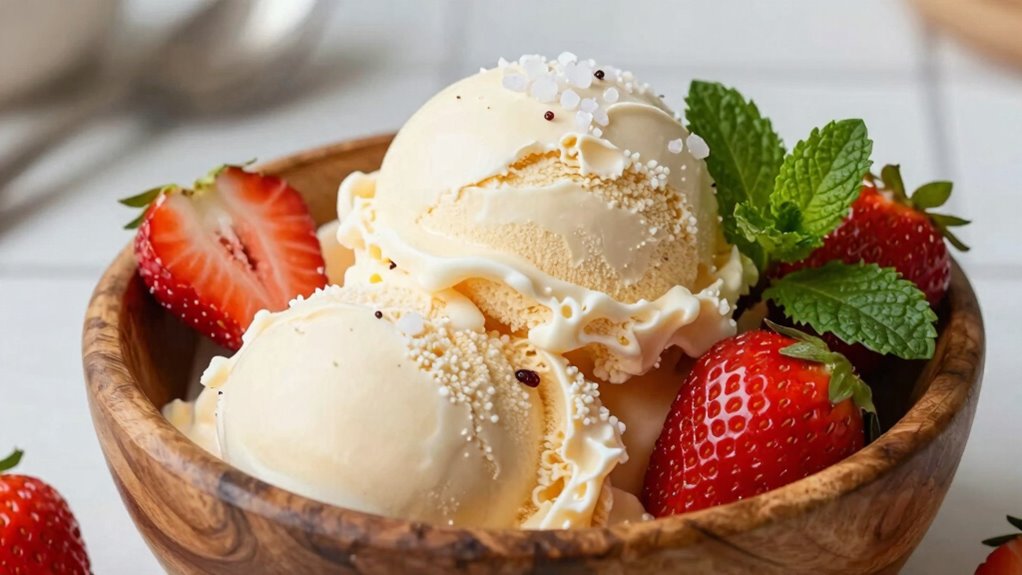
Using kitchen staples as natural stabilizers can help improve the texture of your homemade ice cream. Items like gelatin, cornstarch, or egg yolks act as natural stabilizers, preventing ice crystals from forming and maintaining a smooth consistency. For instance, a small amount of cornstarch mixed into your base can thicken it slightly and enhance scoopability. Egg yolks add richness and stabilize the mixture without artificial additives. Gelatin, when dissolved properly, creates a gel-like structure that helps keep the ice cream creamy and scoopable. These kitchen staples are easy to incorporate and cost-effective, making them ideal natural stabilizers. Incorporating evidence‑based techniques can further ensure your ice cream maintains a desirable texture. Additionally, understanding ice crystal formation can help you fine-tune your method for better results. Recognizing the importance of proper storage temperature can also significantly influence ice crystal development. Moreover, controlling freezing speed during storage can reduce ice crystal size and improve texture. Using ingredients with antimicrobial properties may also help prevent spoilage and extend shelf life. By using them thoughtfully, you can achieve a better texture without relying on synthetic ingredients, resulting in a more natural, enjoyable ice cream experience.
Simple Tips to Soften Ice Cream After Freezing
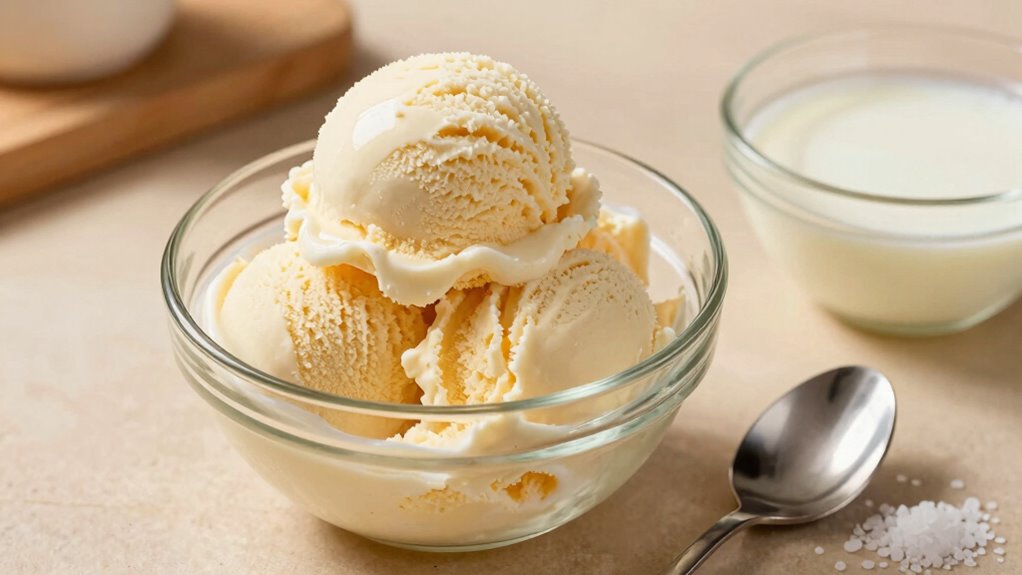
If your ice cream is too hard to scoop, a simple warm water technique can help soften it quickly. Just dip the outside of the container in warm water for a few seconds before opening, and it’ll be easier to serve. Also, storing ice cream properly in airtight containers prevents it from freezing too solid and makes softening easier later on. Using smart appliances that monitor temperature can further optimize storage conditions for ideal softness. Additionally, understanding proper storage methods can help maintain the ice cream’s texture over time, making softening even less of a hassle. Implementing connected home technology such as temperature sensors can help maintain consistent storage conditions, further improving your ice cream experience.
Warm Water Technique
When your ice cream is too hard to scoop, the warm water technique offers a quick fix. Hold the container briefly under warm (not hot) running water or run warm water over a spoon that’s about to scoop. This helps gently warm the surface, making it more scoopable without melting it entirely. Remember, proper temperature control is key—don’t let the water be too hot, or you risk melting the ice cream too much. Also, adjusting ingredient ratios during freezing can influence hardness, but this method is perfect for immediate softening. Here’s a quick comparison:
| Technique | Best For |
|---|---|
| Warm Water Technique | Quick softening before serving |
| Temperature Control | Long-term scoopability |
| Ingredient Ratios | Preventing hardening initially |
Use this method to enjoy your ice cream without fuss. Additionally, consistent freezing techniques can help maintain optimal scoopability over time.
Proper Storage Practices
Proper storage is essential for maintaining ice cream’s ideal texture, especially if you want to soften it quickly after freezing. To preserve flavor, keep your ice cream in airtight containers that prevent moisture and air exposure, which can cause freezer burn and flavor loss. Choose containers with tight-fitting lids or resealable options to minimize air contact and protect the delicate flavor profile. Store ice cream at a consistent, cold temperature, ideally around 0°F (-18°C), to prevent texture changes. Avoid frequent opening and closing of the freezer, as temperature fluctuations can make ice cream harder and less scoopable. Maintaining a stable freezer environment reduces temperature fluctuations, which helps keep the ice cream consistently scoopable. Additionally, using proper storage techniques can help prevent ice crystal formation that affects texture and scoopability. Incorporating best practices for freezing can further improve the ice cream’s softness and overall quality.
Troubleshoot Scoopability Problems
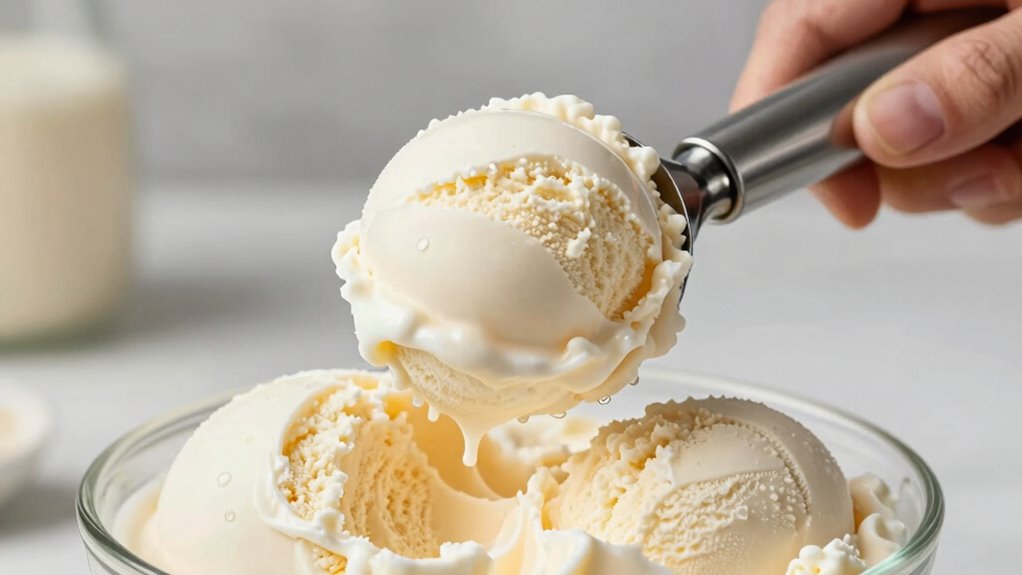
Troubleshooting scoopability issues often involves identifying how the ice cream’s texture has changed. If your ice cream is too hard or crumbly, consider a product substitution like adding a small amount of alcohol or glycerin to improve texture. These ingredients act as natural texture enhancers, preventing ice crystals from becoming too large and making the ice cream easier to scoop. If your ice cream is too soft or melts quickly, review your storage practices and ingredient ratios, especially fats and stabilizers. Sometimes, simply adjusting the ratio of sugar or fat can serve as a form of texture enhancement, helping you achieve a more scoopable consistency. By diagnosing these texture issues and experimenting with ingredient adjustments, you can improve scoopability without relying on “magic” additives.
Key Factors for Perfectly Scoopable Homemade Ice Cream
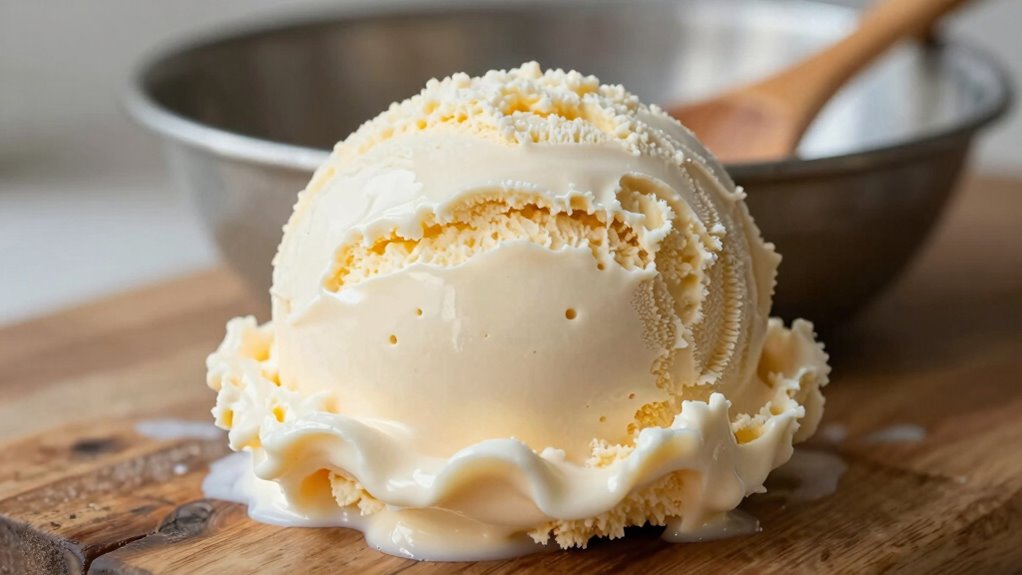
Achieving perfectly scoopable homemade ice cream depends on balancing several key factors, including ingredient ratios, churning process, and storage methods. First, consider flavor combinations that influence texture; rich, high-fat ingredients create a creamier consistency, while lighter flavors may require ingredient substitutions like milk instead of cream. Proper churning incorporates air and prevents ice crystal formation, making scooping easier. Also, avoid overfreezing—store the ice cream at just the right temperature to keep it soft enough for easy scooping. Adding stabilizers or small tweaks in ingredient ratios can improve texture without magic additives. By paying attention to these factors, you guarantee your homemade ice cream remains smooth, creamy, and scoopable straight from the freezer.
Frequently Asked Questions
Can Adding Alcohol Improve Ice Cream Scoopability Naturally?
Adding alcohol can improve ice cream scoopability naturally because alcohol’s effects lower the freezing point, making the ice cream softer. You can incorporate natural additives like fruit liqueurs or flavored spirits to achieve this. Just remember, too much alcohol can prevent freezing altogether, so add it cautiously. By balancing alcohol’s effects with natural ingredients, you can get a scoopable, delicious ice cream without relying on artificial “magic” additives.
How Does Fat Content Affect Ice Cream Hardness?
You might think more fat makes ice cream richer, but it actually affects hardness through fat stability and cream emulsification. Higher fat content creates a smoother, more stable emulsion, reducing ice crystal formation and making it softer. So, by increasing fat, you naturally enhance scoopability without additives, as the fat’s ability to stabilize the mixture keeps your ice cream delightfully creamy and less hard, even without “magic.”
Are There Specific Natural Ingredients That Prevent Ice Crystallization?
You can prevent ice crystallization by using natural stabilizers like agar-agar or pectin, which help keep ice crystals small. Anti-crystallization agents such as glycerol or honey also work naturally to maintain a smooth texture. Incorporating these ingredients into your ice cream mixture creates a barrier against large crystals, ensuring your ice cream stays scoopable and creamy without relying on artificial additives.
What Role Does Air Incorporation Play in Scoopability?
Ever wondered how air incorporation improves scoopability? When you add air bubbles during churning, you create a lighter, softer texture that’s easier to scoop. This process, known as overrun, enhances texture improvement by reducing density and preventing ice crystallization. By intentionally trapping air, your ice cream becomes less hard and more manageable, making every scoop smoother and more enjoyable without needing artificial additives.
How Does Storage Temperature Impact Ice Cream Softness Over Time?
You’ll notice that storage temperature directly affects ice cream softness over time. Keep it at a slightly higher temperature, around -10°C, to slow down ice crystal growth, which helps maintain a softer texture. If you store it too cold, larger ice crystals form, making the ice cream harder and less scoopable. Consistent, ideal storage temp prevents excessive ice crystal growth, ensuring your ice cream stays creamy and easy to serve.
Conclusion
To keep your homemade ice cream scoopable, focus on natural stabilizers and proper freezing techniques. Did you know that adding just a teaspoon of cornstarch can reduce ice crystal formation by 30%, making your ice cream softer? By understanding how ingredients and storage impact texture, you’ll enjoy perfectly scoopable ice cream every time—no magic needed. Keep experimenting with these tips, and you’ll master the art of irresistible, easy-to-scoop frozen treats.