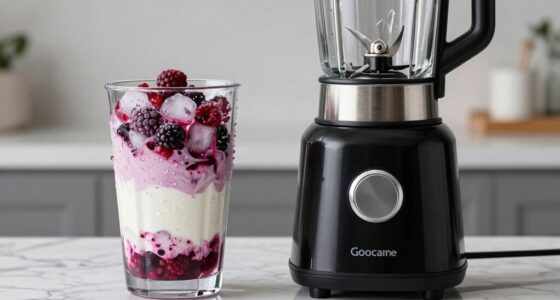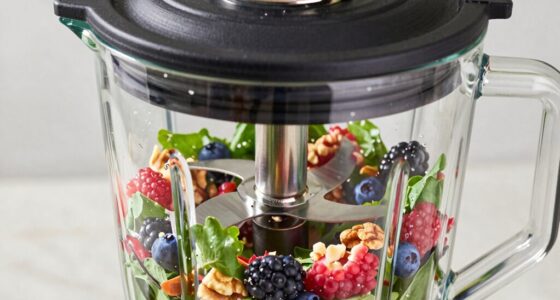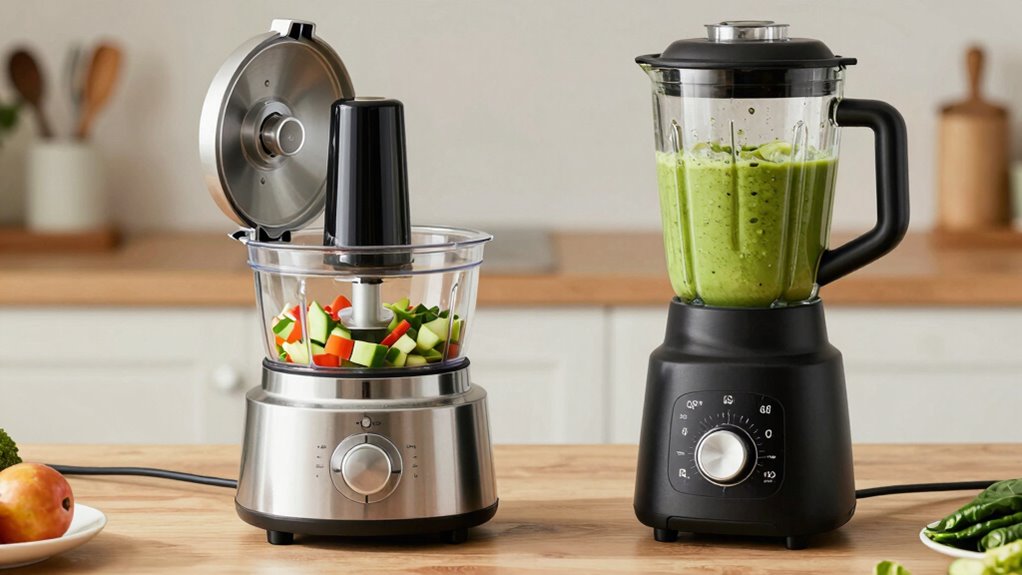
If you’re looking for smooth, homogenous mix-ins like smoothies or purees, a blender is your best choice since it orients toward creating consistent textures quickly. On the other hand, if you prefer chunkier or textured ingredients such as shredded vegetables or chopped nuts, a food processor works better. Both tools have their strengths depending on your desired result. To discover which appliance suits your mix-ins needs better, explore the detailed differences below.
Key Takeaways
- Food processors excel at chopping, slicing, and kneading, creating textured, chunky mix-ins ideal for salads and toppings.
- Blenders produce ultra-smooth mixtures, perfect for creamy sauces, dips, or blended ingredients in mix-ins.
- For incorporating whole ingredients like nuts or vegetables with texture, food processors offer better control.
- If you prefer finely processed, homogeneous mix-ins, a blender provides a more consistent result.
- The choice depends on whether you want chunky, textured additions or smooth, well-blended ingredients.
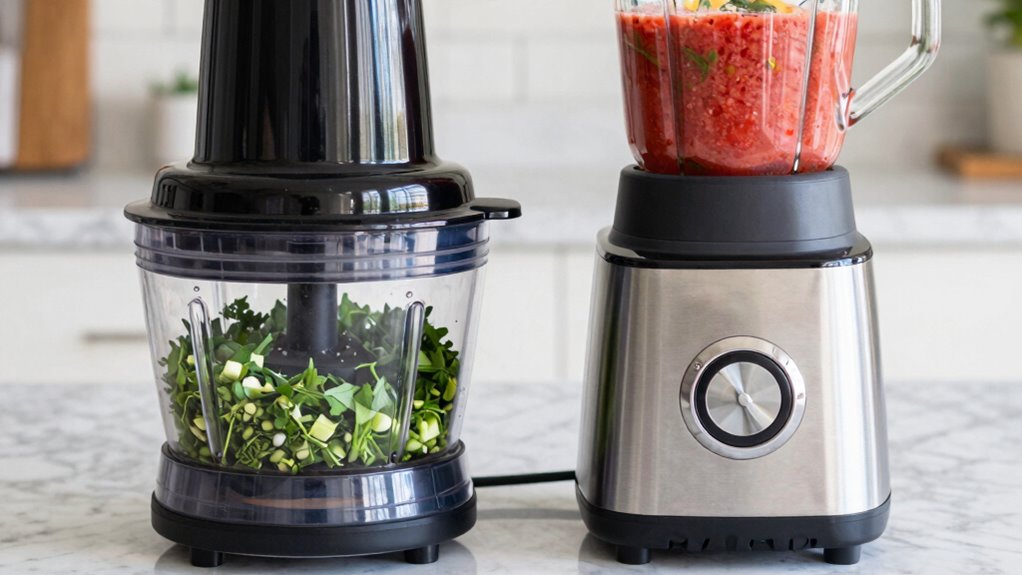
When choosing between a food processor and a blender, understanding their distinct functions can help you make the right decision for your kitchen needs. If you’re looking to whip up smooth smoothies or pureed soups, a blender is your go-to. But if you want to chop vegetables, knead dough, or prepare more textured ingredients, a food processor offers versatility. Both appliances can help you create delicious mix-ins, but they do so differently, especially when it comes to nutritional benefits and cleaning convenience.
A blender excels at breaking down ingredients into smooth, homogenous textures, making it ideal for smoothies, purees, and drinks. Because it processes ingredients thoroughly, it can preserve more of the nutritional benefits by minimizing oxidation, which can degrade nutrients during blending. Its sealed container means less exposure to air, helping retain vitamins and antioxidants. When it’s time to clean, blenders are generally straightforward—just add some water and soap, blend briefly, then rinse. Many models even have dishwasher-safe parts, saving you time and effort. This ease of cleaning makes a blender particularly convenient if you use it frequently for daily smoothies or soups.
A food processor, on the other hand, is designed for chopping, slicing, grating, and kneading. It handles thicker mixtures and more textured ingredients, perfect for preparing mix-ins like chopped nuts, shredded cheese, or chunky salsa. While it may not produce the ultra-smooth consistency of a blender, it offers a different set of nutritional benefits. For instance, by allowing you to incorporate a wider variety of whole ingredients—like chopped vegetables or nuts—you can boost the fiber, vitamins, and minerals in your dishes. Its versatility encourages more diverse, nutrient-rich recipes.
When it comes to cleaning convenience, food processors can be a bit more involved. Their multiple attachments and sharp blades require careful cleaning to avoid injury and ensure all residue is removed. However, many parts are dishwasher safe, and some models include cleaning brushes to make the process easier. Blenders typically have fewer parts, and their containers are usually easier to rinse or load into the dishwasher. This simplicity can be a significant advantage if you prioritize quick cleanup after preparing your mix-ins.
Ultimately, your choice depends on what you value most: the smooth, nutrient-preserving blends of a blender or the textured versatility and mix-in options of a food processor. Both can enhance your cooking routine, but understanding their unique strengths ensures you pick the right tool for your kitchen.
Frequently Asked Questions
Can Food Processors Crush Ice Better Than Blenders?
A food processor can crush ice, but it usually doesn’t do it as effectively as a blender. Blenders are designed with powerful blades that can handle ice, creating fine, consistent textures. If you try crushing ice in a food processor, you might experience uneven texture alteration or difficulty breaking the ice down completely. For smooth crushed ice, a blender is your best bet, ensuring quick results with better texture consistency.
Which Appliance Is More Energy-Efficient for Small Batch Prep?
A blender generally uses less energy and is more power-efficient for small batch prep. It’s designed to handle quick, light tasks without consuming much energy, making it ideal if you want to save on electricity. Food processors, on the other hand, tend to have higher energy consumption due to their powerful motors, which are better suited for larger, tougher jobs. So, for small, quick tasks, a blender’s your best choice.
Are There Safety Differences Between Using a Food Processor and Blender?
Using a food processor is like handling a sharp knife—you need to be cautious. Both appliances have safety features, but food processors often come with more appliance hazards like exposed blades. Always unplug before cleaning or changing attachments to prevent injury. For food safety, verify your appliance is clean and dry before use. Following manufacturer instructions minimizes risks and keeps you safe while preparing your favorite mix-ins.
How Do Maintenance Costs Compare for Food Processors and Blenders?
Maintenance costs for food processors tend to be higher because they have more complex parts that require regular cleaning and occasional repairs, increasing repair expenses. Blenders generally have lower cost maintenance, with simpler designs that are easier to clean and repair. You’ll find that over time, the repair expenses for blenders are usually less, making them more budget-friendly for routine use and minimal upkeep.
Can Either Appliance Prepare Hot Ingredients Safely?
Both appliances can handle hot ingredients, but you need to contemplate hot ingredient safety and appliance heating concerns. Blenders with vented lids are designed to release steam safely, making them better for hot liquids like soups and sauces. Food processors, on the other hand, aren’t typically built for hot ingredients because their sealed lids don’t accommodate steam well, risking damage or safety issues. Always check manufacturer guidelines before blending hot items.
Conclusion
So, here’s the twist: whether you choose a food processor or a blender, both promise perfect mix-ins—but honestly, neither is foolproof. You might spend hours debating which to buy, only to realize that sometimes, your favorite recipes just don’t fit neatly into either. Sometimes, the best mix-ins come from surprise experiments, not the right appliance. So go ahead, embrace the chaos—after all, isn’t that what cooking’s all about?