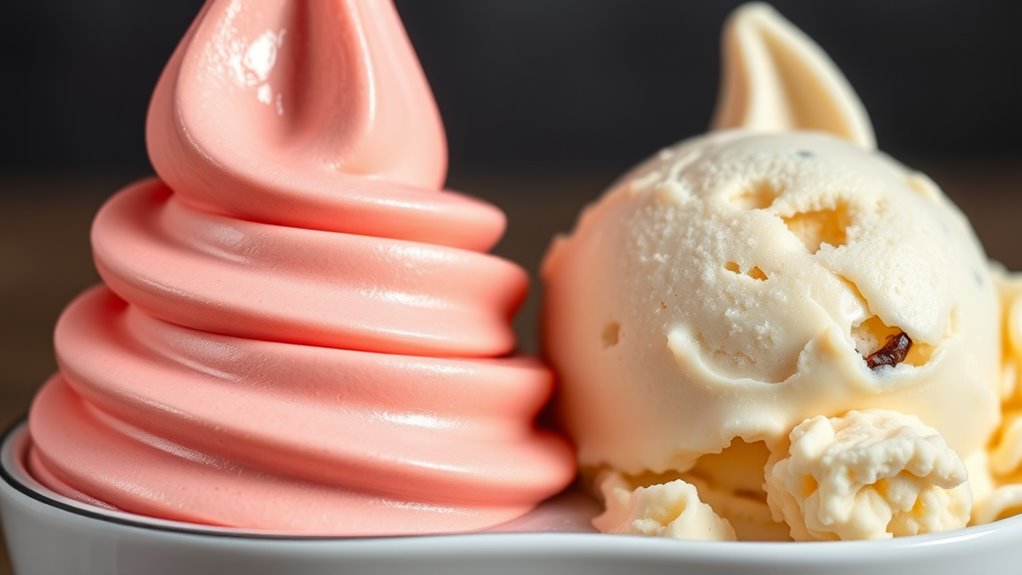

Soft serve mixes have more milk solids and stabilizers, making them creamier, smoother, and easier to dispense at warmer temperatures. They are crafted for quick, continuous servings and maintain a consistent flavor and texture, ideal for self-serve stations. Regular ice cream mixes focus on a firmer, richer, and more traditional taste, stored at colder temperatures for scooping. Want to find out how these differences impact your choice? Keep exploring to learn more.
Key Takeaways
- Soft serve mixes have higher milk solids and are dispensed at warmer temperatures for a creamy, smooth texture.
- They contain stabilizers and emulsifiers to maintain flavor and consistency during quick freezing and dispensing.
- Soft serve mixes require specialized equipment to serve at higher temperatures, unlike traditional ice cream.
- Regular mixes are formulated for longer shelf life, firmer texture, and traditional scooping presentation.
- Soft serve is ideal for high-turnover environments, emphasizing quick service and uniform texture, whereas regular ice cream offers a richer, traditional experience.

When choosing between soft serve mixes and regular ice cream mixes, understanding their differences can help you make the best choice for your needs. One of the main distinctions lies in their dairy content. Soft serve mixes typically contain a higher proportion of milk or milk solids, which gives them a creamier, smoother texture that’s specifically designed to be dispensed at softer temperatures. Regular ice cream mixes, on the other hand, often have a more balanced dairy-to-fat ratio, with a focus on maintaining a firmer consistency that can withstand longer storage times. This difference affects not only the mouthfeel but also how each type holds up over time and under different conditions.
Another key aspect to weigh is flavor stability. Soft serve mixes are engineered to maintain their flavor profile during the quick freezing and dispensing process. The formulas often include stabilizers and emulsifiers that help preserve flavor integrity, ensuring each serving tastes consistent and fresh, even after multiple servings. Regular ice cream mixes, while also formulated for stability, tend to be more resilient to temperature fluctuations during storage. Their flavor stability is designed to endure longer periods in deep freezers, making them suitable for bulk storage and extended shelf life. If you’re running a commercial operation or serving in a busy environment, these stability factors can influence your choice considerably.
Temperature plays an essential role, too. Soft serve mixes are designed to be served at a slightly higher temperature than traditional ice cream, which means they require a specialized machine that keeps them at the ideal consistency. This setup allows for quick, continuous serving without the need for hardening or extensive scooping. Regular ice cream mixes, however, are meant to be stored at colder temperatures, allowing them to harden into a scoopable form. This difference impacts not only the equipment needed but also your serving style and presentation.
Furthermore, the formulation of soft serve mixes often involves added stabilizers that improve texture and extend flavor stability during quick serving cycles. Regular ice cream mixes tend to emphasize a richer, more traditional dairy flavor, with ingredients that support their firmer texture and longer shelf life. As a result, soft serve mixes tend to be more forgiving in fast-paced environments, where quick turnaround and consistent texture matter most, while regular mixes suit those seeking a classic ice cream experience with a more substantial feel. Additionally, soft serve mixes are often designed to be easier to handle during the dispensing process, making them ideal for self-serve stations or busy retail settings.
Frequently Asked Questions
Can Soft Serve Mixes Be Used in Regular Ice Cream Machines?
You can use soft serve mixes in regular ice cream machines, but dairy compatibility is key. Soft serve mixes are formulated for quick freezing and smooth texture, offering flavor versatility. However, they might not churn properly in traditional machines designed for thicker, denser ice cream mixes. To get the best results, check the mix label and verify it’s suitable for your machine type and desired dairy compatibility.
Are Soft Serve Mixes Suitable for Dairy-Free Diets?
Imagine searching for a rainbow in a cloud—dairy-free alternatives can brighten your options. Soft serve mixes aren’t always suitable for dairy-free diets, as many contain milk or cream. Always check allergen considerations and ingredient labels, as some mixes are specially formulated without dairy. If you need a dairy-free treat, look for certified vegan or allergen-friendly soft serve mixes to enjoy safe, delicious desserts.
How Long Do Soft Serve Mixes Last Before Spoiling?
Your soft serve mix typically lasts about 6 to 12 months if stored properly. Check the shelf life on the packaging and follow storage guidelines closely—keep it in a cool, dry place, sealed tightly. Avoid exposure to heat or moisture, as these can spoil the mix faster. Proper storage guarantees your soft serve mix stays fresh longer, giving you delicious treats whenever you want.
Do Soft Serve Mixes Contain Stabilizers or Preservatives?
You’ll find that soft serve mixes often contain additive ingredients like stabilizers and preservatives, which improve shelf stability and texture. These additives help prevent ice crystal formation and extend freshness, allowing the mix to stay good longer. Unlike regular ice cream mixes, soft serve formulas are designed for quick serving and often include these stabilizers to maintain consistency, ensuring your soft serve remains smooth and flavorful even after some storage time.
Can Soft Serve Mixes Be Flavored or Customized Easily?
Flavor fascination fuels fun with soft serve mixes. You can easily explore exciting options by adding syrups, fruits, or extracts, making flavor customization simple and satisfying. The mix versatility allows you to craft classic vanilla or chocolate, or experiment with inventive infusions. Soft serve mixes are flexible, forgiving, and fantastic for personalized flavors, giving you the power to create customized treats that captivate your crowd’s cravings effortlessly.
Conclusion
In the end, choosing between soft serve mixes and regular ice cream mixes is like picking your favorite dance partner—each has its own charm. Soft serve mixes offer a smooth, playful experience that’s perfect for a quick, fluffy treat, while regular mixes bring a richer, more traditional indulgence. Whichever you choose, you’re in for a delightful experience. So go ahead, indulge a little, and let your taste buds enjoy the sweet dance of flavors.