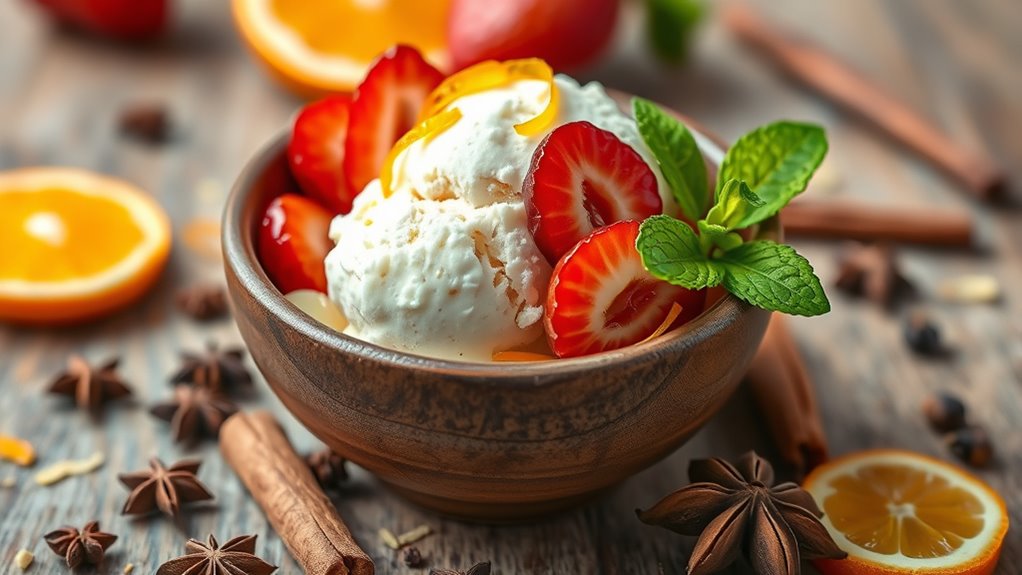

Incorporating seasonal fruits and spices into your ice cream enhances flavor, freshness, and vibrancy, making each bite a true taste of the season. You can highlight spring’s bright berries, summer peaches, fall’s apples and pumpkins, or winter’s cranberries and citrus, pairing them with complementary herbs and warming spices. Using ingredients at their peak preserves natural sweetness and adds warmth or brightness. Continue exploring to discover how each season’s unique ingredients can transform your ice cream creations.
Key Takeaways
- Incorporate seasonal fruits and spices at their peak freshness to enhance flavor and vibrancy.
- Use complementary ingredients like herbs and citrus to create balanced, complex ice cream profiles.
- Match spices such as cinnamon, ginger, or star anise with seasonal fruits for warmth and depth.
- Adjust flavors to reflect the seasonal mood, from light and refreshing in summer to rich and cozy in fall and winter.
- Prioritize water-based ingredients and thoughtful spice pairing to improve texture and consistency during colder months.
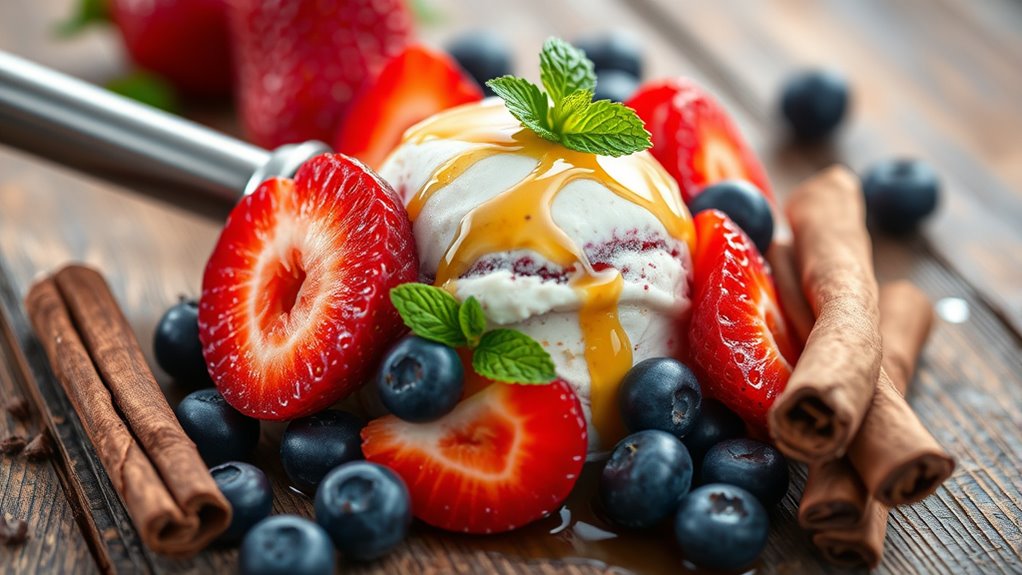
Throughout the year, incorporating seasonal ingredients into ice cream not only enhances its flavor but also connects you to the changing tastes of each season. When you select fresh fruits and spices at their peak, you create ice creams that are vibrant, aromatic, and perfectly aligned with the time of year. This approach elevates your dessert experience, making each scoop feel like a celebration of nature’s bounty.
In spring, think about bright, fresh flavors like strawberries, rhubarb, or cherries. These fruits lend themselves well to fruit pairings, where combining them with complementary ingredients enhances their natural sweetness. For example, mixing strawberries with basil or cherries with a hint of lemon creates a harmonious balance that’s both invigorating and complex. Spices like cardamom or a touch of ginger can add warmth and depth, transforming simple fruit into an extraordinary ice cream flavor. The key is to let the fruits shine while accentuating them with subtle spice combinations that complement their brightness without overpowering it.
Come summer, the focus shifts to cooling, juicy fruits such as peaches, blueberries, and melons. When you incorporate these into your ice cream, think about how fruit pairings can amplify their flavors. A hint of vanilla or a splash of lime can elevate the natural sweetness, while herbs like mint or basil add a fresh, aromatic note. Spices like cinnamon or allspice can add a cozy undertone, especially when paired with stone fruits like peaches or nectarines. These spice combinations create a layered flavor profile that makes your summer ice cream stand out. Using seasonal fruits at their peak ensures maximum flavor, and blending in complementary spices or herbs helps create a more complex, satisfying treat.
As fall arrives, apples, pears, and pumpkins become your go-to ingredients. Fruit pairings here often include warm spices such as cinnamon, nutmeg, and clove, which evoke the comforting essence of the season. You can enhance apple or pear flavors with a drizzle of caramel or a dash of ginger, resulting in a cozy, inviting ice cream. Pumpkin, combined with cinnamon and a hint of ginger or allspice, yields a classic fall flavor that’s both rich and aromatic. The key to successful seasonal ice cream during this time is balancing the natural sweetness of the fruits with the warmth of your spice combinations, creating a dessert that feels like a seasonal hug.
In winter, you might lean into heartier flavors like cranberries, pomegranates, or citrus. Fruit pairings with dark chocolate or a splash of bourbon can add depth, while spices like star anise or cloves evoke a festive mood. These spice combinations, paired with seasonal fruits, produce rich, warming ice creams perfect for cold-weather indulgence. Incorporating water-based flavors and ingredients can also help achieve the ideal texture and consistency for winter treats. Overall, by thoughtfully selecting seasonal fruits and spices, you craft ice creams that celebrate each part of the year while satisfying your taste buds with authentic, fresh flavors.
Frequently Asked Questions
How Do Seasonal Ingredients Affect Ice Cream Shelf Life?
Seasonal ingredients can decrease ice cream’s shelf life because their moisture and natural sugars may affect preservation techniques. You should focus on maintaining flavor stability by using proper storage, like airtight containers at consistent freezing temperatures. Fresh fruit and spices might cause quicker spoilage or flavor loss if not handled carefully. Regularly check for signs of freezer burn or texture changes, ensuring your ice cream stays fresh and delicious longer.
What Are the Best Storage Methods for Fresh Fruit in Ice Cream?
Ever wondered how to keep fruit fresh and flavorful in ice cream? You should store fresh fruit in airtight containers, maintaining cold temperatures to prevent spoilage. Using fruit preservation techniques like quick freezing and vacuum sealing helps lock in freshness. To enhance flavor infusion, add fruit at ideal stages during production. Do you realize proper storage not only preserves quality but also elevates your ice cream’s taste?
Can Seasonal Spices Be Used in Vegan or Dairy-Free Ice Creams?
Yes, you can definitely use seasonal spices in vegan or dairy-free ice creams. Try incorporating vegan spice blends or dairy-free flavoring options to enhance your desserts. Spices like cinnamon, nutmeg, and cardamom work beautifully and add warmth and depth. Just make certain your spice blends are free from animal products, and you’ll create a delicious, seasonal treat everyone can enjoy. Experimenting with these flavors keeps your ice creams fresh and exciting.
How Do You Balance Sweetness When Using Tart Seasonal Fruits?
To balance sweetness with tart seasonal fruits, you should focus on flavor pairing and sweetness adjustment. Taste your fruit first and then add sweeteners gradually—honey, agave, or maple syrup work well. Incorporate complementary flavors like vanilla, cinnamon, or a touch of salt to enhance sweetness naturally. Adjust until you achieve a harmonious balance, ensuring the tartness shines without overpowering the overall flavor.
Are There Health Benefits to Using Seasonal Ingredients in Ice Cream?
Using seasonal ingredients in ice cream offers nutritional benefits like vitamins, antioxidants, and fiber, which boost your health. Plus, fresh fruits and spices enhance flavor naturally, reducing the need for added sugars. This not only makes your treat more wholesome but also enriches the taste experience. So, incorporating these ingredients helps you enjoy a delicious, nutritious dessert that supports your well-being while highlighting the vibrant flavors of the season.
Conclusion
As you savor your ice cream, imagine a vibrant orchard bursting with ripe berries alongside a cozy, spice-laden cabin. The cool, creamy sweetness contrasts with the warm, fragrant notes of cinnamon and nutmeg, creating a dance of temperatures and flavors. Just like the changing seasons, your ice cream transforms simple ingredients into a delightful experience, blending the freshness of summer’s bounty with the comforting spices of fall. Embrace the harmony of nature’s best in every spoonful.