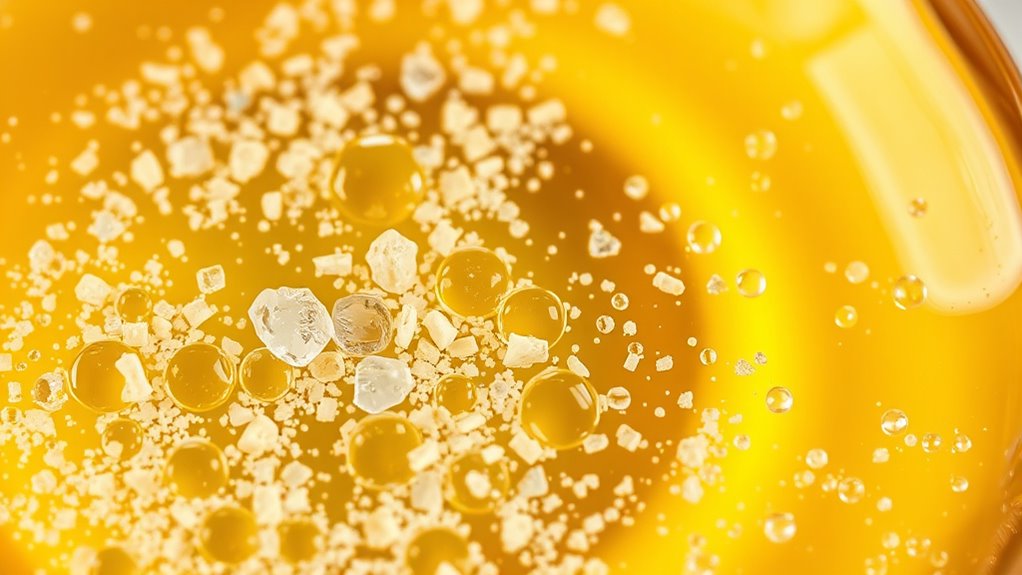

Polysorbate 80 is a common synthetic emulsifier used to blend ingredients like oils and water in many products, ensuring they stay uniform and stable. While natural options like lecithin, beeswax, or plant-based gums exist, they can sometimes be less reliable in maintaining product consistency and shelf life. If you want to understand how these emulsifiers work and what to take into account when choosing them, you’ll find helpful insights ahead.
Key Takeaways
- Polysorbate 80 is a synthetic emulsifier widely used to stabilize oil-water mixtures in foods, cosmetics, and pharmaceuticals.
- Natural alternatives like lecithin and plant gums can serve as emulsifiers but may offer different stability levels.
- While generally recognized as safe, polysorbate 80 may cause allergies or sensitivities in some consumers.
- Label reading helps identify synthetic emulsifiers; choosing products with natural stabilizers aligns with clean-label preferences.
- Balancing product performance with safety involves understanding ingredient functions and personal sensitivities.

Polysorbate 80 is a common emulsifier used in a wide range of food, cosmetic, and pharmaceutical products. It helps blend ingredients that wouldn’t normally mix, like oil and water, ensuring your products stay stable and uniform. But if you’re concerned about what goes into your body or skincare, you might wonder about natural alternatives and safety concerns associated with this additive.
Polysorbate 80 is a common emulsifier used in many products to keep ingredients stable and uniform.
When contemplating natural alternatives, you’re looking for ingredients derived from nature that can perform similar functions without synthetic chemicals. For example, lecithin, derived from soy or sunflower seeds, works as a natural emulsifier and is often used in baking and cosmetics. Other options like beeswax, shea butter, or certain plant-based gums (like guar gum or xanthan gum) can also help stabilize emulsions naturally. These alternatives appeal to those seeking cleaner labels or more organic options. However, they might not always provide the same stability or shelf life as synthetic emulsifiers like polysorbate 80, and their effectiveness can vary depending on the formulation.
Safety concerns are another important aspect to take into account. Polysorbate 80 has been scrutinized because some studies suggest it could cause allergic reactions or skin sensitivities in certain individuals. Additionally, there are ongoing debates about its potential to cause inflammation or disrupt gut health, especially with high consumption. While regulatory agencies like the FDA recognize polysorbate 80 as generally safe when used within approved limits, some consumers prefer to avoid it due to these concerns. It’s worth noting that the quality and source of polysorbate 80 can influence its safety profile, and some products might contain residual impurities.
If you’re cautious about using products with synthetic emulsifiers, researching brands that prioritize clean ingredients becomes essential. Many companies now offer products formulated with natural or plant-based emulsifiers that may reduce your exposure to potential side effects. Also, reading labels carefully can help you identify whether a product contains polysorbate 80 or other similar additives. Remember, while natural alternatives can be appealing, they often require more precise formulation and may not match the stability and longevity of synthetic options.
Ultimately, balancing your preference for natural ingredients with product safety and performance is key. If you have sensitive skin or allergies, consulting with a dermatologist or doing patch tests can help you determine what’s safe for you. Being informed about the ingredients in your products empowers you to make choices aligned with your health priorities. Whether you opt for natural alternatives or accept certain synthetic additives, understanding their role and safety can help you use products confidently and safely.
Frequently Asked Questions
Are There Natural Alternatives to Synthetic Emulsifiers Like Polysorbate 80?
Yes, you can use natural alternatives to synthetic emulsifiers like polysorbate 80. Plant-based thickeners such as xanthan gum, guar gum, and agar-agar act as natural stabilizers, helping blend ingredients smoothly. These options are derived from plants, making them healthier and eco-friendly choices. Incorporate these natural stabilizers into your recipes to achieve the desired consistency without relying on synthetic emulsifiers, ensuring a cleaner, more natural product.
How Do Emulsifiers Affect the Shelf Life of Food Products?
Think of emulsifiers as the unsung heroes that guard your food’s freshness. They act like a shield, creating a barrier that keeps ingredients from separating and slows down spoilage. This preservation benefits extend the shelf life, preventing unwanted microbial growth and oxidation. By maintaining texture and consistency, emulsifiers help your food stay appealing longer, transforming everyday meals into long-lasting delights.
Can Emulsifiers Cause Allergic Reactions or Sensitivities?
Yes, emulsifiers can cause allergic responses or sensitivities in some people. You might experience symptoms like skin rashes, itching, or digestive issues if you’re sensitive to certain emulsifiers, such as Polysorbate 80. While these reactions are not common for everyone, it’s important to read labels carefully. If you notice adverse effects after consuming foods with emulsifiers, consult a healthcare professional to assess your sensitivity risks.
What Regulations Govern the Use of Emulsifiers in Different Countries?
Oh, the joy of maneuvering the maze of regulations! You’ll find that regulatory standards and international guidelines govern emulsifier use, varying wildly from country to country. The FDA in the U.S. sets strict limits, while the European Union enforces its own rules, and others follow Codex Alimentarius. Staying compliant means keeping up with these diverse standards, even when they seem to change more often than the weather.
Are There Any Long-Term Health Studies on Emulsifier Consumption?
Long-term studies on emulsifier consumption are limited, so you might not have a clear picture of their health implications over time. Researchers are still investigating whether regular intake could affect gut health or contribute to inflammation. While some animal studies suggest potential risks, human data remains inconclusive. It’s wise to stay informed and consume emulsifiers in moderation until more extensive long-term research confirms their safety.
Conclusion
So, now you know the role of polysorbate 80 and other emulsifiers in keeping your favorite products smooth and effective. They might seem complex, but understanding them helps you make better choices. Next time you see these ingredients on a label, will you see them as helpful allies or just confusing additives? Remember, a little knowledge goes a long way in steering the world of commercial ingredients—so why not embrace it and stay curious?