

Minerals enter dairy ice cream through ingredients like milk, which naturally contains calcium, magnesium, and other minerals influenced by the cow’s diet and environment. These minerals affect flavor by adding subtle metallic or mineral notes, and they also influence texture, making ice cream creamier and smoother. You might taste these mineral nuances if your palate is sensitive, and factors like added minerals or milk sources can change their strength. Keep exploring to discover how these elements shape your favorite treat.
Key Takeaways
- Minerals like calcium and magnesium influence flavor, adding mineral tang or metallic notes that can be tasted.
- They affect texture by stabilizing fat globules and reducing ice crystals, impacting mouthfeel and creaminess.
- Natural mineral levels vary based on milk source, diet, and environment, contributing to unique flavor profiles.
- Added minerals or stabilizers can enhance flavor complexity and nutritional value, making taste influenced by mineral content.
- Sensory perception of mineral flavors varies due to individual differences, explaining why you can taste minerals in ice cream.
How Do Minerals Get Into Dairy Ice Cream?

Minerals enter dairy ice cream mainly through the ingredients used in its production. During dairy processing, milk naturally contains essential minerals like calcium, potassium, and magnesium, which are retained through careful handling. When you add flavorings, stabilizers, or other ingredients, some minerals can be introduced or concentrated, enhancing the mineral content. The process of pasteurization and homogenization doesn’t profoundly affect mineral levels but ensures the overall quality of the product. As the ice cream is made, mineral absorption happens when these nutrients from milk and added ingredients become integrated into the final product. Proper dairy processing techniques preserve mineral integrity, ensuring that minerals are present in sufficient amounts to influence both the nutritional profile and flavor of your ice cream.
Why Are Minerals Important for Ice Cream’s Nutrition and Flavor?
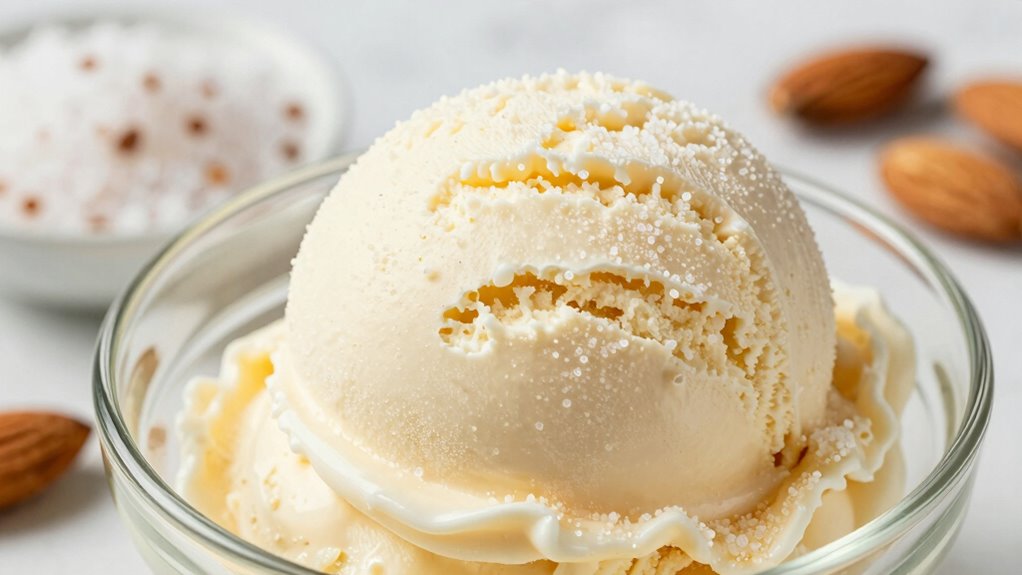
The mineral content in dairy ice cream directly impacts both its nutritional value and its flavor profile. Minerals contribute to flavor enhancement, making each bite more complex and satisfying. They also offer nutritional benefits that support your overall health. Here’s why they matter:
- They improve taste by balancing sweetness with subtle savory notes.
- They support bone health and immune function, boosting your nutritional intake.
- They influence the creaminess and mouthfeel, affecting texture.
- They help preserve the ice cream’s freshness and stability.
Which Minerals Are Most Common in Dairy Ice Cream?
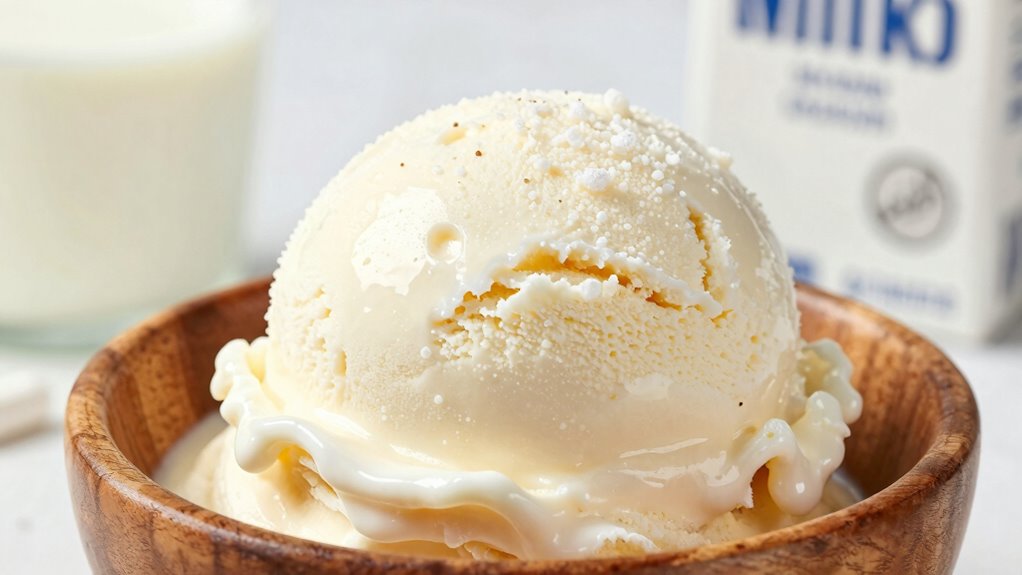
Have you ever wondered which minerals give dairy ice cream its nutritional punch? The most common minerals in dairy ice cream include calcium, potassium, magnesium, and phosphorus. Calcium is essential for strong bones and plays a key role in flavor enhancement, adding subtle richness to the taste. Potassium helps maintain electrolyte balance and influences the product’s natural sweetness. Magnesium contributes to mineral interactions that can subtly alter flavor profiles, making the ice cream more appealing. Phosphorus works alongside calcium to support healthy teeth and bones while also impacting flavor development. These minerals don’t just provide nutritional benefits; they interact to enhance the overall flavor experience, revealing themselves through subtle taste nuances that you can sometimes detect when enjoying your favorite dairy treat. Mineral interactions can also influence the texture and mouthfeel of the ice cream, further enriching your sensory experience. Additionally, the processing methods used during manufacturing can affect how these minerals are retained and interact, ultimately shaping the final product’s quality. Understanding how minerals interact during processing can help in optimizing flavor and texture. Recognizing the role of mineral balance can also be crucial in developing new flavors and improving product consistency.
How Do Minerals Affect Ice Cream’s Texture and Mouthfeel?
As minerals interact with other ingredients in ice cream, they play a crucial role in shaping its texture and mouthfeel. These minerals influence texture enhancement and have a direct mouthfeel influence. For example:
- Calcium helps stabilize fat globules, creating a smoother, creamier sensation. Calcium’s stabilizing effect
- Magnesium interacts with proteins, improving the overall body and reducing iciness. Magnesium interacts with proteins, improving the overall body and reducing iciness.
- Sodium can enhance saltiness, subtly boosting creaminess and making the texture feel richer. Sodium can enhance saltiness, subtly boosting creaminess and making the texture feel richer.
- Trace minerals contribute to a balanced structure, preventing ice crystal formation and ensuring a velvety mouthfeel. Additionally, understanding the architectural solutions involved in ingredient formulation can optimize mineral distribution for improved texture.
Can You Taste the Minerals in Your Ice Cream?

You might wonder if you can actually taste the minerals in your ice cream. Natural mineral levels can influence flavor, but your perception varies from person to person. Sometimes, minerals subtly enhance the taste, while other times, they remain unnoticed. Additionally, the artistry of the craftspeople involved in making the ice cream can also affect how these mineral flavors are expressed. The flavor perception can be shaped by various factors, including how the minerals interact with other ingredients during production. Moreover, sustainable practices in sourcing ingredients may impact mineral content and overall flavor profile. Understanding the quality assurance processes in place can also help determine how minerals are preserved or altered during manufacturing.
Natural Mineral Influence
The natural minerals present in dairy ice cream can subtly influence its flavor profile, making each scoop unique. These minerals engage in mineral interactions that shape flavor development, affecting taste in nuanced ways. Here’s how:
- Calcium and magnesium contribute to a slight mineral tang that enhances richness.
- Trace elements like zinc or iron can add complexity, sometimes detectable as subtle metallic notes.
- Salt minerals influence overall sweetness perception and balance.
- Mineral interactions can alter acidity, impacting freshness and creaminess. Additionally, the presence of minerals in dairy can influence natural flavor development, further affecting the overall taste experience. These factors show that minerals are more than just ingredients—they actively participate in flavor development. Your taste buds might not consciously identify each mineral, but their influence helps create the layered, complex flavors you enjoy in high-quality ice cream.
Understanding minerals in dairy products can deepen appreciation for how natural elements shape flavor profiles.
Taste Perception Variability
While minerals in dairy ice cream subtly influence flavor, not everyone perceives these mineral notes equally. Your sensory differences and individual preferences shape how you experience these subtle tastes. Some people detect distinct mineral flavors, while others notice nothing unusual. Factors like genetics, age, and taste sensitivity drive this variability. Here’s a quick look at how perceptions vary:
| Sensory Differences | Taste Perception Variability |
|---|---|
| Genetics | Affects ability to detect minerals |
| Age | Alters taste sensitivity |
| Personal Preferences | Influences flavor recognition |
This variability shows that tasting minerals isn’t uniform. Your unique sensory profile determines whether you notice mineral nuances in your ice cream or not.
How Do Milk Sources and Additives Change Mineral Content?

Milk sources and additives markedly influence the mineral content in dairy ice cream. Different milk compositions from cow, goat, or plant-based sources bring varying mineral levels. Additive effects also play a role, altering mineral balance through added ingredients. Consider these points:
Milk sources and additives significantly impact dairy ice cream’s mineral content.
- Milk origin: Milk from pasture-fed cows often has higher mineral levels, like calcium and magnesium. The diet of the livestock directly impacts mineral concentrations in the milk produced. Additionally, the environmental conditions where the animals graze can influence mineral uptake and composition. The geographic region further affects the mineral profile of the milk based on local soil and water mineral content.
- Processing methods: Ultra-pasteurization can slightly affect mineral retention.
- Additives: Minerals like calcium carbonate are added to boost nutritional content.
- Flavor enhancers: Some flavorings contain minerals that subtly change the overall mineral profile.
- Mineral content can also be influenced by the specific diet and environment of the milk source, further affecting the final product. Recognizing these influences helps you appreciate how natural and added ingredients shape your dairy ice cream’s mineral profile.
What Should You Look for in Mineral-Rich Ice Cream for Better Flavor and Nutrition?

Choosing mineral-rich ice cream can enhance both flavor and nutrition, but it’s important to know what to look for. Focus on mineral balance—ideally, the ice cream should contain a variety of essential minerals like calcium, magnesium, and zinc, which contribute to flavor enhancement. A well-balanced mineral profile ensures the ice cream isn’t overpoweringly salty or metallic, but instead delivers a smooth, rich taste. Check labels or ask about ingredients to guarantee minerals come from natural sources rather than artificial additives. The best options provide a harmonious mineral balance that elevates flavor complexity while boosting nutritional value. Incorporating natural mineral sources such as sea salts or mineral-rich dairy ingredients can also enhance mineral content naturally. By paying attention to mineral content, you enjoy a more satisfying, healthful treat that satisfies your taste buds and supports overall wellness.
Frequently Asked Questions
How Do Mineral Levels Vary Between Different Dairy Breeds?
Breed differences considerably influence mineral levels in dairy cows. You’ll find that some breeds absorb minerals more efficiently, leading to higher mineral content in their milk. For example, Jersey cows often produce milk with elevated calcium and magnesium levels compared to Holsteins. These variations affect the mineral composition of the dairy, impacting taste and texture. Understanding breed differences helps producers optimize mineral content for better quality ice cream and flavor profiles.
Can Mineral Content Influence Ice Cream Shelf Life?
You might be surprised to learn that mineral content can impact ice cream shelf life. Minerals like calcium and magnesium influence preservation effects by enhancing mineral stability, which slows spoilage. If your ice cream has balanced mineral levels, it’s more likely to stay fresh longer. So, paying attention to mineral content isn’t just about taste — it also helps maintain quality over time, ensuring your treat stays delicious longer.
Do Organic or Conventional Dairy Farms Produce Mineral-Rich Ice Cream?
Organic dairy farms often produce mineral-rich ice cream because they focus on natural dairy farming practices and avoid synthetic additives. Conventional farms might use mineral supplementation to enhance nutrient levels, but organic farms rely on the natural mineral content of the feed and soil. Your ice cream’s mineral profile depends on these farming practices, making organic options potentially more flavorful and nutrient-dense due to their emphasis on natural sources.
How Does Mineral Fortification Compare to Natural Mineral Presence?
Think of mineral fortification as adding a splash of color to a black-and-white photo—you get vibrant benefits, but it’s not the same as natural hues. Fortification benefits include targeted mineral boosts, ensuring consistent levels regardless of farm practices. Natural mineral levels, however, reflect the farm’s environment, offering a more authentic, complex flavor. While both serve a purpose, naturally occurring minerals often provide a richer, more balanced profile.
Are There Health Risks Associated With High Mineral Concentrations in Ice Cream?
Yes, consuming high mineral concentrations in ice cream can pose health risks like mineral toxicity if you’re not mindful. Eating excessive minerals may disrupt your dietary balance, leading to issues such as kidney strain or other health problems. To enjoy ice cream safely, you should pay attention to mineral levels and maintain a balanced diet, ensuring you don’t overconsume minerals that could harm your health.
Conclusion
By understanding the minerals in dairy ice cream, you can appreciate its rich flavor and nutritional value—just like savoring a fine Renaissance feast. Minerals influence everything from taste to texture, so next time you enjoy a scoop, remember they’re the hidden heroes behind that creamy delight. Keep an eye on ingredients and sources, and you’ll experience ice cream in a whole new way—more vibrant, more satisfying, like discovering a secret ingredient in a medieval recipe.