Your choice of milk—whole, 2%, or skim—significantly impacts flavor, texture, and nutrition. Whole milk’s higher fat content makes it richer, creamier, and more flavorful, while skim milk offers a lighter taste with fewer calories. 2% strikes a balance between the two. As fat levels change, so does the milk’s mouthfeel and overall taste experience. Keep exploring to discover how these differences can suit your preferences and dietary needs.
Key Takeaways
- Higher milk fat levels enhance flavor richness, mouthfeel, and carry more flavor compounds, making whole milk the most indulgent option.
- Fat percentage directly influences nutritional content, with whole milk providing more calories and fat-soluble vitamins than 2% and skim milk.
- Reducing milk fat diminishes flavor depth and creates a lighter, more watery taste, especially noticeable in skim milk.
- Consumer preferences vary: whole milk offers a creamy experience, 2% balances flavor and health, while skim milk prioritizes lower fat intake.
- Milk fat content significantly impacts sensory qualities, dietary choices, and overall taste profiles across whole, 2%, and skim options.
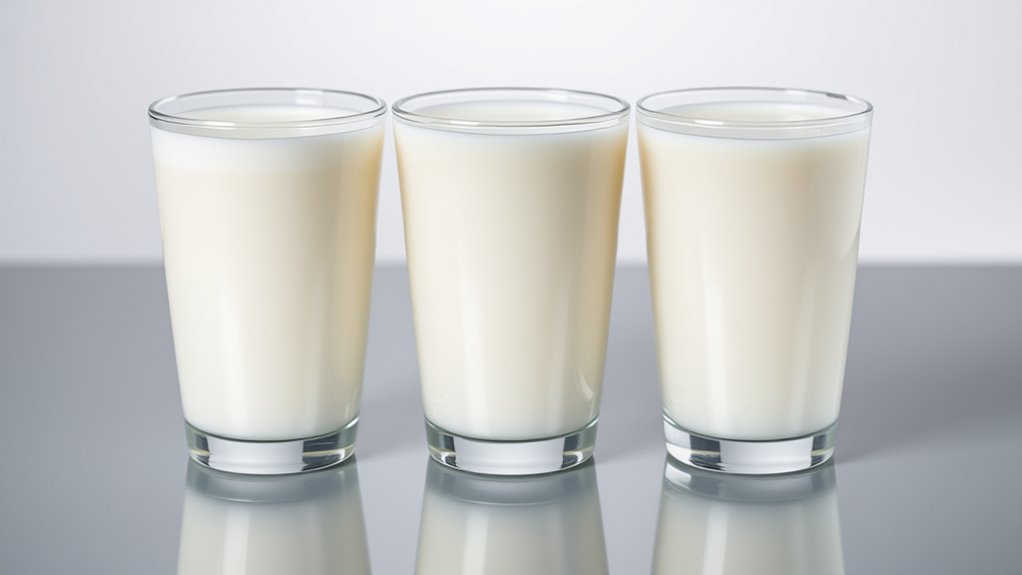
Have you ever wondered what makes different types of milk vary in richness and flavor? The answer largely comes down to their milk fat percentage. Milk fat not only influences how creamy or light a milk product feels but also impacts its nutritional differences and flavor profiles. When you compare whole milk, 2%, and skim milk, you’re seeing a clear spectrum of fat content that affects both taste and health benefits.
Whole milk typically contains about 3.25% fat, making it the creamiest of the three. This higher fat content gives it a richer, more indulgent flavor that many people find appealing. The fat molecules in whole milk carry flavor compounds, enhancing its natural sweetness and creating a smooth, velvety mouthfeel. Because fat is a carrier of flavor, whole milk’s robust taste is often described as more rounded and full-bodied. From a nutritional perspective, whole milk offers more calories and fat-soluble vitamins, such as A, D, E, and K, which are naturally present in the fat. These nutrients contribute to the overall nutritional differences between the milk types, making whole milk a denser source of energy and fat-soluble nutrients.
Whole milk’s 3.25% fat creates a rich, smooth flavor and enhances its natural sweetness and creaminess.
In contrast, 2% milk, also labeled as reduced-fat milk, contains about 2% fat. It strikes a balance between flavor richness and lower fat content. You’ll notice that 2% milk still retains some of the creaminess of whole milk but with a lighter, less intense flavor. The reduction in fat diminishes some of the flavor depth, resulting in a cleaner, slightly less sweet taste. The nutritional differences are significant here—while 2% milk still provides essential vitamins and minerals, it offers fewer calories and less saturated fat compared to whole milk. This makes it a popular choice for those seeking a compromise between flavor and health considerations, especially if they want to limit their fat intake but still enjoy a satisfying milk flavor.
Skim milk, which contains less than 0.5% fat, is the lightest option. Its flavor profile is much more subdued and often described as more watery or bland compared to whole or 2% milk. Removing most of the fat strips away many of the flavor-carrying molecules, resulting in a milk that’s lower in calories but also less rich in taste. Nutritionally, skim milk still provides essential nutrients like calcium, protein, and vitamins, but it lacks the fat-soluble vitamins unless they’re added back artificially, which some brands do. The absence of fat also affects how the milk feels in your mouth, making it feel thinner and less creamy. Additionally, fat content significantly influences the milk’s texture and flavor profile, affecting consumer preferences and dietary choices.
Frequently Asked Questions
How Does Milk Fat Affect Lactose Digestion?
Milk fat can influence your lactose breakdown by slowing digestion, which might give your body more time to process lactose. When fat is present, it also aids in fat digestion, helping your gut handle dairy more comfortably. If you’re sensitive to lactose, choosing lower-fat options like skim milk may help improve your digestion, as less fat means faster lactose breakdown and potentially fewer symptoms.
Are There Health Benefits to Higher Fat Milk?
Think of higher fat milk as a rich, velvety tapestry that enhances dairy flavor, offering more than just taste. Consuming milk with higher fat content can provide essential fatty acids and fat-soluble vitamins, supporting your overall health. While it’s more calorie-dense, it may help you feel fuller longer and boost nutrient absorption. If you enjoy its creaminess, opting for whole milk could give your diet a flavorful, beneficial boost.
Does Milk Fat Influence Calcium Absorption?
Milk fat does influence calcium absorption, which is essential for your bone health. Higher milk fat levels can enhance the absorption of calcium and other fat-soluble vitamins like A and D, supporting your overall nutrition. By including whole milk, you’re likely to benefit from improved milk fat and vitamin absorption, which can help maintain strong bones and better nutrient utilization. So, choosing higher-fat milk may positively impact your bone health.
How Does Milk Fat Impact Calorie Content?
Milk fat increases the calorie content, so whole milk has more calories than skim or 2% milk. This added fat not only boosts the milk’s flavor, making it richer and creamier, but also slightly affects storage stability, as higher fat content can lead to quicker spoilage if not stored properly. If you’re watching your calorie intake, choosing lower-fat options helps reduce calories while still enjoying milk’s benefits.
Can Milk Fat Percentage Affect Allergy Risks?
You might wonder if milk fat percentage affects allergy risks. While fat content doesn’t directly cause milk allergies or fat intolerance, some studies suggest that lower-fat milks contain fewer proteins that trigger reactions. notably, about 2-3% of people have a milk allergy, often reacting to proteins rather than fat. If you’re sensitive, choosing skim or reduced-fat options might help, but always consult an allergist for personalized advice.
Conclusion
As you choose between whole, 2%, or skim milk, remember each offers a unique dance of flavors and textures. While whole milk gently coats your palate like a warm embrace, skim leaves a lighter, breezier impression. Whichever you pick, let your preference be a quiet reflection of your journey toward balance, like a soft breeze guiding you through a peaceful meadow. Embrace your choice, and enjoy the subtle harmony it brings to your daily routine.