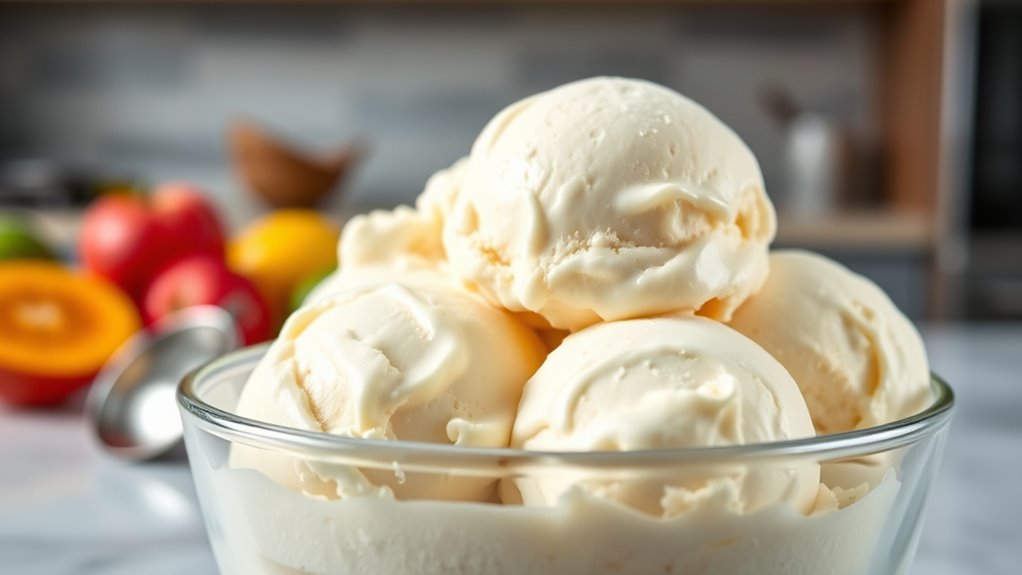

Light ice creams cut calories mainly by replacing fat with ingredients like stabilizers, thickeners, or air through overrun, which mimics creamy texture without the extra calories. They also use sugar substitutes such as artificial sweeteners or natural options like stevia, providing sweetness without added sugar. Portion control and smaller packaging further help reduce calorie intake. By understanding these ingredients and techniques, you’ll discover how they help you enjoy ice cream guilt-free. Keep exploring to learn even more.
Key Takeaways
- Light ice creams replace regular sugar with artificial sweeteners or natural options like stevia to lower calorie content.
- They use reduced fat ingredients, often supplemented with stabilizers, thickeners, or air (overrun) to mimic creamy textures.
- Portion control via smaller servings helps manage overall calorie intake and prevent overconsumption.
- Ingredient adjustments, including added stabilizers and air, compensate for reduced fat and maintain desirable texture and flavor.
- These products focus on balancing flavor, texture, and calories to satisfy cravings while supporting health goals.
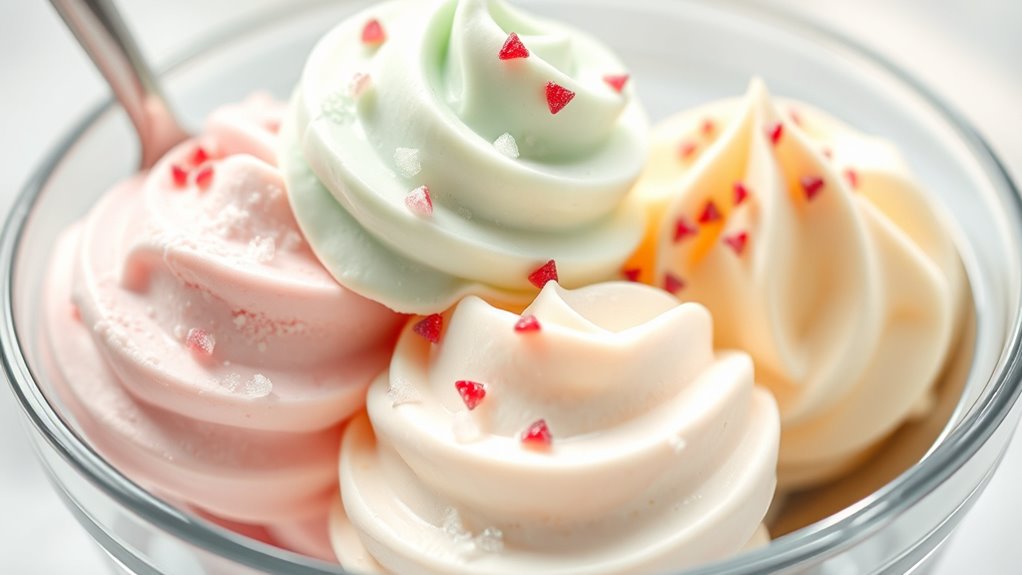
If you’re looking to enjoy a sweet treat without sabotaging your health goals, light ice creams offer a smart solution. These desserts aim to satisfy your cravings while keeping calorie counts lower than traditional options. One of the key ways they do this is by using sugar substitutes instead of regular sugar. Sugar substitutes, such as artificial sweeteners or natural alternatives like stevia, provide the sweetness you desire without the extra calories. This means you can indulge in dessert without the typical blood sugar spike or guilt that often accompanies full-fat ice creams. The use of sugar substitutes allows manufacturers to drastically cut the calorie content while maintaining a pleasing level of sweetness, making light ice creams a popular choice for health-conscious consumers.
Light ice creams satisfy cravings with fewer calories using sugar substitutes like stevia, making indulgence healthier and guilt-free.
Portion control also plays a pivotal role in reducing calorie intake when enjoying light ice creams. Many brands package their products in smaller servings or suggest smaller portions, helping you manage your overall calorie consumption. Even if a particular light ice cream contains some added sugar substitutes, eating a smaller amount still keeps your calorie intake in check. This approach not only helps prevent overindulgence but also encourages mindful eating habits. When you’re aware of portion sizes, you’re less likely to consume excess calories, which is essential for weight management and overall health.
Furthermore, light ice creams often incorporate other ingredients to compensate for the reduced fat content. Instead of relying solely on fat reduction, manufacturers may use stabilizers or thickeners that mimic the creamy texture of full-fat varieties. Some even incorporate air into the product through a process called “overrun,” which increases volume without adding calories, giving the ice cream a fluffy, satisfying mouthfeel. These techniques allow light ice creams to retain their enjoyable texture and flavor while fitting into a calorie-controlled diet.
Additionally, understanding the role of fat in ice cream can help consumers better appreciate how these products are formulated and why certain ingredients are used. Ultimately, the combination of sugar substitutes, portion control, and innovative ingredients makes light ice creams a smart choice for anyone looking to indulge without overdoing it. By understanding how these products are formulated, you can make informed decisions that align with your health goals. Enjoying a scoop or two of light ice cream can be part of a balanced diet, providing pleasure without the guilt or excess calories. So, next time your sweet tooth strikes, reach for a light option—you don’t have to sacrifice flavor or fun to stay on track.
Frequently Asked Questions
Do Light Ice Creams Taste as Good as Regular Ones?
You might find that light ice creams don’t taste quite as good as regular ones, often due to flavor compromise and texture differences. The reduced fat and added sweeteners can alter the creamy feel and richness you expect. While some brands come close, you may notice a lighter, sometimes less satisfying experience. However, experimenting with different brands can help you find a balance between lower calories and enjoyable flavor.
Are Light Ice Creams Suitable for People With Lactose Intolerance?
If you’re lactose intolerant, light ice creams might be suitable, but it depends on the ingredients. Some brands offer lactose-free options, which eliminate dairy altogether. Others use dairy alternatives like almond, coconut, or soy milk, making them a good choice for avoiding lactose. Always check labels to guarantee the product is truly lactose-free and fits your dietary needs. These options let you enjoy ice cream without discomfort.
How Do Artificial Sweeteners in Light Ice Creams Affect Health?
You wonder how artificial sweeteners in light ice creams may impact your health. While they’re generally considered safe when approved by health authorities, concerns about artificial sweetener safety and potential metabolic effects remain. Some studies suggest they might influence appetite or blood sugar levels, so it’s wise to consume them in moderation. Ultimately, understanding their safety and effects helps you make informed choices about enjoying light ice creams without compromising your health.
Can Light Ice Creams Help With Weight Loss Long-Term?
You might wonder if light ice creams can help with long-term weight loss. They can assist by reducing calorie intake and aiding appetite control, making it easier to stick to your goals. However, relying solely on them isn’t enough; a balanced diet and regular exercise are essential. Incorporating light ice creams can be a helpful part of your strategy, but sustainable habits are key for lasting results.
Are There Natural Alternatives to Artificial Sweeteners in Light Ice Creams?
You’re wondering if natural sweeteners or plant-based alternatives exist for light ice creams. Yes, plenty of options are available, like honey, maple syrup, agave, and stevia, which come from natural sources. These alternatives can satisfy your sweet tooth without artificial ingredients. By choosing ice creams made with natural sweeteners, you enjoy a more wholesome treat while still reducing calorie intake compared to traditional options.
Conclusion
Choosing light ice creams is like holding a delicate feather—you get the sweetness without the heavy burden. By replacing fat with clever substitutes, you keep the joy of dessert alive while easing your journey toward healthier habits. Remember, it’s not about giving up; it’s about balancing the weight you carry. Just as a feather lifts effortlessly, so can your choices—light, free, and full of flavor—guiding you toward a sweeter, healthier future.