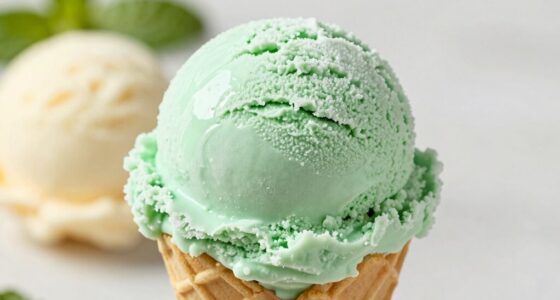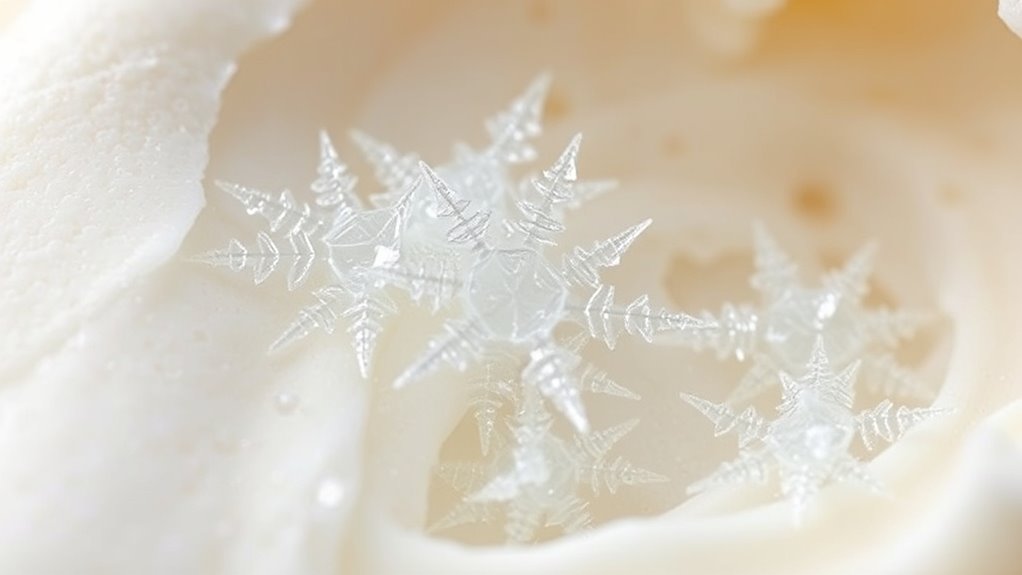

Ice crystals are tiny structures of solid water that form during the freezing of ice cream. They shape the product’s texture and determine whether it feels smooth or grainy. If crystals are too large, your ice cream can become icy and gritty, but smaller crystals make it velvety and enjoyable. Controlling how these crystals develop is key to quality. Keep exploring to discover how microstructure influences your perfect scoop.

Get baking supplies delivered free — and shop member deals
- Fast, free delivery on millions of items
- Access to Prime Big Deal Days deals on October 6–7
- Prime Video, Amazon Music and more included
Key Takeaways
- Ice crystals are tiny solid ice structures formed during freezing that impact ice cream’s texture.
- Their size and distribution determine whether ice cream feels smooth or grainy.
- Smaller crystals, typically under 50 micrometers, contribute to a velvety, creamy mouthfeel.
- Larger crystals develop through slow freezing or temperature fluctuations, causing a gritty texture.
- Controlling freezing rate and storage conditions helps maintain small crystals and high-quality microstructure.
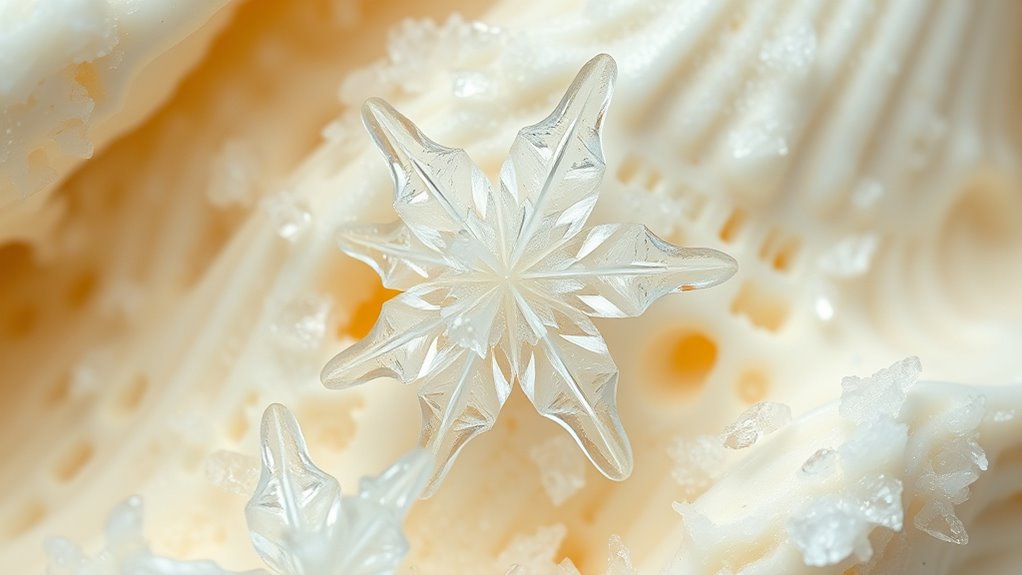
When ice crystals form in ice cream, they can considerably affect its texture and quality. These tiny ice structures are central to the overall cream texture you experience when enjoying a scoop. The size and distribution of ice crystals determine whether your ice cream feels smooth and creamy or grainy and icy. This relationship highlights the significance of understanding the freezing process, as it directly influences crystal formation. During freezing, liquid water inside the mixture turns into solid ice, and how quickly this happens shapes the microstructure of your ice cream. A rapid freezing process results in smaller ice crystals, which are key to maintaining a desirable cream texture. Conversely, slow freezing allows larger crystals to develop, leading to a less pleasant, icy mouthfeel.
The microstructure of ice cream is fundamentally a network of small ice crystals embedded within a matrix of fat, air, and unfrozen liquid. When the freezing process is carefully controlled, the ice crystals stay tiny, typically less than 50 micrometers in diameter. These microscopic crystals are invisible to the naked eye but are vital for achieving that smooth, velvety sensation. If the crystals grow larger, they become perceptible, causing a gritty or icy texture that diminishes the overall quality of the product. That’s why manufacturers pay close attention to the freezing rate and employ techniques like quick freezing or continuous agitation during production to keep crystals small.
Understanding the formation of ice crystals also helps you grasp why temperature fluctuations can ruin your ice cream. When stored at improper temperatures, small crystals can melt and then refreeze, forming larger crystals in the process. This growth alters the original microstructure, leading to a compromised cream texture once you scoop it. To prevent this, it’s best to keep ice cream consistently frozen and minimize thawing and refreezing episodes. When you serve it, let it sit at room temperature just enough to soften slightly, ensuring the crystals are soft enough to melt smoothly on your tongue, preserving that creamy mouthfeel you love.
Additionally, advancements in freezing technology have significantly improved the ability to control ice crystal size, resulting in higher-quality ice cream products.
ice cream maker with rapid freezing technology
As an affiliate, we earn on qualifying purchases.
As an affiliate, we earn on qualifying purchases.
Frequently Asked Questions
How Do Ice Crystals Affect Ice Cream Flavor?
They say “a picture is worth a thousand words,” but in ice cream, tiny ice crystals speak volumes about flavor. When crystals are small, they enhance flavor by releasing aroma and taste more effectively, boosting flavor enhancement. Larger crystals can ruin texture perception, making it gritty and dulling the flavor experience. So, keeping crystals tiny guarantees your ice cream’s flavor shines and your texture feels smooth and delightful.
Can Ice Crystal Size Vary Between Homemade and Commercial Ice Cream?
Yes, ice crystal size can vary between homemade and commercial ice cream, affecting texture variation and melting rate. You’ll notice that homemade ice cream often has larger crystals, making it icier and melting faster. Commercial versions usually have smaller crystals, giving a smoother texture and slower melting. This difference occurs because commercial ice cream uses specialized equipment and techniques to control crystal growth, enhancing your overall eating experience.
What Role Does Temperature Play in Ice Crystal Formation?
Temperature heavily influences ice crystal formation by affecting supercooling effects and nucleation processes. When you lower the temperature quickly, supercooling causes fewer crystals to form initially, leading to smaller, smoother ice crystals. Conversely, slow cooling promotes larger crystals through more nucleation. Maintaining consistent, ideal temperatures prevents unwanted crystal growth, ensuring your ice cream remains creamy. Proper temperature control is key to controlling crystal size and achieving the ideal texture.
Are There Health Impacts Related to Ice Crystal Size?
Ice crystal ingestion generally doesn’t pose significant health risks, but larger crystals can cause discomfort or damage to your teeth. Tiny ice crystals are easier to swallow and digest, reducing potential health implications. If you frequently consume ice cream with large crystals, you might experience minor irritation or dental issues over time. To minimize health impacts, opt for ice cream with a smooth, fine microstructure, avoiding those with noticeable or sharp ice crystals.
How Do Stabilizers Influence Ice Crystal Growth?
Did you know stabilizers can reduce ice crystal size by up to 50%? They work through stabilizer mechanisms that inhibit crystal growth, keeping ice crystals small and uniform. This prevents large crystals from forming during storage, ensuring a smoother texture. Stabilizers effectively control crystal growth by forming a protective network around ice, which slows down crystal enlargement and maintains ice cream’s creamy consistency for longer periods.
Conclusion
Now that you know how ice crystals form and impact ice cream’s texture, you might wonder how manufacturers keep them tiny and smooth. By controlling factors like freezing speed and ingredients, they prevent large crystals from forming. So, next time you enjoy a scoop, appreciate the microstructure behind that creamy perfection. After all, isn’t it amazing how tiny crystals can make or break your favorite treat?
Fall Picks
fall essentials
As an affiliate, we earn on qualifying purchases.