
Homogenization and pasteurization work together to build stable, safe dairy products with consistent textures. Homogenization breaks down fat globules for even distribution, preventing cream separation and ensuring a smooth appearance. Pasteurization kills harmful bacteria, extending shelf life and improving safety. Combined, they deliver products that are both visually appealing and microbiologically safe. Understanding these processes helps you appreciate how modern dairy products stay fresh and uniform—keep exploring to learn more about their benefits.
Key Takeaways
- Homogenization breaks down fat globules for uniform dispersion, preventing cream separation and ensuring a smooth, stable milk texture.
- Pasteurization kills harmful microbes, extending shelf life and maintaining microbial safety in dairy products.
- Combining homogenization and pasteurization produces stable, safe dairy mixes with consistent appearance and quality.
- Homogenization improves flavor and mouthfeel by evenly distributing fat, enhancing sensory stability.
- Pasteurization preserves nutritional value while eliminating spoilage bacteria, supporting long-term stability of dairy products.
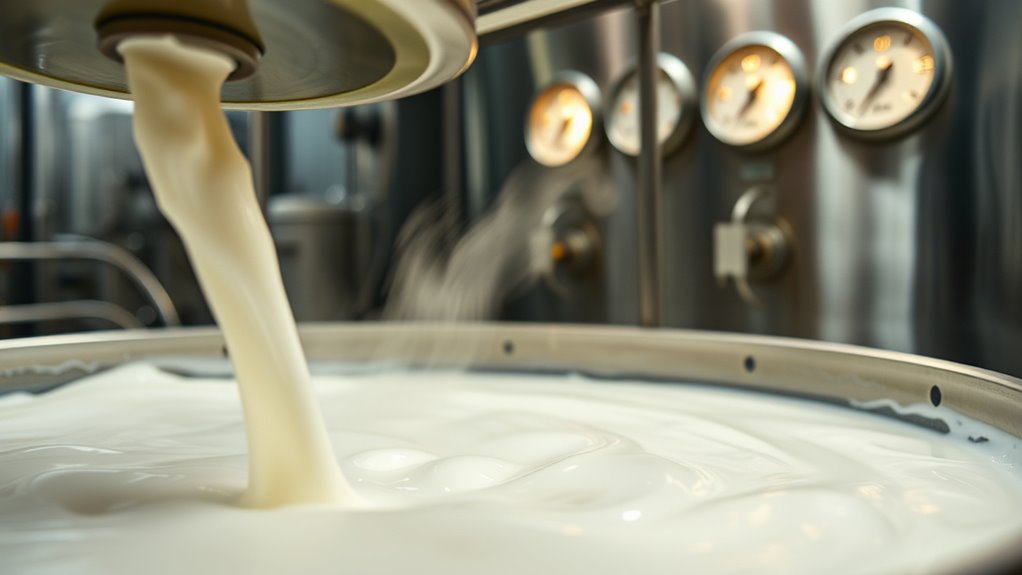
Homogenization and pasteurization are essential processes in ensuring the safety and quality of dairy products. When you’re working with milk, understanding how these processes impact milk fat and microbial safety is crucial. Homogenization breaks down fat globules, dispersing them evenly throughout the milk, which prevents cream from separating and creates a consistent texture. This process guarantees that your milk maintains a smooth, uniform appearance, making it more appealing and easier to mix into recipes or beverages. Without homogenization, the cream naturally rises to the top, leading to separation issues that can compromise both the appearance and the perceived freshness of the product.
Homogenization ensures smooth, uniform milk by preventing cream separation and enhancing texture.
In addition to improving texture, homogenization plays a vital role in controlling milk fat distribution, which directly influences flavor and mouthfeel. A well-homogenized milk offers a balanced taste, with no greasy spots or oily layers that can be off-putting. It also enhances the stability of the milk, preventing cream separation over time, which is especially important for packaged dairy products stored for extended periods. When you understand the importance of milk fat in homogenization, you realize that consistent fat distribution not only enhances sensory qualities but also contributes to the overall quality standards required in dairy processing.
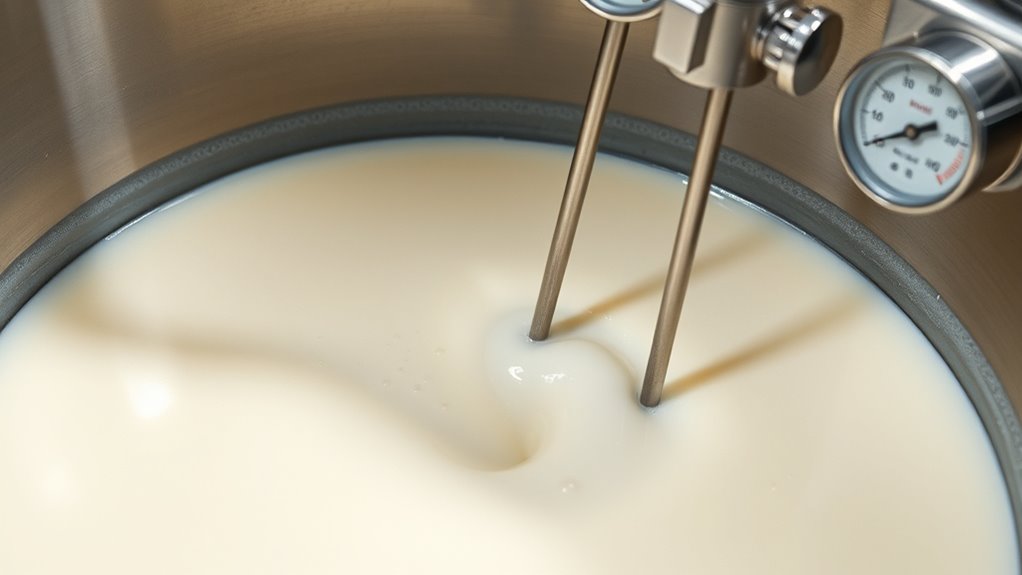
Pasteurization, on the other hand, focuses primarily on microbial safety. When you heat milk to specific temperatures for set durations, you effectively kill harmful bacteria, pathogens, and spoilage microbes. This step is essential for preventing foodborne illnesses and extending the shelf life of dairy products. Pasteurization doesn’t significantly affect the milk’s nutritional value or flavor if done correctly, but it guarantees that the milk you consume is safe. The process also helps eliminate bacteria that could produce undesirable flavors or cause spoilage, maintaining the freshness and quality of the milk from the point of processing to consumption.
Together, homogenization and pasteurization form a robust foundation for producing stable, safe dairy products. Homogenization ensures a consistent, appealing texture with evenly distributed milk fat, while pasteurization guarantees microbial safety, preventing illness and spoilage. When you combine these processes, you end up with a product that’s both enjoyable to drink and safe to consume, with a longer shelf life. These steps are integral to modern dairy production, guaranteeing that your milk remains fresh, safe, and of high quality from the farm to your glass. Understanding their roles helps you appreciate the science behind the dairy products you rely on every day. Additionally, proper processing techniques are essential to maintaining the overall quality and safety standards in dairy manufacturing.
Frequently Asked Questions
How Do Homogenization and Pasteurization Affect Nutritional Content?
Homogenization and pasteurization slightly affect nutrient retention by reducing some enzyme activity, which can impact nutrient levels like vitamins. However, they generally preserve most nutrients, ensuring your product remains nutritious. Pasteurization kills harmful bacteria, protecting health, while homogenization creates a uniform texture. Although some sensitive nutrients may diminish, the overall nutritional content stays intact, making your dairy or beverage safe and nutritious for consumption.
What Equipment Is Required for Small-Scale Homogenization?
You’ll need the right tools to get the job done—think of it as a small-scale setup for homogenization. Basic equipment includes a hand-held or bench-top homogenizer, suitable for small batches, along with a motorized or manual pump if needed. Use small-scale homogenization tools like a high-shear mixer or a lab-scale homogenizer to achieve consistent particle size. Remember, quality equipment makes all the difference in producing stable, uniform mixes.
Are There Any Safety Risks Associated With Pasteurization?
Yes, there are safety risks associated with pasteurization if you don’t follow proper process control. Improper temperatures or times can lead to incomplete pathogen reduction, risking contamination. Always monitor equipment closely, verify correct temperature settings, and maintain consistent timing. Failing to do so might allow harmful microbes to survive, compromising safety. Proper training and strict adherence to pasteurization protocols help minimize risks and ensure a safe, stable product.
How Do These Processes Impact Flavor and Texture?
Think of pasteurization and homogenization as skilled artisans shaping clay. They subtly impact flavor retention, often enhancing freshness, while texture alteration smooths out inconsistencies, creating a uniform feel. These processes preserve delicate flavors and improve mouthfeel, ensuring your mix remains appealing. By carefully controlling temperature and pressure, you get a product that’s both stable and tasty, with flavor and texture working together seamlessly to delight your senses.
Can Homogenization and Pasteurization Be Combined in Home Settings?
Yes, you can combine homogenization and pasteurization in home settings with DIY techniques. Use a blender or immersion blender for homogenization, guaranteeing ingredients are thoroughly mixed and broken down. For pasteurization, heat your mixture to the required temperature (around 72°C) and maintain it for 15-30 seconds, then cool quickly. Consider equipment considerations like a reliable thermometer and heat-resistant containers to ensure safety and effectiveness.
Conclusion
By mastering homogenization and pasteurization, you’re crafting a symphony of stability in your mixes. Think of it as tending a delicate garden—each process shapes and shields your blend like nurturing roots that anchor and nourish. When you get these steps right, your creations become resilient, like a mighty oak standing tall against storms. Embrace these techniques, and you’ll turn everyday ingredients into a harmonious masterpiece that endures through time.