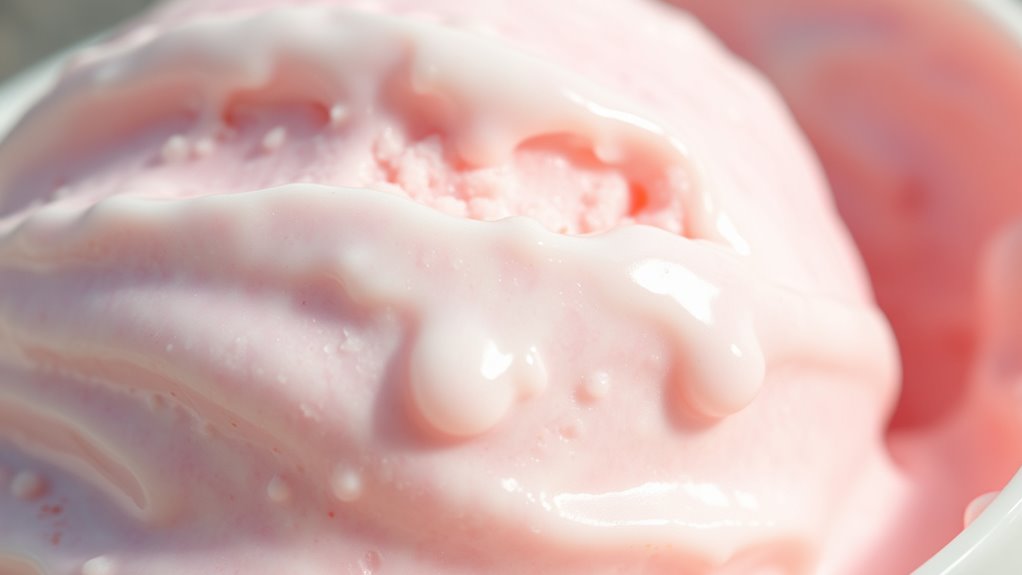

When ice cream experiences temperature swings, the delicate balance of fats, sugars, and ice crystals gets disturbed. The rapid heating and cooling cause ice crystals to grow larger and the emulsion to break down, resulting in a grainy or icy texture. These changes are usually irreversible, ruining its smooth, creamy consistency. If you want to understand how this process damages your ice cream and ways to prevent it, there’s more to explore ahead.
Key Takeaways
- Temperature swings cause ice crystals to grow larger, resulting in a grainy, icy texture in ice cream.
- Repeated melting and refreezing break down the emulsion of fats, sugars, and stabilizers.
- Structural networks weaken under thermal stress, reducing creaminess and smoothness.
- Fluctuations disrupt the balance of ingredients, leading to inconsistent texture and mouthfeel.
- Maintaining stable cold temperatures preserves ice cream’s microscopic structure and overall quality.
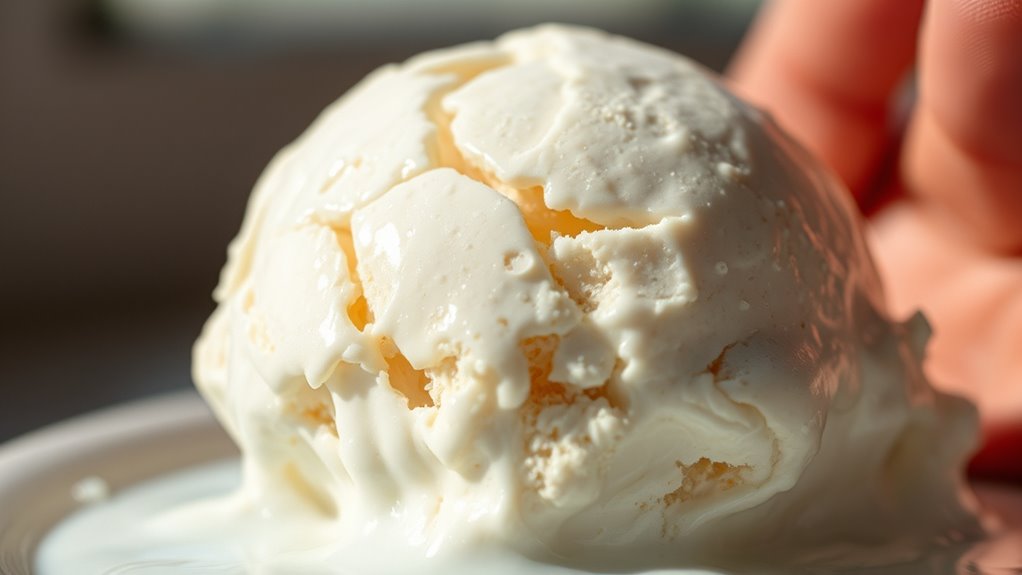
Have you ever wondered how cells survive sudden increases in temperature? It’s a fascinating process that reveals just how delicate and resilient life can be. When temperature fluctuations occur, cells face a form of cellular stress that challenges their normal functions. This stress triggers a series of protective responses designed to keep essential processes running smoothly. In the context of ice cream, these tiny cellular-like mechanisms help explain why temperature swings can ruin its texture. As ice cream warms and cools unpredictably, the structural integrity of its ingredients becomes compromised, leading to undesirable changes in creaminess and firmness.
When ice cream is exposed to temperature fluctuations, its delicate balance of fats, sugars, and ice crystals gets disturbed. The rapid changes cause ice crystals to melt and refreeze unevenly, which disrupts the smooth, creamy texture you love. This process resembles cellular stress in living organisms, where sudden heat shocks can damage proteins and membranes. In ice cream, the “proteins” and “membranes” are the emulsified fats and stabilizers that keep everything uniformly mixed. When these components are subjected to inconsistent temperatures, they can break down or aggregate improperly, resulting in a grainy or icy consistency. The key issue is that these fluctuations accelerate the coalescence of ice crystals and destabilize the emulsion, making the product less appealing.
Your ice cream’s quality depends heavily on maintaining a stable temperature environment. Even small temperature swings can cause irreversible damage to its texture. That’s because the structural network established during freezing relies on consistent cold conditions. When the temperature rises, the network weakens, allowing ice crystals to grow larger and fats to separate. When it cools again, the refreezing process doesn’t restore the original smoothness—instead, it often creates a rougher, icier texture. This cycle of melting and refreezing induces stress within the mixture, similar to cellular stress responses that occur when living cells are exposed to heat shock. These responses in cells are meant to protect and repair, but in ice cream, the result is a compromised product that no longer has its intended mouthfeel.
Understanding how temperature fluctuations induce cellular stress-like effects in ice cream helps explain why keeping it consistently cold is paramount. It’s not just about preventing melting; it’s about preserving the microscopic structure that gives ice cream its characteristic smoothness. When you experience a sudden warm spell or if ice cream isn’t stored properly, you’re essentially subjecting it to a form of thermal stress. This stress causes irreversible changes, ruining its texture and diminishing your enjoyment. Additionally, the temperature stability during storage is crucial in preventing these structural damages. The science behind this reveals that, whether in living cells or in your freezer, stability in temperature is essential for maintaining integrity, quality, and the delightful experience of perfectly creamy ice cream.
Frequently Asked Questions
How Does Heat Shock Affect Different Types of Ice Cream?
When you expose ice cream to temperature swings, heat shock impacts various types differently. You might notice texture degradation, making it grainy or icy, and flavor alteration as the heat causes fats and sugars to separate or crystallize. For softer, premium, or artisanal ice creams, these effects are more pronounced, leading to a less enjoyable experience. Proper storage prevents these issues, keeping your ice cream smooth and flavorful.
Can Reheating Fix Ice Cream That Has Undergone Heat Shock?
Think of your ice cream as a delicate dance partner that’s lost its rhythm. Reheating methods can sometimes coax it back into a smoother step, but often, heat shock has already left its mark—causing ice crystals to grow and break the dance. While gentle warming might slightly soften the texture, true texture restoration is tricky. You’ll likely need to refreeze or start fresh for the best results.
What Are the Signs of Heat Shock in Stored Ice Cream?
You’ll notice signs of heat shock in stored ice cream through visible ice crystal formation and texture degradation. When temperatures fluctuate, the ice crystals grow larger, making the ice cream grainy and less creamy. You might also detect a loss of smoothness and a change in flavor. These signs indicate that the ice cream has experienced temperature stress, which compromises its quality and enjoyment.
Does Temperature Fluctuation Impact Ice Cream Safety?
Imagine your ice cream as a delicate dance partner, sensitive to sudden moves. Temperature fluctuations can be like abrupt twirls, causing ice crystals to grow and ruining its smooth texture. These swings don’t just spoil the flavor; they also invite bacterial growth, risking ice cream spoilage and safety. So, keep it steady in your freezer to protect its creamy integrity and make sure it remains safe to enjoy.
How Do Manufacturers Prevent Heat Shock During Transportation?
You can prevent heat shock during transportation by ensuring the cold chain remains intact through effective insulation techniques. Manufacturers use insulated containers and refrigerated trucks to maintain consistent low temperatures, protecting the ice cream from temperature fluctuations. Regular monitoring and prompt handling also help avoid heat exposure, ensuring the ice cream stays frozen and its texture remains perfect upon arrival. This careful process keeps quality intact from production to your freezer.
Conclusion
So, stay vigilant against sudden temperature swings to safeguard your ice cream’s sublime smoothness. Remember, a quick climb and plunge can cause chaos in your creamiest confections, turning silky sensations into soupy surprises. Keep your freezer firm and your handling careful, avoiding the heat’s harsh hug. By mastering these methods, you’ll maintain that perfect, pristine texture, transforming every scoop into a sensational, satisfying treat that stays just as delightful as the first bite.