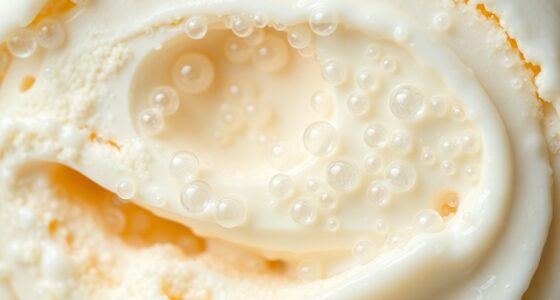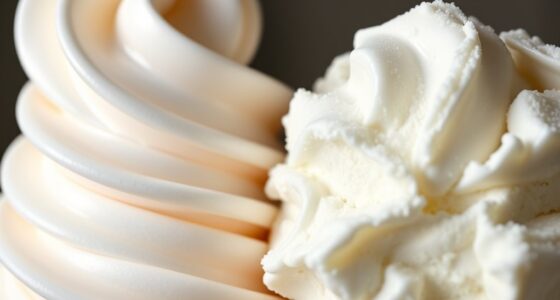
Freezer burn occurs when ice crystals grow on your ice cream, damaging its texture and flavor. This happens because moisture migrates from the ice cream to the freezer environment, especially during temperature fluctuations or when the packaging isn’t airtight. Repeated melting and refreezing cause larger, more damaging crystals to form. If you want to understand how keeping the freezer steady and sealing your treats can prevent freezer burn, keep exploring the science behind it.
Key Takeaways
- Ice crystals grow larger over time due to temperature fluctuations and moisture migration, causing a gritty texture.
- Freezer door opening introduces warm air, leading to melting, refreezing, and larger ice crystal formation.
- Moisture loss from dehydration creates dry, leathery areas on the ice cream surface, known as freezer burn.
- Consistent low temperatures slow ice crystal growth, preserving smoothness and preventing freezer burn.
- Airtight packaging minimizes moisture loss and prevents ice crystal enlargement, maintaining ice cream quality.
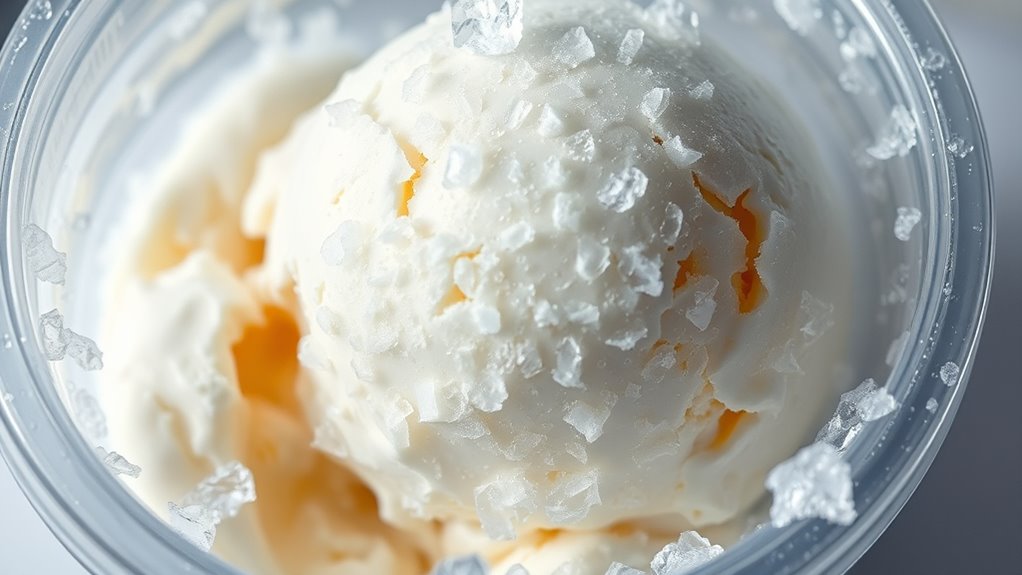
Have you ever wondered why some frozen foods develop that dry, leathery texture known as freezer burn? It’s a common frustration, especially with ice cream. The answer lies in the science of ice crystal growth and moisture migration. When you freeze your ice cream, water inside the product turns into ice crystals. Over time, these crystals can grow larger, damaging the smooth texture you love. This process begins because of ice crystal growth, which happens when small ice crystals merge into larger ones. The larger crystals distort the structure of your ice cream, making it feel icy and gritty instead of creamy.
Moisture migration plays a central role in freezer burn development. When you open and close the freezer door, warm air seeps in and causes slight temperature fluctuations. These changes can lead to moisture moving from the ice cream into the surrounding freezer environment. As moisture migrates, it leaves behind tiny pockets of dehydrated, dry areas in your ice cream. The result is a leathery, dried-out surface that’s tough and unappetizing. This migration is also driven by differences in vapor pressure between the ice cream and the freezer air; moisture naturally moves from areas of higher vapor pressure to lower vapor pressure, often leading to dehydration of the food.
Moisture migrates when the freezer door opens, causing dehydration and a leathery texture in your ice cream.
Another factor that accelerates these processes is temperature fluctuation. Every time the freezer warms slightly, even momentarily, it allows some of the ice crystals to melt, creating a liquid phase. When the freezer cools again, this liquid refreezes into larger crystals, which are more damaging. Over repeated cycles, this can markedly alter the texture of your ice cream. Additionally, if your ice cream isn’t stored in airtight packaging, exposed surfaces are more vulnerable to moisture loss and ice crystal growth. Proper packaging helps lock in moisture, preventing moisture migration and slowing down ice crystal growth. Maintaining a consistent temperature throughout storage is crucial because temperature fluctuations can cause repeated melting and refreezing, which accelerates crystal growth and dehydration.
Understanding these processes highlights why maintaining a consistent freezing temperature and using airtight containers are essential. Keeping your freezer at a steady temperature minimizes ice crystal growth, while airtight packaging reduces moisture migration. By doing so, you help preserve the creamy, smooth texture of your ice cream and prevent freezer burn from ruining the experience. So, next time you notice that icy, dry patch on your favorite treat, you’ll know it’s due to the ongoing science of ice crystal growth and moisture migration, both of which you can control with proper storage habits.
Frequently Asked Questions
How Does Humidity Affect Ice Crystal Formation?
Humidity impact plays a big role in ice crystal formation on your ice cream. When humidity is high, moisture migration occurs more easily, causing water vapor to enter the ice cream and form larger ice crystals. This results in a grainy texture. To prevent this, keep your freezer dry and sealed tightly. Controlling humidity levels helps maintain a smooth, creamy consistency and reduces unwanted ice crystal growth.
Can Adding Sugar Prevent Freezer Burn?
Adding sugar to your ice cream is like giving it a cozy blanket, but it doesn’t prevent freezer burn. Sugar’s effect is to lower the freezing point, making the ice cream softer and sweeter, but it doesn’t stop ice crystals from forming or moisture from sublimating. The sweetness influence can improve texture, but to truly prevent freezer burn, focus on proper storage and airtight containers.
What Is the Ideal Freezer Temperature for Ice Cream?
You should set your freezer to around -18°C (0°F) for ideal ice cream storage. This freezer temperature helps prevent excessive ice crystal formation, keeping your ice cream smooth and creamy. If the temperature is too high, larger ice crystals form, making your ice cream icy and less enjoyable. Maintaining the proper freezer temperature guarantees your ice cream stays fresh, scoopable, and free from unwanted ice crystals.
Does the Type of Container Influence Ice Crystal Size?
A stitch in time saves nine, and choosing the right container can make all the difference. Your container material and lid seal quality directly influence ice crystal size—airtight, sturdy materials like plastic or metal keep moisture out, preventing large crystals. Poor lid seals allow moisture intrusion, creating bigger crystals. So, select a tight-fitting container to keep your ice cream smooth and creamy, not icy.
How Often Should I Open the Freezer to Reduce Ice Crystals?
To reduce ice crystals, you should limit how often you open your freezer. Each time you do, warm air enters, disrupting air circulation and causing moisture to form ice crystals on your ice cream. Keep your freezer at a consistent temperature and store your ice cream for shorter durations when possible. This helps maintain proper air circulation, minimizes temperature fluctuations, and keeps your ice cream smooth and delicious longer.
Conclusion
Understanding freezer burn helps you enjoy ice cream without unwanted ice crystals. Did you know that ice crystals can grow up to 100 times larger during storage, ruining texture and flavor? By sealing your ice cream properly and minimizing exposure to air, you prevent these crystals from forming. Keep your freezer at the right temperature, and you’ll preserve your favorite treat’s creamy goodness longer. Now, you can savor every scoop without worrying about freezer burn ruining the experience.