
Eggs play a pivotal role in custard-style ice creams by acting as natural emulsifiers and thickeners. Their lecithin helps blend fats and liquids smoothly, giving you a rich, velvety texture. High-quality, fresh eggs improve flavor, stability, and scoopability, while proper handling and cooking create a strong protein network that keeps the ice cream stable during freezing. Keep exploring to discover how these factors work together for perfect ice cream consistency.
Key Takeaways
- Eggs act as natural emulsifiers, blending fats and liquids for a smooth, velvety custard base.
- Fresh eggs enhance flavor, color, and texture, resulting in richer, more stable ice cream.
- Proper handling and gradual heating prevent curdling, ensuring a strong protein network.
- The proteins in eggs form a gel matrix that maintains structure during freezing.
- Overall, eggs improve the stability, creaminess, and scoopability of custard-style ice creams.
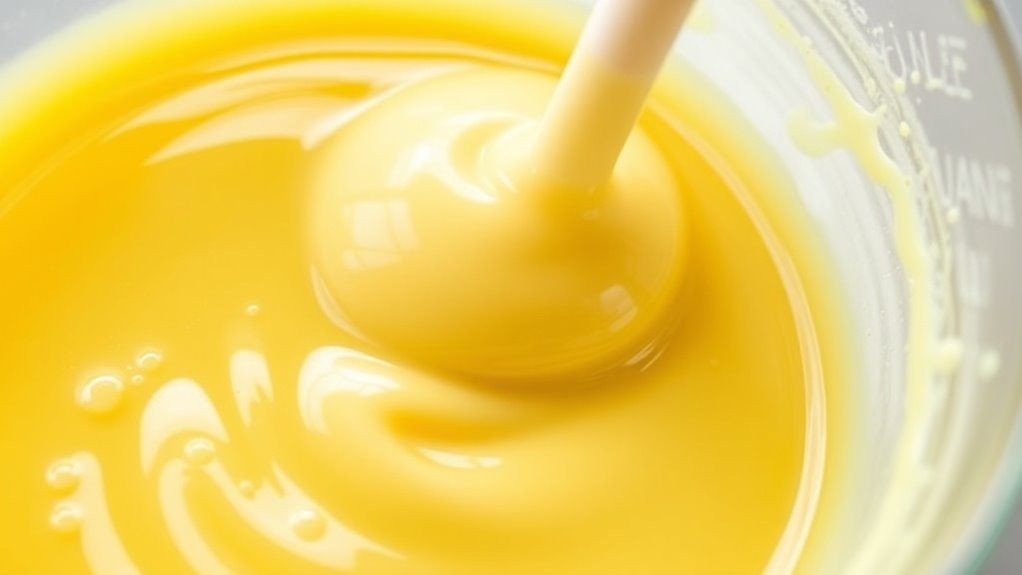
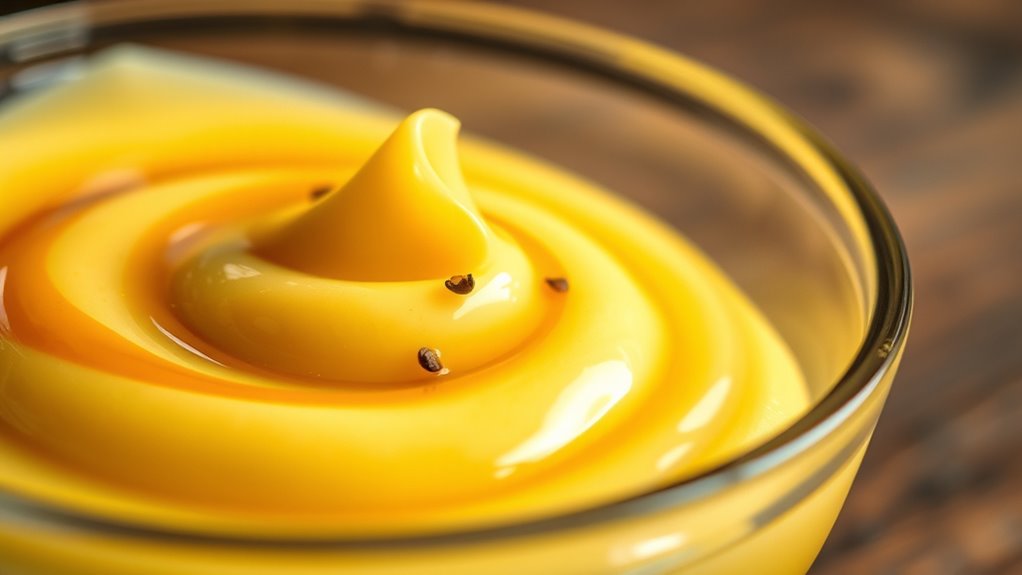
Have you ever wondered what gives custard-style ice creams their rich, smooth texture? The secret lies largely in eggs, which serve as natural emulsifiers and thickening agents. Eggs contain lecithin, a powerful emulsifier that helps blend fats and liquids seamlessly. When you mix eggs into your custard base, they create a stable, uniform mixture that prevents the fats from separating out, resulting in that luscious, creamy consistency you love. This emulsifying property is essential because it guarantees each spoonful is smooth and velvety, avoiding a greasy or gritty mouthfeel.
Eggs act as natural emulsifiers, creating a smooth, creamy custard that keeps ice cream luscious and velvety.
However, the effectiveness of eggs in custard ice cream depends heavily on their quality and how you store them. High-quality eggs have a richer yolk and a more vibrant color, which can influence the final flavor and appearance of your ice cream. Fresh eggs contain intact membranes and less bacterial contamination, reducing the risk of spoilage and confirming your custard remains safe to consume. When eggs are fresh, their proteins are more cohesive, which helps create a stronger gel network during freezing, giving your ice cream better structure and scoopability.
Storing eggs properly is equally important. Keep eggs refrigerated at or below 40°F (4°C) to slow down bacterial growth and maintain their freshness. Avoid leaving eggs out at room temperature for extended periods, as this can compromise their quality. If eggs are stored for too long, their proteins break down, reducing their emulsifying ability. Old eggs might produce a thinner custard with less body, and their flavor can become off-putting. Always check eggs for cracks or unusual odors before using them, as contaminated eggs can spoil your batch and pose health risks.
When preparing your custard, temper the eggs carefully—adding hot milk gradually to avoid curdling. This technique ensures the eggs cook gently, coagulating proteins uniformly without scrambling. Properly cooked custard, rich in eggs, holds its creamy consistency once frozen, thanks to the protein network formed during heating. If you skimp on quality or storage, you risk a watery, less stable ice cream. But with fresh eggs and correct handling, you’ll reveal the full potential of this natural emulsifier, creating a dense, silky texture that keeps your ice cream irresistibly smooth from first bite to last.
Frequently Asked Questions
Can Eggless Custard-Style Ice Creams Be as Creamy?
Yes, eggless custard-style ice creams can be just as creamy. By using egg substitutes like cornstarch, arrowroot, or tofu, you can achieve a smooth texture. Dairy-free options such as coconut milk, almond milk, or cashew cream also help provide richness and creaminess. With the right combination of these ingredients, you’ll end up with a delicious, creamy ice cream without eggs.
What Are Alternative Thickeners to Eggs?
Your quest for creamy, egg-free ice cream is like searching for a unicorn—rare but possible. Vegan alternatives like aquafaba, silken tofu, and coconut milk work wonders, while natural thickeners such as cornstarch, arrowroot, and agar-agar add body without eggs. These ingredients create smooth, luscious textures, proving you don’t need eggs to craft irresistibly rich ice cream. Plunge in and experiment—delicious results await!
How Do Eggs Influence Ice Cream Texture Over Time?
Eggs influence ice cream texture over time by helping with air incorporation and creating a smooth, creamy mouthfeel. Egg yolk emulsification stabilizes the fat and liquid mixture, preventing ice crystal growth. As the ice cream ages, these effects maintain its richness and prevent it from becoming grainy or icy. You’ll notice that properly incorporated eggs keep your ice cream consistently velvety and well-textured, even after storage.
Is Pasteurized Egg Safer for Homemade Recipes?
Did you know that pasteurized eggs reduce the risk of Salmonella contamination by over 99%? Yes, pasteurized egg safety makes homemade recipes much safer, especially if you’re concerned about raw eggs. The pasteurization process involves gently heating eggs to eliminate harmful bacteria without cooking them, so you can enjoy custard-style ice cream with peace of mind. Using pasteurized eggs is a smart choice for safer, delicious homemade ice cream.
Can Plant-Based Eggs Substitute in Custard Ice Creams?
Yes, plant-based substitutes can replace eggs in custard-style ice creams, but they may affect custard stability. You should choose thickeners like cornstarch, arrowroot, or aquafaba to mimic eggs’ binding and thickening properties. Keep in mind, these alternatives might alter texture and flavor slightly, so experiment to find the right balance for your recipe. With proper adjustments, you’ll still achieve a creamy and delicious ice cream.
Conclusion
So, savor the significance of eggs in creating creamy, custard‑style ice creams. They bring body, balance, and brilliance to your beloved desserts. By blending bold flavors with the beauty of eggs, you boost both richness and resilience. Remember, mastering this method means more marvelous, memorable ice creams. Embrace eggs’ essential role, elevate every scoop, and enjoy every delectable, delightful bite. Your dedication to detail delivers deliciously divine desserts each and every time.