
When ice cream is stored for a few weeks, it can become chewy due to ice crystals growing larger from temperature fluctuations and improper storage. These bigger crystals give it a gritty or rubbery texture. Additionally, fats may break away and separate, making the ice cream feel greasy. Exposure to air and moisture worsens the problem. By understanding the causes, you’ll discover how to keep your ice cream smooth and creamy longer.

Get baking supplies delivered free with Prime
- Fast, free delivery on millions of items
- Prime Video, Amazon Music and more included
- Member-only deals all year
Key Takeaways
- Fat separation over time creates a greasy, less smooth texture, contributing to a chewy mouthfeel.
- Freezer temperature fluctuations accelerate ice crystal growth, leading to a gritty, rubbery consistency.
- Extended storage causes ice crystals to enlarge, disrupting the ice cream’s original creamy texture.
- Exposure to air and moisture promotes freezer burn, which worsens chewiness.
- Proper storage, including stable temperatures and airtight packaging, helps maintain the ice cream’s smoothness.
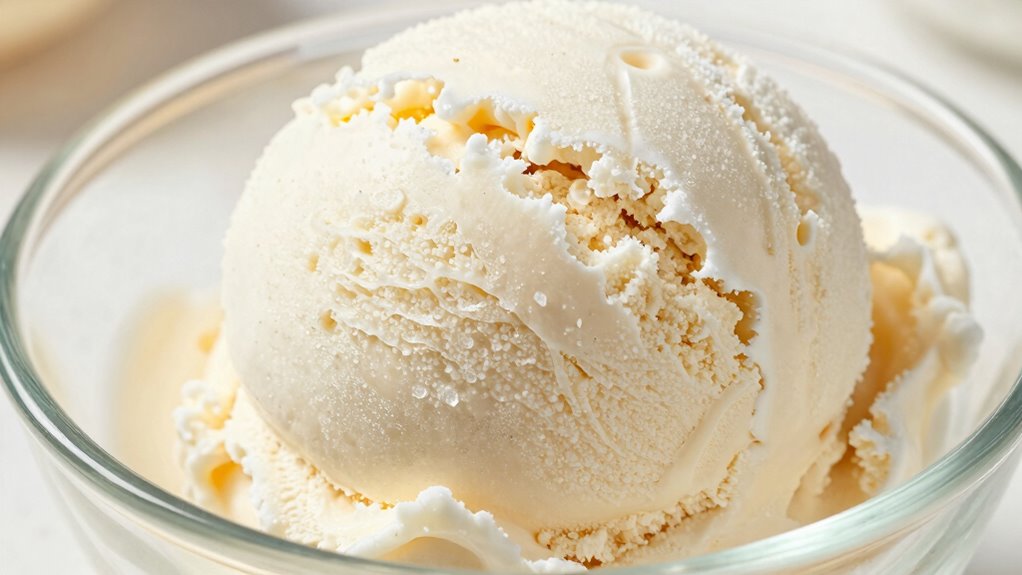
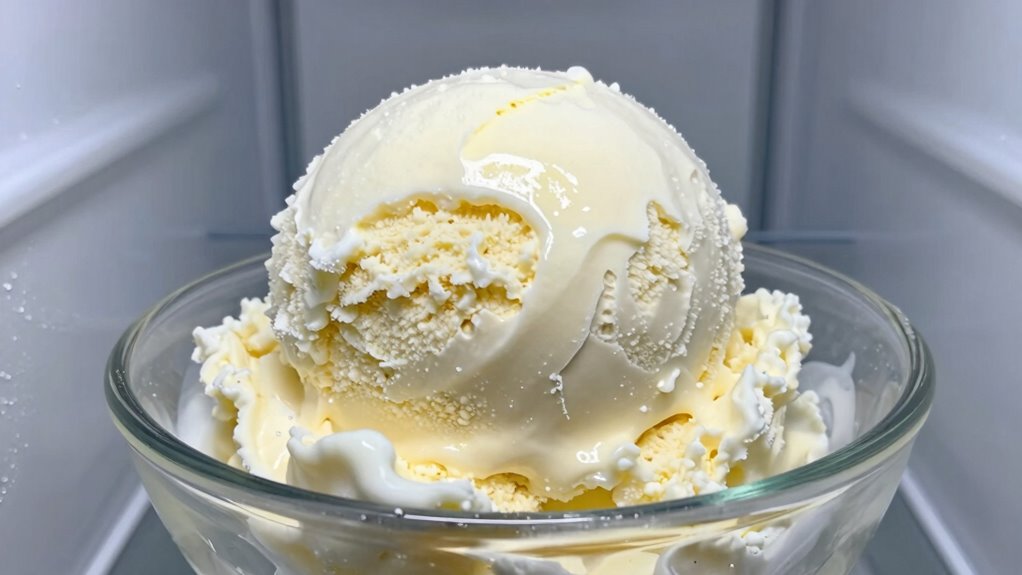
Ice cream often becomes chewy in storage, especially when it’s been kept for too long or exposed to improper conditions. When you notice this change, it’s typically due to a process called ice crystal formation. Over time, tiny ice crystals develop and grow larger inside the container. These larger crystals can make the texture gritty or rubbery, which contributes to that chewy sensation. If the freezer temperature fluctuates or if the ice cream isn’t stored at a consistent cold enough temperature, it accelerates ice crystal growth. This is why ice cream kept in a freezer with frequent opening or temperature changes tends to deteriorate faster.
Along with ice crystal formation, fat separation plays a significant role in the chewy texture. When ice cream sits for an extended period, the fats can start to break away from the mixture, rising to the top or sinking to the bottom of the container. This separation impacts the overall consistency, making the ice cream less smooth and more chewy. Fat separation occurs because, over time, the emulsion that keeps the fats evenly distributed begins to break down, especially if the container isn’t sealed tightly or if it’s exposed to warmer temperatures. This process can be further exacerbated by temperature fluctuations, which speed up the breakdown of the emulsion and worsen the texture issues. The result is a greasy or oily layer that alters the mouthfeel, making the ice cream feel more dense and chewy than creamy. Ice crystal growth is a common issue that can be mitigated by proper storage practices. Maintaining a stable freezer temperature can significantly slow down these changes and preserve the ice cream’s original texture. Additionally, exposure to air and moisture can further compromise quality by promoting freezer burn and texture changes. Proper packaging can help prevent air exposure and reduce moisture intrusion, further protecting the ice cream’s quality over time.
If you’re storing ice cream correctly but still notice it turning chewy after a few weeks, it’s often due to these underlying changes. Freezing conditions that aren’t stable cause ice crystals to grow larger, and fats to separate, both of which impact texture significantly. Once these changes happen, simply scooping or eating the ice cream becomes less pleasant because the once smooth and creamy consistency turns into a more rubbery or chewy experience. To prevent this, it’s best to keep your freezer at a consistent temperature around 0°F (-18°C) and avoid opening the freezer frequently or exposing the ice cream to air and moisture.
airtight ice cream storage container
As an affiliate, we earn on qualifying purchases.
As an affiliate, we earn on qualifying purchases.
Frequently Asked Questions
Can Ice Cream Become Chewy if Stored at Room Temperature?
Yes, ice cream can become chewy if stored at room temperature. When it’s not kept cold, the texture changes, leading to a loss of flavor retention and a chewy, icy consistency. You’ll notice the ice cream becomes less smooth and more difficult to scoop. Proper storage at freezing temperatures preserves its texture, ensuring it stays creamy and flavorful. So, always keep your ice cream chilled to enjoy its original quality.
Does the Type of Ice Cream Affect Its Tendency to Become Chewy?
Imagine opening a tub of ice cream, and the texture surprises you—sometimes chewy, other times smooth. The type of ice cream definitely affects its tendency to become chewy. Flavor variations and ingredient quality play key roles; premium ingredients and classic flavors tend to stay creamy longer, while those with artificial additives or unique flavors might turn chewy faster. So, choose your ice cream wisely for a consistently delightful experience.
How Does Packaging Influence Ice Cream’s Texture Over Time?
Packaging plays a vital role in preventing flavor degradation and texture alteration in your ice cream. If it’s not sealed properly, air and moisture can seep in, causing ice crystals to form and making the ice cream chewy over time. Airtight containers or wrap help preserve the original texture and flavor, ensuring your ice cream stays creamy and delicious longer. Proper packaging keeps out contaminants and maintains ideal storage conditions.
Is It Safe to Eat Chewy Ice Cream After Long Storage?
Like a forgotten relic in your freezer, chewy ice cream after long storage is safe to eat, but its texture might be off. The ice cream texture can become rubbery due to ice crystal growth, which also impacts flavor preservation. If it smells and tastes okay, go ahead and enjoy it. Just remember, the quality might not match fresh scoops, but safety isn’t usually compromised.
Can Additives Prevent Ice Cream From Becoming Chewy?
Additives like stabilizers and emulsifiers can help prevent ice cream from becoming chewy by preserving its texture. These additive types work by maintaining smoothness and preventing ice crystal growth, which leads to chewiness. If you want to enhance texture preservation, look for ice creams with added stabilizers like guar gum or carrageenan. Using these additives can keep your ice cream creamy and enjoyable for longer periods.
Conclusion
Think of your ice cream as a frozen canvas, where time paints its subtle changes. When it turns chewy, it’s like a quiet echo of forgotten memories, a reminder that even the sweetest things need proper care to stay pristine. By understanding these changes, you become the artist of your own frosty masterpiece. Keep it fresh, and let your ice cream stay a symbol of joy, not a relic of neglect.
Halloween Picks
halloween
As an affiliate, we earn on qualifying purchases.