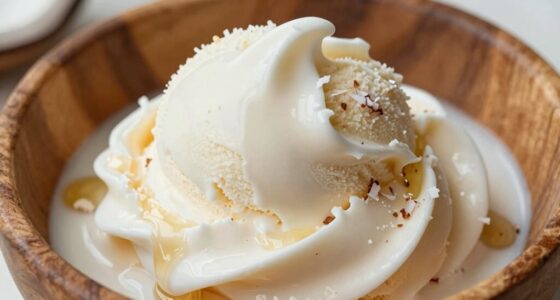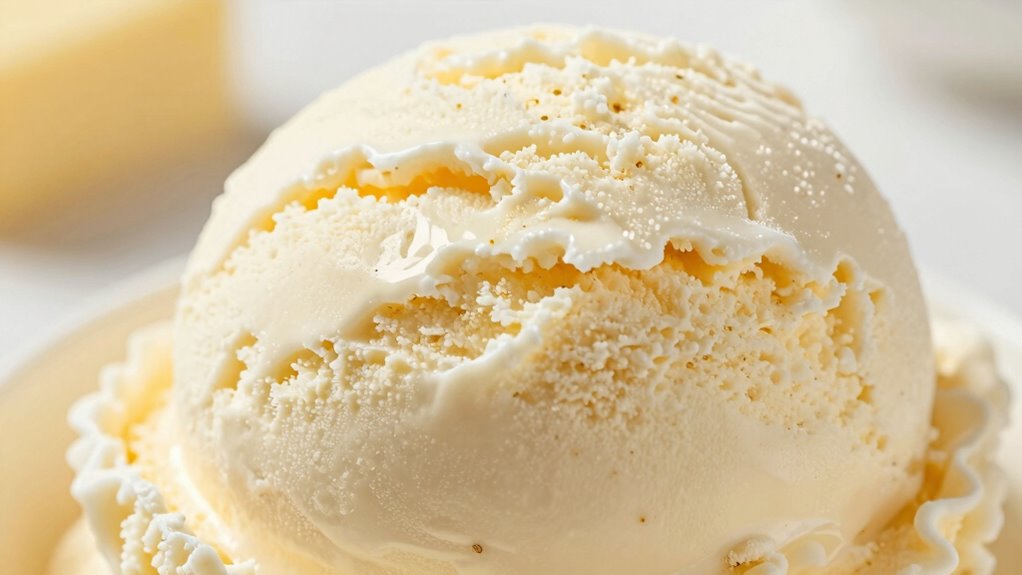

The buttery flavor in ice cream mainly comes from compounds like diacetyl, which mimic butter’s rich aroma and taste. Fats and proteins in the ice cream help carry these flavors, enhancing creaminess and mouthfeel. Both natural processes, like fermentation, and artificial additives contribute to this taste. The balance and formulation are key to avoiding overpowering notes. To discover how these ingredients and techniques come together for that perfect buttery scoop, keep exploring further.
Key Takeaways
- The buttery flavor in ice cream mainly comes from diacetyl, a volatile compound that mimics butter and popcorn aromas.
- Diacetyl interacts with taste and smell receptors, creating a rich, creamy butter-like flavor profile during consumption.
- Fats in ice cream carry and amplify buttery flavors by trapping volatile compounds, enhancing aroma perception.
- Food scientists use flavor enhancers like vanillin and esters to boost buttery notes and mask off-flavors.
- Natural fermentation and innovative technologies are increasingly used to develop authentic, safer butter-like flavors in ice cream.
What Causes the “Buttery” Flavor in Ice Cream?
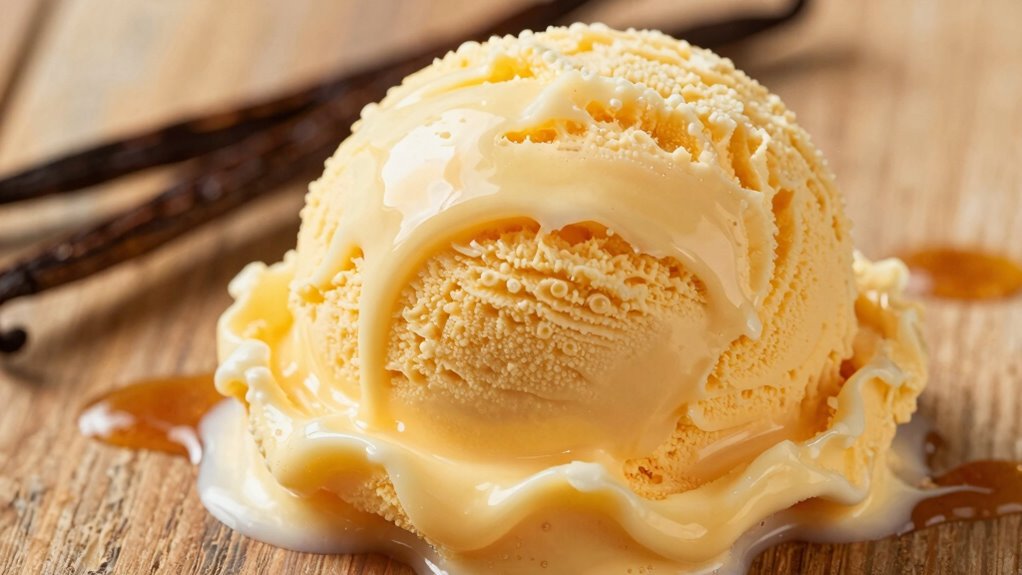
The buttery flavor in ice cream primarily comes from a chemical compound called diacetyl. You might recognize diacetyl from its frequent mention in cultural references, often linked to popcorn or buttered snacks. This compound gives ice cream its rich, creamy taste that many adore. However, health implications have raised concerns about its safety, especially when inhaled in large quantities during manufacturing. While diacetyl is naturally present in some foods, artificial additions are common in commercial ice cream to enhance flavor. Understanding these chemical influences helps you appreciate the complex chemistry behind your favorite treat. Although generally considered safe in small amounts, ongoing discussions about health risks keep this topic relevant for consumers and food scientists alike. Additionally, the presence of volatile compounds like diacetyl can vary depending on production methods, affecting the final flavor profile of ice cream. Manufacturing processes can influence the concentration of these compounds, further altering taste. Modern flavor enhancement techniques can also modify the levels of diacetyl and related compounds, impacting the overall sensory experience. Moreover, advances in production technology aim to reduce the levels of potentially harmful chemicals while maintaining flavor quality. Research into alternative flavoring methods is ongoing to develop safer yet equally appealing options for consumers.
How Do Diacetyl and Related Compounds Create a Buttery Taste?
Diacetyl and its related compounds create a buttery taste by interacting with your taste buds and olfactory receptors, mimicking the flavor of real butter. This interaction produces a distinctive buttery aroma that enhances the overall flavor experience. When you encounter diacetyl, it triggers specific receptors associated with the rich, creamy notes you associate with butter. These compounds contribute to flavor enhancement, making ice cream taste more indulgent. To understand how this works:
- They release volatile molecules that stimulate olfactory receptors.
- They mimic natural butter’s complex aroma profile.
- They amplify the perception of richness in the ice cream.
- They create a smooth, buttery aftertaste that lingers.
- Proper management of flavor compounds can prevent overpowering and maintain a balanced taste profile.
- The precise balance of these compounds is crucial to achieve a natural butter-like flavor, ensuring the flavor remains authentic and appealing. This chemistry tricks your senses into perceiving a genuine buttery flavor, elevating the overall sensory experience without using actual butter. Additionally, the chemical interactions involved help fine-tune the flavor profile for consistency and authenticity, and understanding the body’s sensory response can further optimize flavor development.
How Fats and Proteins Enhance Creaminess and Butteriness in Ice Cream
Fats give ice cream its rich, smooth mouthfeel and help carry buttery flavors. Proteins contribute to a creamy texture by stabilizing the mixture and preventing ice crystal formation. Additionally, the wave and wind interactions can influence the final texture and sensory qualities of the product during processing. Understanding how emulsification works is key to achieving the perfect buttery and creamy consistency in ice cream. Techniques such as net worth analysis of key ingredients can also guide formulation improvements to enhance flavor and texture. Incorporating essential oils in flavor development can further enhance the sensory profile of the final product, especially when considering the chemical interactions that affect flavor release.
Fat’s Role in Flavor
As you savor a scoop of ice cream, the rich, creamy texture comes from fats and proteins working together to enhance flavor and mouthfeel. Fats act as carriers, trapping volatile compounds that contribute to the buttery aroma, while proteins help stabilize these flavors during dairy fermentation. This synergy allows for better flavor modulation, making subtle notes more noticeable. Fats also influence how flavors are released in your mouth, intensifying the overall experience. Additionally, fats help balance sweetness and bitterness, creating a harmonious taste. They serve as a foundation for adding butter-like notes, amplifying the buttery flavor you enjoy. Without fats, the complex interplay of flavors and aroma compounds would be considerably diminished, reducing the depth and richness that makes ice cream so satisfying. The properties of fats and proteins are essential in the flavor development process, shaping the sensory qualities that make ice cream so irresistible. Moreover, fats can affect the perception of creaminess, contributing to the smooth, luxurious feeling that enhances overall enjoyment. Fats also influence flavor release, which impacts how taste sensations are perceived during consumption. Understanding how fat content influences flavor release and texture can help in creating ice creams with precisely the desired qualities.
Proteins and Texture
Proteins play a crucial role in shaping the creamy, smooth texture that makes ice cream so appealing. Milk proteins, especially casein and whey, contribute markedly to texture modification by forming a stable network that traps air and water. This network enhances creaminess and provides a desirable mouthfeel. When you incorporate milk proteins into your ice cream, they help improve the overall structure, preventing ice crystal formation and ensuring a velvety consistency. Proteins also interact with fats, balancing the richness and creating a more cohesive, buttery sensation. Understanding eco-friendly accommodations how milk proteins influence texture can help you craft ice creams that are not only flavorful but also irresistibly smooth and luscious, elevating the sensory experience with every spoonful.
How Food Scientists Mask Off-Flavors and Boost Butter-Like Notes?

Food scientists use flavor enhancers to amplify the buttery notes in ice cream while masking any off-flavors. They carefully balance fatty aromas to guarantee a smooth, appealing taste without unwanted bitterness. By combining these techniques, they create a rich, buttery flavor that’s both convincing and enjoyable. Additionally, understanding flavor balancing is essential for achieving a natural and harmonious taste profile. Proper use of aroma compounds can further enhance the overall sensory experience and ensure the desired buttery perception. Mastering sensory analysis allows scientists to fine-tune these formulations for optimal flavor.
Use of Flavor Enhancers
Flavor enhancers play a crucial role in creating that rich, buttery taste in ice cream by masking any off-flavors that might detract from the desired profile. They work through flavor masking and aroma balancing, ensuring the buttery notes stand out. These enhancers can improve overall flavor perception and make the ice cream more appealing. By carefully selecting specific compounds, food scientists can suppress undesirable tastes while amplifying the desired buttery aroma. This process involves:
- Amplifying natural butter flavors
- Reducing lingering off-notes
- Enhancing aroma integration
- Ensuring consistent flavor profiles
Using these techniques, they create a smooth, balanced flavor experience that feels indulgent and authentic. Flavor enhancers are essential tools in perfecting the buttery illusion without overpowering or muddling the ice cream’s overall taste.
Masking Unwanted Notes
To create that smooth, buttery flavor in ice cream, scientists actively mask off-notes that could distract from the desired profile. They use flavor masking techniques and aroma balancing to suppress undesirable flavors like grassy or metallic notes. This process involves selecting ingredients that complement or overpower off-flavors, ensuring the butter-like aroma stands out. Here’s a look at some common methods:
| Technique | Purpose | Example Ingredients |
|---|---|---|
| Masking agents | Cover up unwanted notes | Vanillin, lactones |
| Aromatic enhancers | Boost desirable butter aromas | Diacetyl, dihydroxyacetone |
| Aroma balancing | Harmonize overall flavor profile | Fatty acids, esters |
| Flavor modifiers | Alter perception of off-notes | Methyl anthranilate |
| Sensory adjustment | Fine-tune aroma and taste | Natural extracts |
Balancing Fatty Aromas
Balancing fatty aromas plays a crucial role in enhancing the buttery notes in ice cream by masking off-flavors and creating a harmonious flavor profile. To achieve this, food scientists carefully manipulate ingredients to optimize the flavor balance. They often add subtle components that complement the buttery aroma, making it more prominent. For example, incorporating certain dairy fats or natural flavor enhancers can strengthen the desired notes. Additionally, balancing fatty aromas involves reducing any overpowering or off-putting smells that distract from the buttery profile. Techniques include adjusting fat types, using emulsifiers, or adding flavor modifiers. These strategies ensure the ice cream delivers a rich, smooth, and appealing butter-like experience that keeps consumers coming back.
Natural vs. Artificial “Buttery” Flavors: What’s the Difference?
When it comes to creating that rich, buttery taste in ice cream, manufacturers can choose between natural and artificial flavors, each offering distinct differences. Natural buttery flavors often come from ingredients like cream, butter, or natural extracts, providing a genuine buttery aroma and a more authentic taste. Artificial flavors, however, are chemically synthesized to mimic this aroma and flavor without using real dairy components. They tend to be more consistent and cost-effective, but they can sometimes require flavor masking to hide any off-notes. Natural flavors appeal to those seeking a more authentic experience, while artificial flavors offer versatility and stability. Understanding these differences helps you appreciate how different formulations influence the overall buttery profile in your favorite ice cream.
Techniques for Crafting a Rich, Butter-Like Flavor in Ice Cream
Creating a rich, butter-like flavor in ice cream involves more than simply adding flavoring agents. You can enhance this flavor through techniques that manipulate dairy fermentation and aroma compounds. Fermentation develops complex aroma compounds that mimic the buttery notes naturally present in dairy. To achieve this, consider:
Enhance buttery ice cream flavors by optimizing dairy fermentation and aroma compound development naturally.
- Using fermented dairy ingredients like cultured cream or yogurt for depth
- Adjusting fermentation times to optimize aroma compound development
- Incorporating subtle amounts of diacetyl or related compounds for richness
- Balancing fats and proteins to promote desirable aroma release
These methods help cultivate authentic, buttery flavors by encouraging natural chemical reactions within the dairy base. By controlling fermentation and aroma compound formation, you craft a more genuine, rich butter-like profile in your ice cream.
Key Ingredients That Make Ice Cream Taste More Buttery
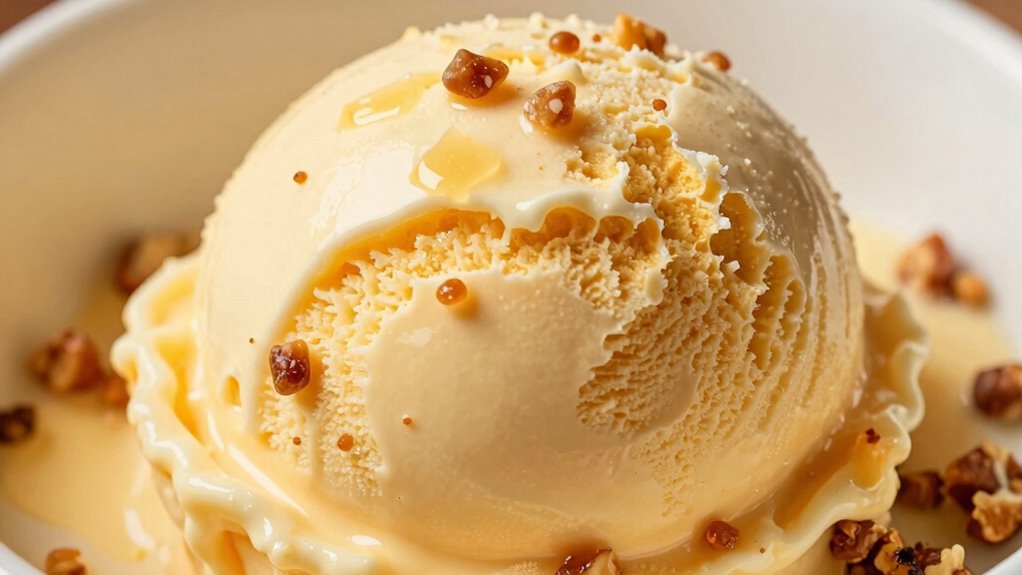
To enhance the buttery flavor in ice cream, incorporating specific key ingredients can make a noticeable difference. Dairy fermentation plays a essential role, as certain bacteria break down milk sugars and fats, producing compounds that deepen the buttery profile. These fermentation byproducts, like diacetyl, are indispensable in flavor chemistry, giving ice cream a rich, buttery aroma without added fats. Using cultured dairy ingredients such as sour cream or buttermilk introduces natural fermentation effects, intensifying the buttery notes. Additionally, adding butter or butter flavor extracts can amplify this effect, but understanding the underlying chemistry guarantees you achieve a natural, authentic taste. By selecting ingredients rooted in dairy fermentation and flavor chemistry, you’ll craft ice cream with a genuine, irresistible buttery flavor.
How Temperature and Storage Impact the Butteriness of Ice Cream
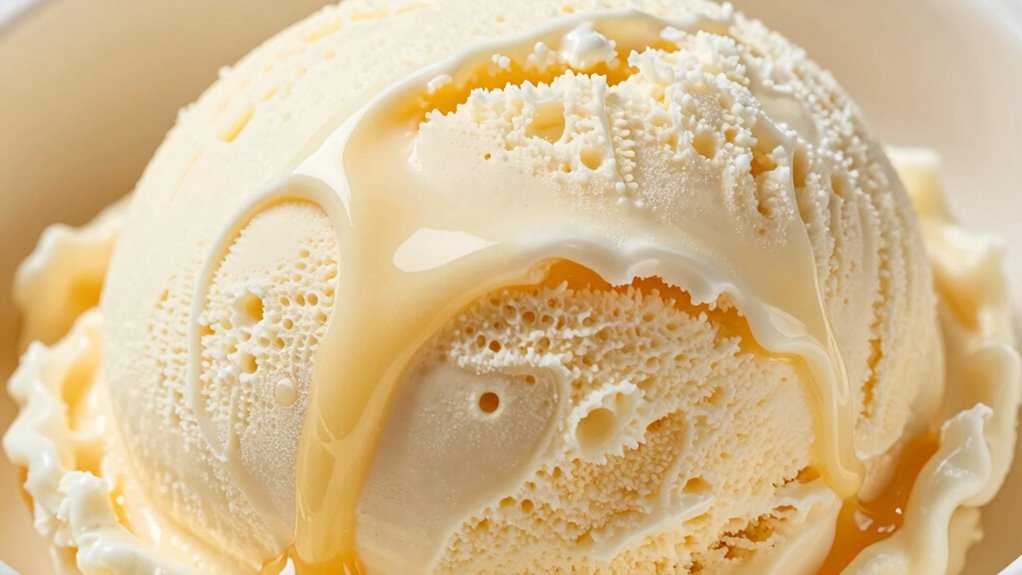
Temperature and storage conditions play a essential role in maintaining the buttery flavor of ice cream. When stored properly, the milk fat remains evenly distributed, ensuring flavor stability over time. If ice cream gets too warm, the milk fat can separate or melt, reducing its buttery notes. Conversely, freezing it too cold can cause the fat to become brittle, impacting texture and flavor release. To optimize flavor stability, keep ice cream consistently frozen at around -20°C. Proper storage also prevents oxidation, which can dull the buttery taste. Be mindful of these factors:
- Store ice cream at a stable, low temperature
- Avoid frequent temperature fluctuations
- Use airtight containers to prevent flavor transfer
- Keep away from light and heat sources
Maintaining ideal conditions preserves milk fat’s contribution to that rich, buttery flavor.
Future Innovations in Creating Authentic “Buttery” Flavors in Frozen Desserts
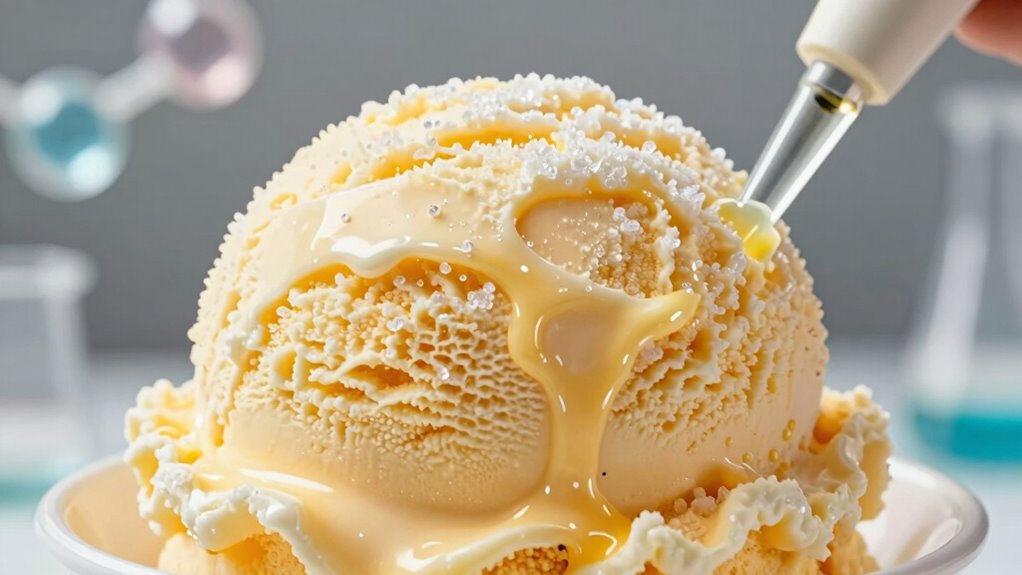
Advancements in food science are opening new possibilities for replicating the authentic buttery flavor in frozen desserts. Researchers are exploring innovative methods to enhance the buttery aroma, making it more natural and appealing. Techniques like precision fermentation and enzyme technology allow for the creation of specific flavor compounds that boost flavor perception without artificial ingredients. Additionally, nano-encapsulation of flavor molecules can improve stability and controlled release, ensuring a consistent buttery note throughout storage. Emerging plant-based ingredients and fermentation-derived compounds also promise to deepen the authentic butteriness. These innovations aim to deliver a richer, more genuine flavor profile that appeals to consumers seeking natural, clean-label products. As technology advances, your ice cream can soon offer an even more convincing buttery experience, elevating the overall sensory enjoyment.
Frequently Asked Questions
Are Artificial Butter Flavors Safe for All Consumers?
Artificial butter flavors are generally safe for most consumers, but you should check the label for ingredient sourcing and potential allergens. These flavors help maintain flavor consistency across batches, ensuring your ice cream tastes as expected. However, if you have allergies or sensitivities, it’s wise to consult product information or a healthcare professional. Always choose reputable brands that prioritize quality and transparency to enjoy your treat worry-free.
How Do Different Dairy Sources Influence Buttery Flavor Profiles?
Imagine the richness of cream meets the subtle tang of yogurt—that’s how different dairy sources influence buttery flavor profiles. You’ll find that cream offers a smooth, creamy base, while milk adds a lighter note. Butterfat levels and fermentation processes shape the flavor, making each dairy source uniquely contribute to the buttery taste. So, your choice of dairy directly impacts the depth and complexity of the flavor profile in ice cream.
Can Plant-Based Ice Creams Achieve the Same Buttery Taste?
Yes, plant-based ice creams can achieve a buttery taste by using plant-based fats like coconut or palm oil, which mimic dairy fats’ richness. Additionally, natural flavorings such as diacetyl or buttery aroma compounds enhance the buttery profile. By carefully combining these ingredients, you can create a plant-based ice cream with a convincing buttery flavor that appeals to those seeking dairy-free options.
What Role Do Fermentation Processes Play in Flavor Development?
Fermentation processes shape flavor development through fermentation metabolites and microbial interactions. You’ll find that fermentation metabolites, such as esters and ketones, create complex, nuanced flavors. Microbial interactions enhance this complexity, producing unique aroma compounds and enriching taste profiles. By controlling fermentation conditions, you can influence these metabolites and interactions, crafting flavors that deepen and diversify your ice cream’s buttery notes, making your product more appealing and memorable.
How Do Regional Preferences Affect Butter Flavor Formulation?
You should consider regional preferences when formulating butter flavor, as the regional palate and cultural influence shape taste expectations. In some areas, a rich, creamy butter flavor is preferred, while others favor a lighter, more delicate note. By understanding local flavor profiles, you can tailor the formulation to match cultural tastes, ensuring your ice cream appeals to specific markets and enhances customer satisfaction globally.
Conclusion
Now that you know the chemistry behind that irresistible buttery flavor, you can imagine it as a symphony of tiny molecules dancing together. Whether from natural ingredients or clever science, this flavor transforms your ice cream into a creamy, golden experience. Next time you enjoy that rich, buttery note, remember you’re savoring a masterpiece crafted by science and artistry—turning simple ingredients into a frozen delight that feels like a hug in every bite.