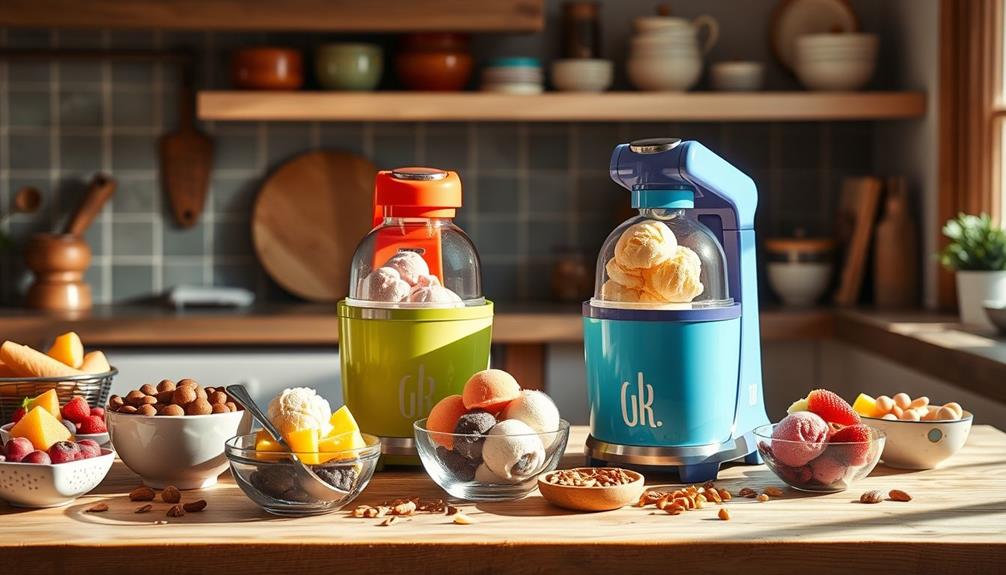
Brown sugar adds depth to ice cream because its natural molasses imparts rich caramel, spice, and earthy flavors that white sugar lacks. Its impurities and trace minerals also enhance complexity, creating a layered taste. Plus, the moisture and finer grains promote a smooth, creamy texture. This combination makes your ice cream more flavorful and satisfying. If you keep exploring, you’ll discover even more ways brown sugar transforms your ice cream experience.

Get baking supplies delivered free — and shop member deals
- Fast, free delivery on millions of items
- Access to Prime Big Deal Days deals on October 6–7
- Prime Video, Amazon Music and more included
Key Takeaways
- Brown sugar contains molasses, which adds caramel-like, earthy notes that deepen the ice cream’s flavor profile.
- The natural impurities and trace minerals in brown sugar enhance complexity and contribute subtle flavor nuances.
- Caramelization and Maillard reactions during heating develop rich, layered flavors unique to brown sugar.
- The moisture content in brown sugar promotes a smoother, creamier texture, enriching the overall taste experience.
- The natural flavors and chemical processes in brown sugar create a more robust, multi-dimensional flavor than white sugar.
As an affiliate, we earn on qualifying purchases.
What Makes Brown Sugar Different From White Sugar In Ice Cream?

Have you ever wondered what sets brown sugar apart from white sugar in ice cream? The key difference lies in how each interacts during the mixing process. Brown sugar contains molasses, which affects sugar crystallization, making the sugar less prone to forming large, gritty crystals. This results in a smoother texture and helps with flavor infusion, allowing the subtle caramel notes from the molasses to blend seamlessly into the ice cream. The moistness of brown sugar also promotes even distribution of sweetness, enhancing overall creaminess. Additionally, sugar crystallization plays a crucial role in determining the final texture of the ice cream. White sugar, on the other hand, crystallizes more easily, which can lead to a slightly grainy texture. The presence of molasses in brown sugar not only influences crystallization but also impacts flavor depth, giving the ice cream a richer taste. Moreover, the moisture content in brown sugar can help prevent ice crystal formation during freezing, contributing to a more luxurious texture. Interestingly, the natural acids present in brown sugar can also enhance the overall flavor profile, making your ice cream more complex and satisfying. So, brown sugar’s unique composition influences both the texture and depth of flavor, making your ice cream richer and more complex.
How Does Brown Sugar’s Molasses Content Enhance Flavor Depth?

Brown sugar’s molasses content plays a vital role in deepening flavor because it introduces rich, caramel-like notes that white sugar simply can’t replicate. This molasses flavor adds complexity, making your ice cream taste more layered and satisfying. The natural sweetness is complemented by subtle hints of spice and earthiness, enhancing overall flavor depth. These elements create a warm, inviting profile that keeps each spoonful interesting. Additionally, the chemical composition of brown sugar influences how its flavors develop during cooking or mixing, further enriching the taste experience. The presence of natural impurities also contributes to its distinctive flavor profile, setting it apart from white sugar. It’s these flavor compounds that give brown sugar its characteristic richness and depth. The moisture content of brown sugar can also impact how flavors meld and evolve during preparation, adding to its depth. Moreover, the moisture level can affect the texture and consistency of your ice cream, influencing how well flavors integrate. To understand better, consider this:
| Aspect | Effect | Result |
|---|---|---|
| Molasses content | Adds caramel-like notes | Richer flavor profile |
| Flavor enhancement | Boosts depth and complexity | More satisfying taste |
| Overall impact | Creates warmth and richness | Deeper, more memorable experience |
How Does the Chemistry of Brown Sugar Create That Warm, Rich Flavor?
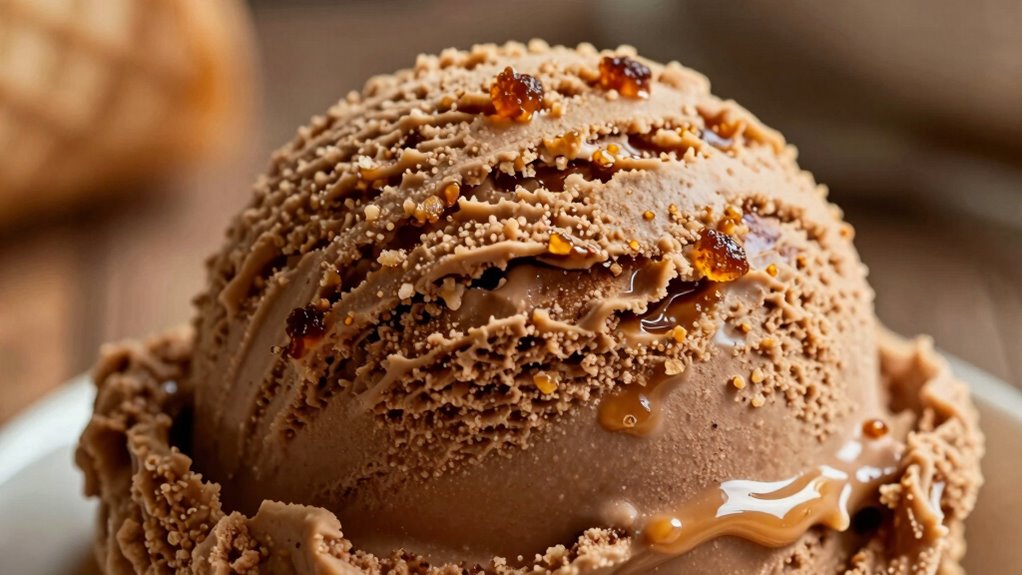
The chemistry of brown sugar, especially its molasses content, plays a key role in creating that warm, rich flavor. When heated, the sugars caramelize, developing deep, complex notes that enhance taste. Additionally, unrefined sugars contribute subtle nuances that white sugar can’t match. The presence of molasses not only adds flavor but also influences the sugar composition, resulting in a more layered taste profile. Understanding caramelization reveals how heat transforms sugars into those desirable flavor profiles, emphasizing the importance of sugar type in culinary applications. Moreover, the complexity of flavors introduced by molasses enhances the sensory experience of the final product. Recognizing the role of traditional indigenous practices in food preparation can deepen appreciation for the richness of such flavors. Exploring sugar processing methods sheds light on how different treatments impact flavor depth and complexity.
Caramelization of Molasses
As the sugars in molasses undergo caramelization during heating, complex chemical reactions produce the warm, deep flavors that define brown sugar ice cream. This process involves sugar crystallization, where sugar molecules break down and reassemble into new compounds, creating rich, caramel-like notes. These reactions deepen the flavor profile, making it more robust and complex than white sugar. The intense heat also promotes Maillard reactions, enhancing the warmth and adding subtle smoky undertones. When you pair brown sugar with ingredients like spices or nuts, these caramelized compounds amplify the flavor pairing, creating a harmonious, multidimensional taste. Additionally, artistic complexities in flavor development mirror how innovative techniques in art can evoke layered emotional responses. Overall, caramelization of molasses transforms simple sugars into a flavorful foundation that gives brown sugar ice cream its signature depth and warmth.
Presence of Unrefined Sugars
Have you ever wondered why brown sugar imparts such a warm, complex flavor to ice cream? It’s because of its presence of unrefined sugars, which retain natural molasses. Unlike refined white sugar, unrefined sugars offer a richer, more nuanced natural sweetness that enhances depth. This unprocessed state preserves trace minerals and flavor compounds, contributing to that signature warm, caramel-like aroma. Additionally, these natural components can provide subtle health benefits, such as minerals like calcium and potassium. The chemistry of brown sugar’s unrefined sugars allows it to create a more layered taste profile, making your ice cream feel deeper and more satisfying. This natural complexity is what sets brown sugar apart, giving your dessert that inviting, cozy flavor that white sugar simply can’t match.
Does Using Brown Sugar Change the Texture and Creaminess of Ice Cream?

Using brown sugar in ice cream recipes can subtly influence its texture and creaminess. The natural molasses in brown sugar promotes texture variation, leading to a slightly softer and more moist consistency. This moisture content can enhance the overall creaminess, making each bite feel richer and more indulgent. The moisture content in brown sugar helps prevent ice crystallization, resulting in a smoother, silkier mouthfeel. Additionally, its finer granulation disperses more evenly during mixing, contributing to uniform texture. By incorporating brown sugar, you may notice a subtle depth in the cream’s richness, which amplifies the perception of creaminess. The moisture retention properties of brown sugar further support a creamy and luscious final product. Moreover, the flavor complexity provided by the molasses enhances the overall sensory experience, making the ice cream taste deeper and more nuanced. The presence of natural sugars also affects freezing point, helping to maintain a desirable texture during storage. This sugar’s chemical composition impacts how the ice cream freezes, ensuring a smoother consistency. Overall, brown sugar not only adds flavor but also plays a role in improving the ice cream’s texture, delivering a more satisfying and luxurious experience.
Which Sugar Gives Your Ice Cream a More Complex, Layered Sweetness?

Brown sugar often introduces a more complex, layered sweetness to ice cream because its natural molasses adds subtle, multifaceted flavors. This complexity enhances the overall flavor profile, making each bite more interesting. When choosing between sugars, consider these factors:
- Sugar crystallization – Brown sugar’s moisture content reduces crystallization, creating a smoother texture and richer taste.
- Flavor pairing – Its deep, caramel notes blend well with spices, nuts, and fruit, enriching the layered sweetness.
- Taste depth – The molasses in brown sugar adds earthy undertones, providing a more nuanced, sophisticated flavor compared to white sugar’s straightforward sweetness.
- Moisture retention – Brown sugar’s moisture helps maintain a desirable texture stability in the ice cream, preventing it from becoming too icy or hard. Additionally, its moisture content contributes to a creamier mouthfeel overall. Furthermore, the natural composition of brown sugar supports a more balanced and layered flavor experience. Incorporating brown sugar can also influence the fermentation process, subtly affecting the overall flavor development during freezing.
How Can I Use Brown Sugar to Maximize Flavor in Ice Cream?

To maximize the flavor of brown sugar in your ice cream, start by incorporating it early in the mixing process. This allows the sugar to dissolve fully, promoting even flavor distribution and enhancing the overall taste. For better flavor enhancement, consider heating the milk or cream slightly with the brown sugar before blending it into your base; this intensifies its rich, caramel notes. When substituting ingredients, replace white sugar with brown sugar gradually to preserve texture and consistency, ensuring the deeper flavors shine through without overpowering the ice cream. Using brown sugar as a primary sweetener adds depth and complexity, making each bite more satisfying. Proper integration and mindful ingredient substitution *unseal* the full potential of brown sugar’s flavor enhancement in your homemade ice cream.
Can I Substitute White Sugar With Brown Sugar In My Ice Cream Recipe?

Substituting white sugar with brown sugar in your ice cream recipe is definitely possible, but it requires some adjustments. Brown sugar adds moisture and a richer flavor, which can influence the texture and taste. To successfully make this switch, consider these tips for sugar substitutions and flavor variations:
- Reduce liquid: Since brown sugar contains moisture, decrease other liquids slightly to prevent ice cream from becoming too soft.
- Adjust sweetness: Brown sugar is often less sweet than white sugar, so taste and add more if needed.
- Enhance flavor: Use brown sugar to introduce deeper, caramel-like notes, creating unique flavor variations in your ice cream.
Experimenting with sugar substitutions can yield richer, more complex flavors, making your ice cream truly special.
Frequently Asked Questions
Does Brown Sugar Affect the Freezing Point of Ice Cream?
Yes, brown sugar affects the freezing point of ice cream by influencing crystal formation and ice crystal size. Its molasses content introduces impurities that lower the freezing point, helping prevent large ice crystals. This results in a creamier texture because smaller ice crystals form during freezing. So, when you use brown sugar, you’ll notice a smoother, richer ice cream with better-controlled crystal growth, enhancing overall quality.
Can Brown Sugar Be Used in Vegan Ice Cream Recipes?
Yes, you can use brown sugar in vegan ice cream recipes. It’s a great vegan ingredient substitution that adds richness and depth to your dessert. Brown sugar works well as an alternative sweetener, providing moisture and a caramel-like flavor that enhances the overall taste. Just keep in mind that it may slightly alter the texture, so consider adjusting other ingredients if needed to achieve your desired consistency.
How Does Brown Sugar Impact the Shelf Life of Ice Cream?
Brown sugar can extend your ice cream’s shelf life by enhancing flavor and retaining moisture. Its molasses content adds richness, making the flavor last longer, while the moisture retention helps prevent crystallization and freezer burn. This means your ice cream stays fresher longer, maintaining its creamy texture. Keep in mind, though, that excess moisture may slightly affect texture, so balance your ingredients carefully for ideal shelf life.
Is There a Difference in Calorie Content Between Brown and White Sugar?
Think of sugar as a tiny energy bank—you’ll find brown and white sugar both pack similar calorie counts, roughly 16-17 calories per teaspoon. While their sugar composition differs—brown sugar has molasses, adding moisture and flavor—this doesn’t substantially alter calorie content. So, whether you choose brown or white sugar, you’re getting about the same energy boost, making their calorie comparison pretty even for your sweet cravings.
Does Brown Sugar Influence the Melting Rate of Ice Cream?
Yes, brown sugar can influence the melting rate of ice cream by adding moisture and affecting texture variation. Its moisture content can slow down melting, giving the ice cream a richer, more luxurious feel. Additionally, the flavor enhancement from brown sugar’s molasses notes can make the overall taste more complex and deep, which complements the texture and prolongs the enjoyable eating experience.
Conclusion
Think of brown sugar as a hidden gem in your ice cream, adding layers of warmth and depth like an unfolding story. Its molasses whispers secrets of richness, transforming each scoop into a journey through flavor’s labyrinth. So, next time you indulge, remember—brown sugar isn’t just sweet; it’s the key to revealing a deeper, more soulful ice cream experience. Embrace its magic, and let every spoonful carry you deeper into delight.
Fall Picks
fall essentials
As an affiliate, we earn on qualifying purchases.