When you bite into cold ice cream, your mouth’s sensory receptors rapidly react to the sudden temperature drop, especially on the palate. These receptors send signals through the trigeminal nerve, which also carries sensations from your forehead and face, causing your brain to interpret the message as a headache—a phenomenon called referred pain. The rapid blood vessel changes amplify the headache, but it usually fades quickly. If you keep exploring, you’ll uncover even more about this fascinating nervous response.
Key Takeaways
- Rapid cold contact in the mouth triggers sensory receptors in the palate, sending pain signals to the brain.
- The trigeminal nerve transmits signals from the palate to the brain, which misinterprets them as originating from the forehead.
- Referred pain causes the headache sensation, even though no tissue damage occurs.
- Blood vessel constriction and dilation in the palate amplify pain during the cold stimulus.
- The headache subsides once the temperature stabilizes and nerve signals decrease.
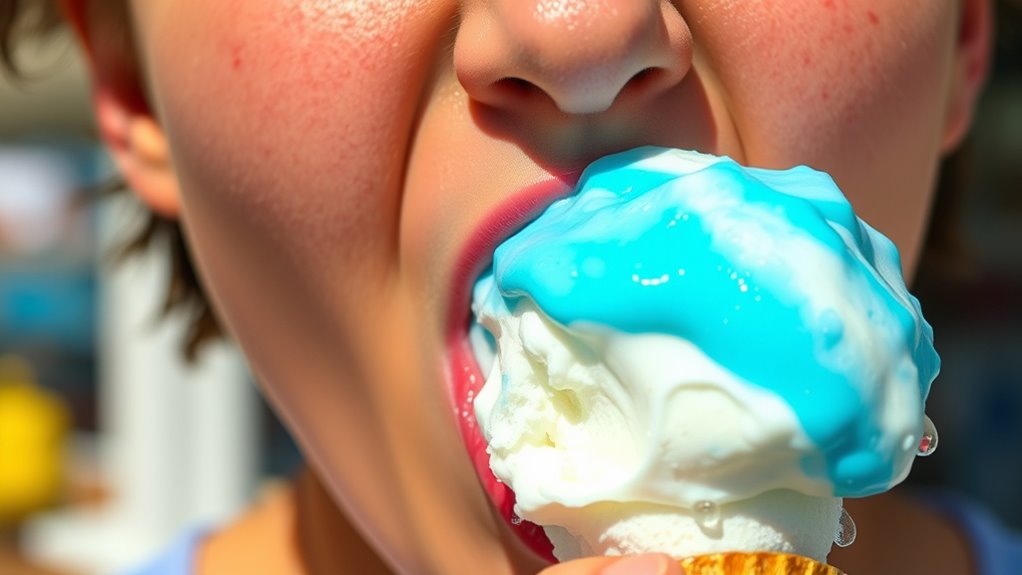
Have you ever wondered why biting into that icy scoop of ice cream causes a sudden, sharp headache? It’s a common experience, yet the science behind it reveals fascinating details about how your body reacts to cold stimuli. That intense, fleeting pain is rooted in your brain’s response to temperature sensitivity—specifically, how your nerves detect and process sudden drops in temperature inside your mouth. When you take a bite of ice cream, the cold rapidly chills the roof of your mouth, triggering a reflex in your nervous system. This response involves pain pathways, which are the routes your brain uses to interpret signals of discomfort or injury.
Your mouth is densely packed with nerve endings, especially in the palate, which is highly sensitive to temperature changes. When the cold ice cream contacts this area, sensory receptors detect the rapid decrease in temperature. These receptors then send signals through pain pathways to your brain, alerting it to potential harm. The brain perceives this intense cold as pain, even though no actual tissue damage occurs. The mechanism is similar to how your body reacts to other sensory stimuli—it’s a protective response designed to warn you of potential injury, even if the injury is just a temporary cold sensation.
The reason this sensation becomes so intense is because of the way these pain pathways connect to the brain. The signals from your palate are transmitted via the trigeminal nerve, which also carries sensory information from your face and forehead. This connection is key to understanding why the headache feels so localized to your forehead or temples. Fundamentally, your brain gets confused, interpreting the cold signals from the palate as coming from the forehead, which is why you feel that familiar, sharp headache. This phenomenon is sometimes called “referred pain,” where pain perceived in one area is actually caused by a stimulus in another.
As the cold stimulus continues, blood vessels in the area may also constrict and then rapidly dilate, adding to the sensation of pain. This vascular response amplifies the headache, making it feel even more intense for a brief moment. Once the cold subsides and the temperature stabilizes, the nerve signals diminish, and the headache quickly fades. The whole process is a rapid, complex interaction between temperature sensitivity, pain pathways, and neural interpretation, showcasing how finely tuned your nervous system is to protect you from potential harm—even if that harm is just a chilly treat.
Frequently Asked Questions
Can Brain Freeze Be Prevented Entirely?
You can’t prevent brain freeze entirely, but you can reduce the chances. Many brain freeze myths suggest eating slowly or avoiding extremely cold foods, which helps. When indulging, skip ice cream toppings that are too cold or eat smaller bites. By being mindful of your eating pace and temperature, you can enjoy ice cream without the sharp headache, though a small chance of brain freeze still exists.
Does the Intensity of Brain Freeze Vary Among Individuals?
You might notice that brain freeze variability exists, meaning some people experience it more intensely than others. Your individual sensitivity plays a big role in how severe your headache feels. Factors like your pain threshold, the speed of eating, and how your body reacts to cold can influence this. So, yes, the intensity of brain freeze definitely varies among individuals based on these differences.
Is Brain Freeze Harmful or Just an Uncomfortable Sensation?
You might wonder if brain freeze is harmful or just uncomfortable. The truth is, brain freeze myths suggest it’s harmless pain rather than real harm. While it causes a sharp, temporary sensation, it doesn’t damage your brain. It’s more about pain vs. harm—your body reacting to cold stimuli. So, don’t worry; it’s just a fleeting discomfort, not something dangerous, and you can enjoy your ice cream safely.
How Quickly Does Brain Freeze Typically Subside?
When you experience brain freeze, it usually subsides within 20 to 30 seconds. Your body’s response to the rapid temperature change from the ice cream’s textures and temperature effects helps you recover quickly. As your mouth warms the cold sensation, the headache fades. To avoid prolonged discomfort, try eating ice cream slowly or pressing your tongue against the roof of your mouth to warm the area.
Are There Other Foods That Cause Similar Headaches?
Think of cold foods as sneaky troublemakers that can trigger headaches just like ice cream does. Besides ice cream, foods like chilled drinks, popsicles, or even cold desserts can cause similar pain. These cold foods act as headache triggers, sending a quick jolt to your nerves and blood vessels. So, if you’re prone to head pain, watch out for these icy culprits—they might just catch you off guard.
Conclusion
Next time you experience that sudden headache after a scoop of ice cream, remember it’s your body’s way of reacting to the cold. Imagine Sarah, who loves ice cream but always gets a quick headache; understanding the neuroscience behind it might help her enjoy her treat without discomfort. So, next time, take small bites or warm your palate first. Knowing what’s happening inside can make your frozen favorites even more enjoyable!