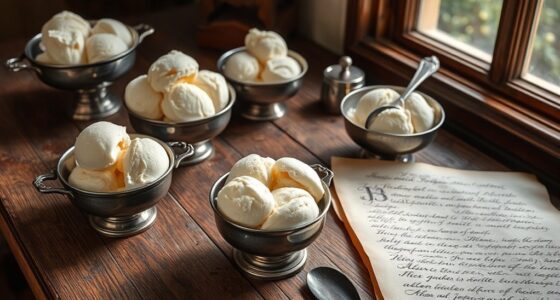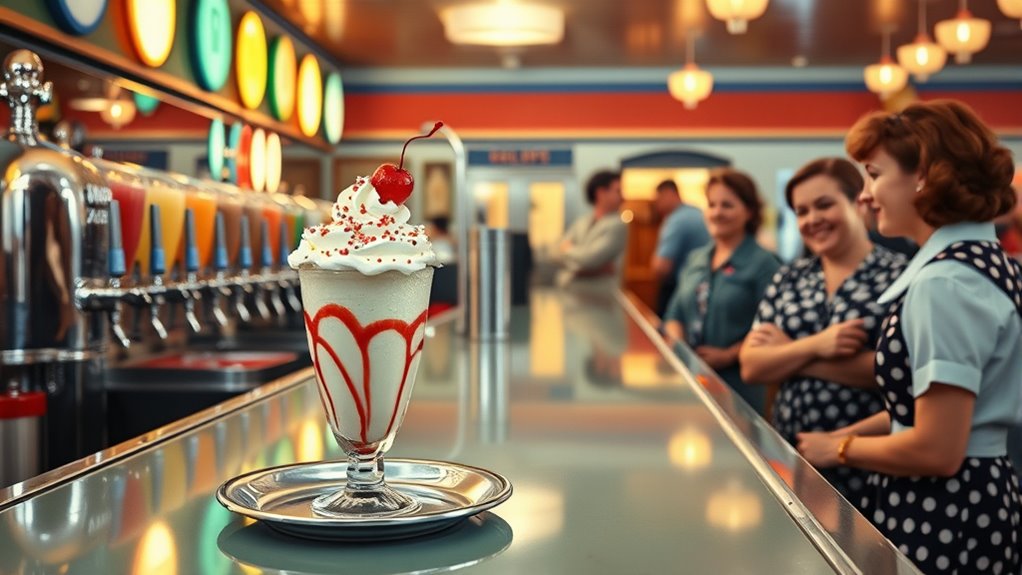

Imagine stepping into a soda fountain, where ice cream is more than just a treat—it’s a catalyst for social connection. These vibrant hubs first appeared in the late 19th century, transforming pharmacies into lively centers of community. As popular gathering spots, they fostered conversations, shared celebrations, and traditions that still echo today. If you’re curious about how these sweet venues shaped social life and cultural legacy, there’s plenty more to discover ahead.
Key Takeaways
- Soda fountains emerged in the late 19th century, transforming pharmacies into social gathering spots.
- They became cultural icons, reflecting American identity and the carefree spirit of the Roaring Twenties.
- These venues fostered community bonds through shared experiences like ice cream socials and celebrations.
- Soda fountains promoted face-to-face interaction, encouraging spontaneous friendships and social conversations.
- Their nostalgic charm continues to symbolize timeless social connections and the joy of communal leisure.
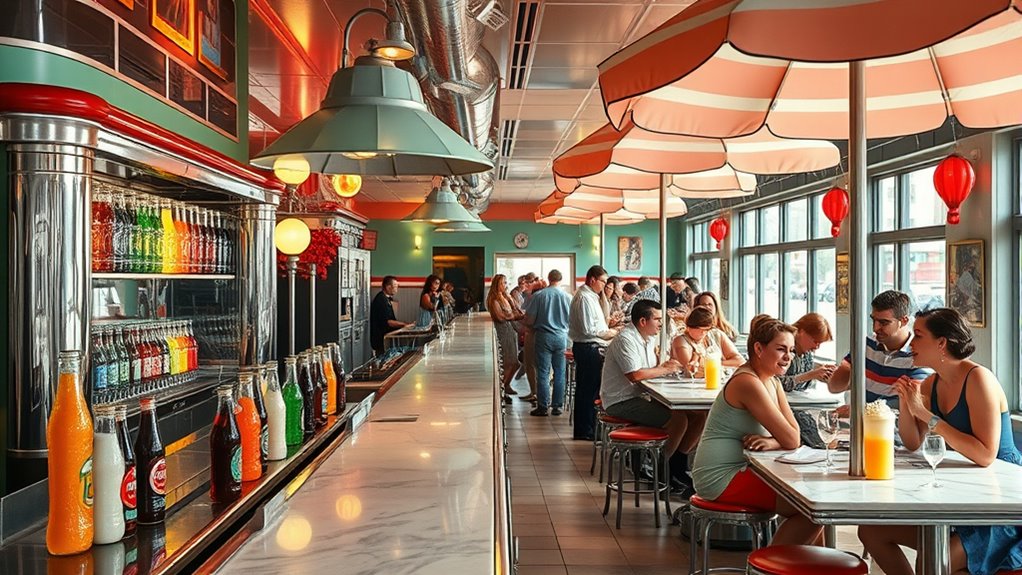
Have you ever wondered why soda fountains and ice cream socials hold such a nostalgic charm? These lively spots aren’t just about treats; they’re gateways to moments that shaped social life and community bonding. The historical significance of soda fountains stretches back to the late 19th century, when they first appeared as innovative inventions that transformed pharmacies and drugstores into social hubs. Originally, soda fountains served medicinal purposes, offering healthful remedies alongside fizzy drinks. Over time, they evolved into bustling centers of entertainment and social interaction, especially throughout the early 20th century. Their popularity soared, becoming symbols of modernity and progress, especially as cities expanded and urban life accelerated. You can see the influence of this history in how soda fountains became more than just places to grab a drink—they became communal spaces where people gathered to socialize, celebrate, and escape daily routines. Additionally, the rise of archives provides valuable insights into these social venues’ evolution over time. Culturally, soda fountains played a pivotal role in shaping American identity. They became iconic settings in movies, literature, and folklore, representing the carefree spirit of the Roaring Twenties and the innocence of small-town life. These venues weren’t just about serving ice cream; they fostered a sense of belonging and camaraderie. Families, friends, and even couples found a sense of community within their counters and booths. The social influence extended beyond just local neighborhoods. As ice cream socials grew in popularity, especially during the 20th century, they became shared experiences that reinforced community bonds and traditions. These gatherings often marked celebrations, fundraisers, or simple weekend fun, uniting people across generations. Through their lively atmosphere and shared enjoyment, soda fountains and ice cream socials helped embed a culture of togetherness and joy into the fabric of American society. You can’t overlook how these venues shaped social norms around leisure and entertainment. They encouraged interaction in an era before digital screens, fostering face-to-face conversations and spontaneous friendships. The nostalgic charm persists because these places symbolize a simpler time when community mattered, and a sweet treat could turn an ordinary day into a memorable occasion. By understanding their historical significance and cultural influence, you see how soda fountains and ice cream socials aren’t just relics of the past—they’re enduring symbols of social connection and tradition. They remind us that, sometimes, a simple scoop of ice cream can be a powerful catalyst for community and joy, echoing the social spirit that made these venues so special for generations.
Frequently Asked Questions
When Did Soda Fountains First Become Popular in America?
You’ll find that soda fountains first became popular in America during the late 19th century, around the 1880s. They emerged from early American cafes, where soda fountain history began as a way to serve flavored syrups and carbonated drinks. By the early 1900s, soda fountains had become social hubs, attracting people of all ages. Their popularity grew steadily as they became central to community life and social gatherings.
What Are the Most Iconic Ice Cream Flavors Served at Soda Fountains?
You know what they say, “Variety is the spice of life.” At soda fountains, classic sundaes and flavor combinations reign supreme. Iconic flavors like vanilla, chocolate, and strawberry are timeless, often paired with toppings like hot fudge, nuts, and whipped cream. These flavors create memorable experiences, making each visit special. You can’t go wrong with these favorites, as they’ve stood the test of time and continue to delight generations.
How Did Soda Fountains Influence American Social Culture?
Soda fountains transformed American social culture by becoming community gathering spots that fostered youth socialization. As you visit, you see young people connecting over ice cream and sodas, creating a lively, shared experience. These venues encourage interaction, friendship, and community spirit, shaping social habits and providing a fun environment where people of all ages come together, strengthening local bonds and making soda fountains iconic centers of social life.
Are Vintage Soda Fountains Still Operational Today?
Imagine stepping into a time capsule—many vintage soda fountains are still operational today. You’ll find them blending retro decor with modern adaptations, keeping their charm alive while updating for contemporary tastes. These classic spots serve as living history, offering nostalgic experiences with a fresh twist. So, yes, you can still enjoy the social vibe of vintage soda fountains, now reborn with a mix of old-fashioned allure and modern comfort.
What Role Did Soda Fountains Play During the Great Depression?
During the Great Depression, soda fountains served as essential community gathering spots, offering people a sense of normalcy and comfort amid economic hardship. You’d find them bustling with locals seeking affordable treats and social connection. These establishments also demonstrated economic resilience, as they adapted by serving simple, inexpensive refreshments. Their role went beyond just food, providing emotional support and fostering community spirit during tough times.
Conclusion
Today, soda fountains seem like relics of the past, frozen in time. Yet, they once thrived as lively social hubs, where laughter and chatter flowed as freely as the ice cream. Just as technology has transformed how we connect, these fountains remind us of a simpler, sweeter era. So, next time you indulge in a cone or sip a soda, think of the social magic that once made these places the heart of community life.