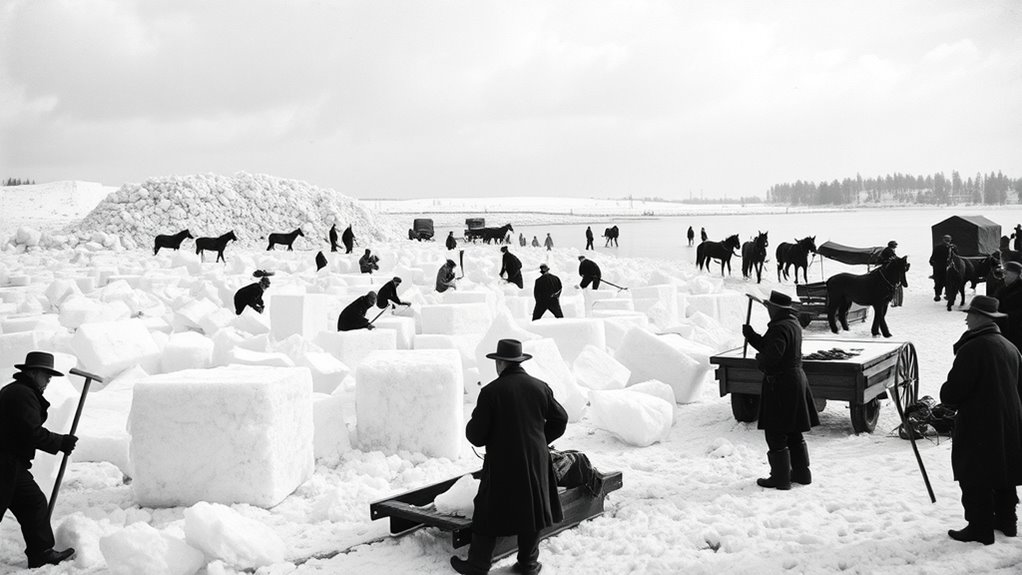

The 19th-century ice harvesting industry revolutionized food preservation by providing a reliable way to keep perishable items cold for transport and storage. As you might imagine, this sparked innovations in insulated icehouses and transport ships, making ice more accessible and durable. The advancements paved the way for mechanical refrigeration and ice production, which are essential for modern ice cream manufacturing. Keep exploring to discover how these innovations transformed how we enjoy ice cream today.
Key Takeaways
- Ice harvesting enabled large-scale storage of ice, crucial for preserving perishable ingredients used in ice cream production.
- Development of insulated icehouses and transportation methods made ice readily available, reducing costs and increasing accessibility.
- Innovations in refrigeration technology, driven by the ice trade, laid the foundation for modern ice cream manufacturing and distribution.
- Widespread use of ice facilitated the growth of refrigerated transport, expanding markets for ice cream beyond luxury to mass consumption.
- The technological progress from ice harvesting to artificial refrigeration directly supported the rise of popular, affordable ice cream.
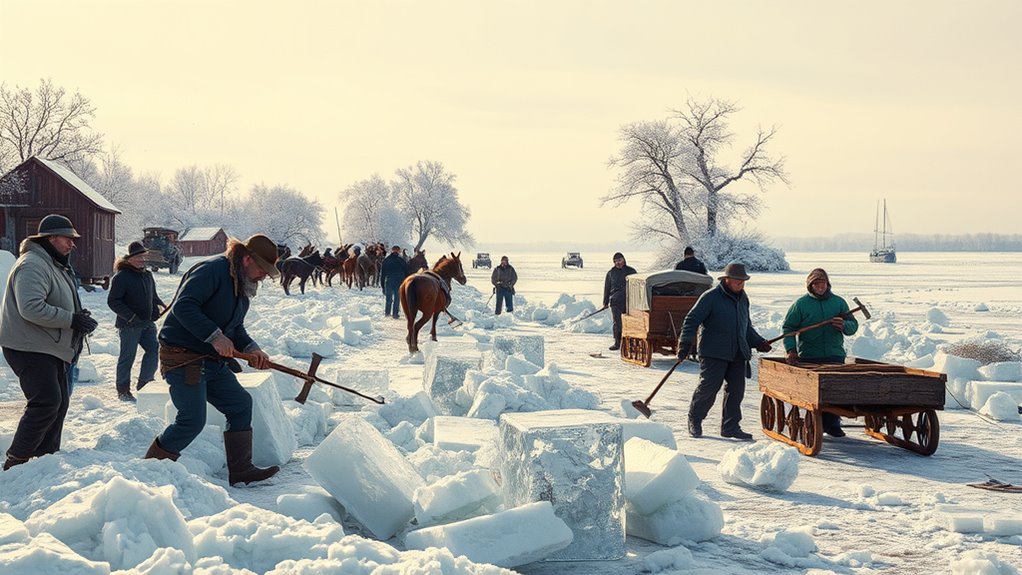
In the 19th century, ice harvesting became a crucial industry that transformed how people preserved and transported food. Before refrigeration technology advanced, the ice trade was the primary method for keeping perishable goods fresh during long journeys. You might not realize it, but this industry laid the groundwork for many modern conveniences, including the production of ice cream. As demand for fresh food and cold storage grew, entrepreneurs began harvesting ice from lakes and rivers during winter, cutting massive blocks and storing them in insulated icehouses. These efforts made it possible to ship frozen or chilled items across great distances, revolutionizing food distribution.
This period marked a significant chapter in refrigeration history. Early ice merchants capitalized on the availability of natural ice, but it wasn’t long before the industry faced challenges—seasonal limitations and the difficulty of maintaining ice quality. To address this, they developed insulated storage and transportation methods, such as sawdust-packed iceboxes and insulated ships. These innovations extended the ice’s lifespan and allowed it to be transported to warmer climates, expanding markets and accessibility. The growth of the ice trade also spurred technological advancements in refrigeration, leading to the development of artificial ice and mechanical refrigeration systems later in the 19th century.
Your understanding of how ice harvesting influenced modern refrigeration reveals a chain of innovation. The success of the ice trade demonstrated that controlling temperature could preserve food, a principle that directly inspired the development of mechanical refrigeration. As ice became more accessible, it enabled the creation of refrigerated railcars and warehouses, which further boosted the food industry. The innovations born from ice harvesting didn’t just impact food storage—they also fostered the birth of industries like ice manufacturing and led to the emergence of ice cream as a popular treat.
In essence, the 19th-century ice trade didn’t just serve practical needs; it laid the technological and economic foundations for modern refrigeration and frozen treats. You can see its influence today in how we store and enjoy perishable foods worldwide. The breakthroughs from this era made it possible for ice cream to reach broader audiences, transforming it from a luxury into a common delight. Without the pioneering efforts of ice harvesters and the early innovations in refrigeration history, the widespread popularity and accessibility of ice cream would likely have taken much longer to develop. This era’s ingenuity and resourcefulness continue to shape how we enjoy cold treats today.
Frequently Asked Questions
How Did Ice Harvesting Methods Differ Between Regions?
You’ll notice that regional climate greatly influenced ice harvesting techniques. In colder regions, people could harvest ice more easily and store it longer, often using simple tools. Warmer areas, however, relied on more elaborate methods or imported ice. These regional differences shaped harvesting methods, with colder climates favoring natural freezing and storage, setting the stage for innovations that eventually led to modern ice cream production worldwide.
What Tools Were Essential for 19th-Century Ice Harvesters?
You’ll find that ice harvesting technology relied heavily on essential ice cutting tools like saws and pickaxes. These tools allowed harvesters to efficiently cut and extract large blocks of ice from frozen lakes. Using sharp, durable blades, you could slice through thick ice sheets, making the process faster and more effective. These ice cutting tools revolutionized the industry, laying the groundwork for the development of modern refrigeration and ice cream production.
How Did Ice Storage Techniques Evolve During the 19TH Century?
Your curiosity about ice storage evolution is like unraveling a secret recipe. During the 19th century, people improved ice preservation with better insulated warehouses and saw refrigeration innovations. These advancements drastically reduced ice melting, making storage more efficient and reliable. You’d be amazed how these innovations laid the foundation for modern refrigeration, transforming how we keep things cold and paving the way for innovations like ice cream.
Were There Any Environmental Impacts From Extensive Ice Harvesting?
You might wonder about the environmental consequences of extensive ice harvesting. It caused ecological impacts, such as disrupting local ecosystems and reducing natural ice supplies. Large-scale harvesting often led to the depletion of ice in lakes and rivers, affecting wildlife that depended on these frozen habitats. These practices also contributed to habitat loss and altered water temperatures, highlighting the significant ecological impacts of 19th-century ice harvesting.
How Did Ice Trade Routes Develop Globally During This Period?
Imagine a network of veins spreading across the globe—this was how ice trade routes developed. During this period, trade expansion fueled the creation of maritime routes connecting icy regions to markets worldwide. These routes enabled the efficient transport of ice, fostering international commerce. As ships navigated icy waters, they laid the foundation for global trade networks, making ice accessible far beyond its original cold environment and boosting economies worldwide.
Conclusion
Your journey through 19th-century ice harvesting reveals how it laid the foundation for today’s ice cream delights. Just as a river carves its path through stone, this cold craft carved a route for innovation and freshness in refrigeration. Without those early efforts, our modern frozen treats might still be a distant dream, frozen in time. So, next time you enjoy ice cream, remember it’s the offspring of icy laborers who dared to dream in cold.