
Frozen yogurt has roots that go back to ancient Persia, China, and the Middle East, where early versions used snow or ice mixed with fruit or dairy to cool and refresh. It became popular in the U.S. in the 1970s as a healthier ice cream alternative, especially when live cultures were added for probiotics. Thanks to innovations like self-serve shops and new flavors, frozen yogurt continues evolving while maintaining its health-friendly reputation—discover more about its fascinating journey and health benefits.
Key Takeaways
- Frozen yogurt originated in ancient Persia, China, and the Middle East as icy, fruit- or dairy-based treats.
- It became a commercial product in the U.S. during the 1970s, promoted as a healthier alternative to ice cream.
- The 1980s saw innovations like self-serve shops and a focus on health benefits, boosting industry growth.
- Modern trends include dairy-free, organic, and probiotic-rich options, maintaining its health-conscious appeal.
- Its evolution from ancient dessert to a global superfood reflects ongoing innovation and cultural integration.
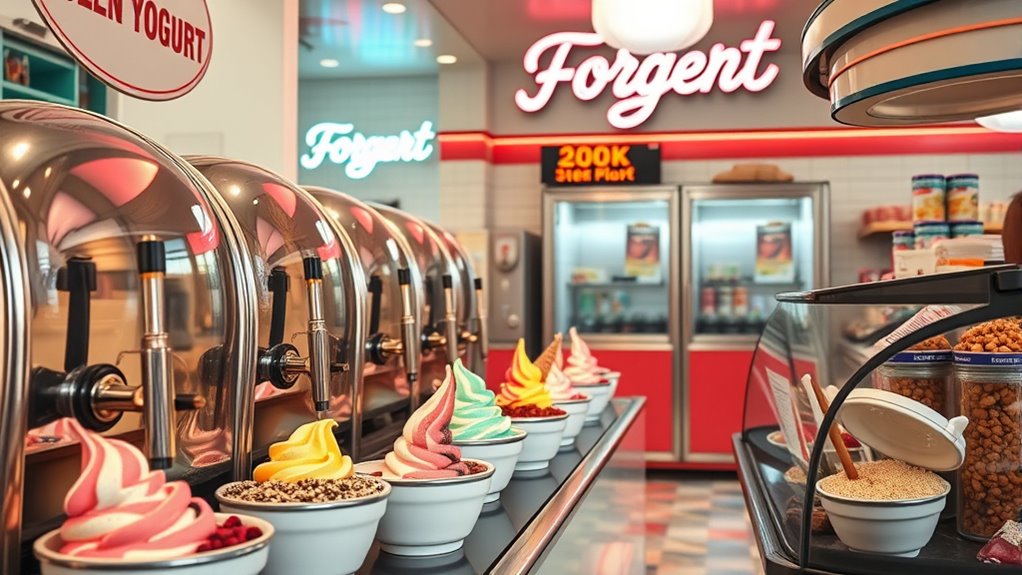
Have you ever wondered where frozen yogurt originated? The story begins centuries ago, with the frozen desserts from ancient Persia, China, and the Middle East. These early versions of frozen treats were often made using snow or ice mixed with fruit or dairy to create a cooling, invigorating snack. Over time, the frozen yogurt origins can be traced to the adaptation of these traditional methods, but it wasn’t until the 20th century that frozen yogurt truly took shape as a commercial product. The evolution of frozen yogurt started in the United States during the 1970s when entrepreneurs saw the potential in a healthier alternative to ice cream. They experimented with yogurt-based recipes, blending live cultures with the cold process to produce a tangy, creamy dessert. This marked a pivotal moment in the evolution of frozen yogurt, as it shifted from homemade treats to a popular, store-bought item. The health benefits associated with yogurt, such as probiotics and lower fat content, helped fuel its popularity, especially among health-conscious consumers. As frozen yogurt gained momentum, new techniques and flavors emerged, pushing its evolution further. The introduction of self-serve frozen yogurt shops in the 1980s revolutionized the industry, giving customers control over portion size and toppings, which became a major selling point. During this period, the variety of flavors expanded, and branding efforts emphasized the product’s health halo—its association with good nutrition and wellness. This marketing strategy resonated with consumers seeking healthier indulgences, further driving the growth of frozen yogurt. Today, the evolution of frozen yogurt continues, with innovations like dairy-free options, organic ingredients, and probiotic-rich formulations. The original health halo remains a core part of its appeal, as people look for treats that satisfy their sweet tooth without sacrificing their dietary goals. The history of frozen yogurt reflects a blend of cultural influences, scientific advancements, and shifting consumer preferences. It’s a story of how a simple, ancient concept was transformed into a modern superfood that balances taste with health benefits. The development of dairy-free options and other dietary adaptations showcases how the industry continues to innovate in response to consumer needs. The history of frozen yogurt highlights its journey from a traditional dessert to a versatile, health-conscious treat enjoyed worldwide. Whether enjoyed at a local shop or made at home, frozen yogurt’s journey from its humble beginnings to a global phenomenon highlights its enduring appeal. As you savor each spoonful today, remember that you’re part of a long, fascinating history that continues to evolve, blending tradition with innovation to keep this cool treat relevant and beloved across generations.
Frequently Asked Questions
How Has Frozen Yogurt’s Nutritional Profile Changed Over Time?
You might notice that frozen yogurt’s nutritional profile has improved over time due to evolving ingredient choices and changing nutritional trends. Producers now use lower-fat options, incorporate probiotic strains, and minimize added sugars to appeal to health-conscious consumers. This ingredient evolution results in a product that’s often richer in beneficial bacteria and lower in calories, aligning with current wellness trends. So, frozen yogurt today is generally healthier than it was in the past.
What Are Common Misconceptions About Frozen Yogurt’s Health Benefits?
You might think frozen yogurt is a miracle food, but myth busting reveals it’s not a cure-all. Many believe it’s ultra-healthy and low-calorie, but some flavors hide added sugars and fats that boost calories. Don’t fall for exaggerated health claims—frozen yogurt can be a nutritious treat, but it’s not a magic bullet. Always read labels and enjoy it in moderation to truly benefit from its health potential.
How Did Cultural Perceptions Influence Frozen Yogurt’s Popularity?
Cultural perceptions and consumer attitudes significantly boosted frozen yogurt’s popularity. When people saw it as a healthier, trendy alternative to ice cream, they became more enthusiastic to try it. The idea of frozen yogurt as a guilt-free treat resonated across different cultures, encouraging more stores and flavors. Your perception of it as a nutritious, fashionable choice shapes how you view and enjoy frozen yogurt, fueling its widespread appeal.
Are There Regional Differences in Frozen Yogurt Flavors Historically?
You’ll find that regional tastes shaped frozen yogurt flavors markedly, with over 60% of consumers preferring local-inspired options. Historically, flavor diversity reflected regional palates, from tropical fruit blends in Asia to rich chocolate varieties in Europe. These differences highlight how cultural influences and local ingredients drive flavor choices, creating a unique frozen yogurt experience across regions. This diversity keeps the market exciting and personalized to local preferences.
What Innovations Have Shaped the Development of Frozen Yogurt?
You’ve seen how innovations like dairy alternatives and flavor innovations have shaped frozen yogurt’s development. You can now enjoy plant-based options like almond or coconut milk-based frozen yogurt, catering to various dietary needs. Flavor innovations, from combining fruit to adding unique mix-ins, keep the product exciting and diverse. These advancements have expanded options, making frozen yogurt more inclusive and appealing to a broad audience.
Conclusion
As you savor frozen yogurt, remember it’s more than just a treat—it’s a symbol of innovation and health. Like a gentle snowflake, it embodies the harmony of indulgence and wellness, reminding you that balance is achievable. Each spoonful carries the legacy of a centuries-old journey, blending tradition with modernity. So, next time you enjoy it, recognize that you’re partaking in a story of evolution, where health and pleasure dance together beneath a frosty, promising glow.