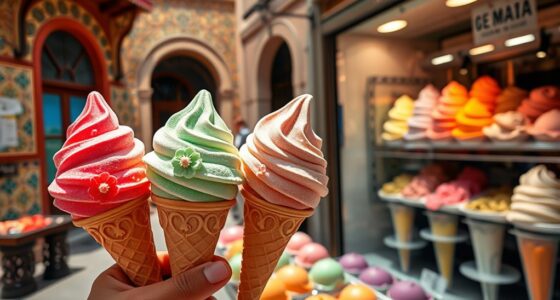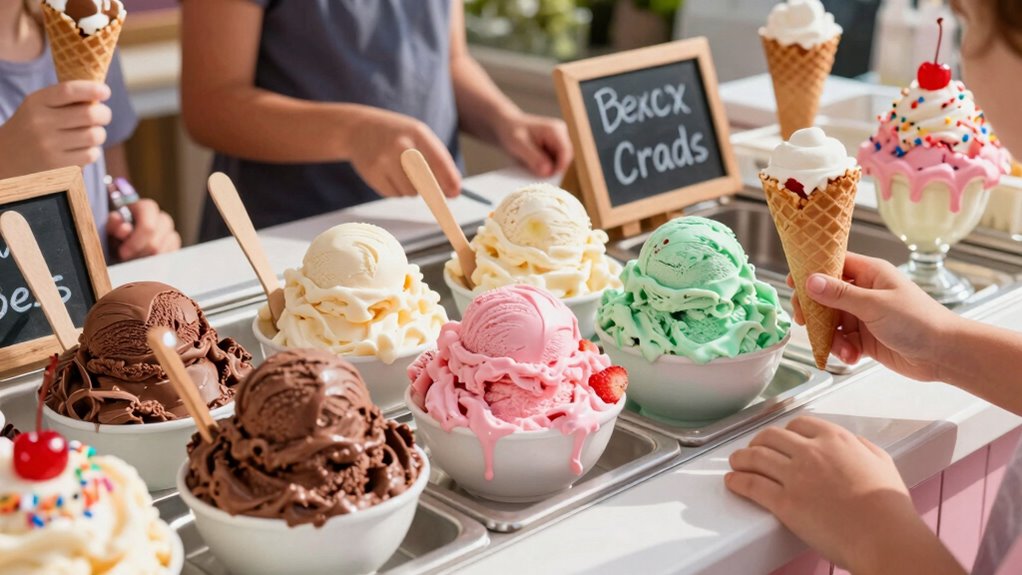

Early ice cream menus featured simple flavors like vanilla, chocolate, and fruit-based sorbets, reflecting regional ingredients and tastes. People enjoyed modest scoops served in basic cups or bowls, often garnished with nuts or fruit. During the 18th and 19th centuries, ice cream was a luxury, served with refined presentation for special occasions. As you explore further, you’ll discover how these humble beginnings evolved into the colorful, elaborate displays we see today.

Get baking supplies delivered free with Prime
- Fast, free delivery on millions of items
- Prime Video, Amazon Music and more included
- Member-only deals all year
Key Takeaways
- Early ice cream menus featured simple flavors like vanilla and chocolate served in basic cups or bowls.
- Fruit-flavored sorbets and small sundaes were common early menu items.
- Presentation was minimal, often using paper or glass containers without elaborate decoration.
- Ice cream was considered a luxury, enjoyed during social gatherings with refined serving styles.
- Regional influences introduced flavors such as honey, pistachio, coconut, and local fruits.
As an affiliate, we earn on qualifying purchases.
The Origins of Ice Cream and Its First Flavors
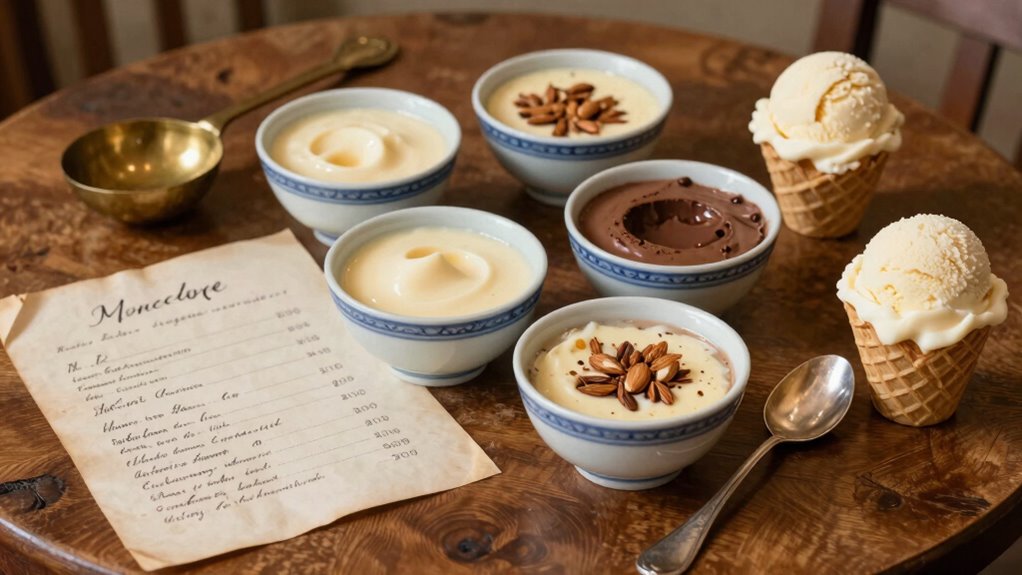
Ice cream has a rich history that dates back thousands of years, with its origins rooted in ancient civilizations. Early cultures, such as the Chinese and Persians, crafted historical recipes that combined snow or ice with fruit, honey, and milk to create invigorating treats. These recipes reflect diverse cultural influences, as each region added its unique ingredients and techniques, shaping what we now recognize as ice cream. For example, the Chinese used snow mixed with rice and fruit, while Persians flavored their chilled desserts with saffron and nuts. Over time, these early innovations spread across continents, blending traditions and ingredients, laying the groundwork for modern ice cream flavors. Additionally, the development of early freezing techniques contributed significantly to the evolution of ice cream, allowing these treats to be preserved and enjoyed over longer periods. The introduction of ice harvesting methods further improved the ability to store and distribute ice globally, expanding access to frozen desserts. Your understanding of these roots highlights how cultural exchanges influenced the development of this beloved dessert.
What Were the First Items on Ice Cream Menus?
Have you ever wondered what the earliest ice cream menu items looked like? Back then, menus featured simple, classic treats that captivated diners. Early offerings often included plain ice cream scoops served in cups or bowls, showcasing the pure flavors of the time. As gelato trends gained popularity, menus expanded to include richer, creamier options, emphasizing quality ingredients. Ice cream packaging was minimal—served in simple containers, often with paper or glass. For a glimpse into history, consider these first menu items:
- Plain vanilla or chocolate scoops
- Fruit-flavored sorbets
- Affogatos or small sundaes
These items laid the foundation for modern gelato trends and innovative packaging, making ice cream a beloved treat across centuries. The use of colorful presentation and creative serving techniques eventually helped elevate these simple dishes into more elaborate desserts. Recognizing these initial offerings highlights how European culinary traditions influenced the evolution of ice cream presentation and enjoyment.
How Did People Enjoy Ice Cream in the 18th and 19th Centuries?
During the 18th and 19th centuries, people enjoyed ice cream as a luxurious treat reserved for special occasions and social gatherings. Ice cream etiquette dictated refined manners, like using delicate spoons and avoiding messy hands, especially in upscale settings. Historical serving methods often involved elegant presentations, such as serving it in glass bowls or silver cups, sometimes with decorative garnishes like fruit or nuts. Wealthier individuals would indulge in ice cream at salons or during formal dinners, where it was considered a symbol of sophistication. Men and women observed proper decorum, savoring each bite slowly. Ice cream was not just a dessert but an event, emphasizing social status and elegance. This era set the foundation for the more casual enjoyment of ice cream we understand today. Additionally, the use of serving ware such as silver and glass reflected social hierarchy and taste. The presentation and eating customs of ice cream during this time underscored the importance of decorum and social standing in culinary practices. Furthermore, the social significance of ice cream consumption highlighted its role in reinforcing class distinctions and cultural norms. Proper ice cream presentation also involved specific techniques to maintain cleanliness and elegance during consumption. The emphasis on formal occasions further reinforced the connection between ice cream and social prestige.
Did Different Regions Have Unique Early Ice Cream Flavors?
As people in different regions embraced ice cream, they began to create flavors that reflected local ingredients and tastes. These regional ingredients and cultural influences shaped early ice cream flavors, making each area unique. You might find flavors inspired by local fruits, spices, or traditions that mirror the region’s identity. For example, Mediterranean areas often used honey and pistachios, while tropical regions incorporated coconut and tropical fruits. These regional variations show how local resources and cultural preferences influenced flavor choices. Incorporating regional food traditions further enriched the diversity of early ice cream flavors, making them a true reflection of local culinary heritage. Additionally, understanding the study techniques behind flavor development can provide insights into how these regional preferences evolved over time, highlighting the importance of flavor innovation in the history of ice cream. Recognizing the significance of cultural influences helps explain why certain flavors became popular in specific regions.

Ice cream menus have undergone a remarkable transformation, evolving from simple scoops into elaborate displays of creativity and indulgence. Early ice cream parlors kept menu design minimal, focusing on basic flavors served in cones or bowls. As popularity grew, menus expanded to include toppings, syrups, and layered combinations, allowing you to customize your treat. This shift led to the rise of fancy sundaes and elaborate presentations, turning ice cream into an art form. Parlors began showcasing their most inventive creations to attract customers and stand out. Today, menu design emphasizes visual appeal, with colorful images and detailed descriptions that invite you to explore new flavors and combinations. This evolution reflects how ice cream has transformed from a simple dessert into a versatile culinary experience.
What Early Menus Reveal About the History of Our Favorite Dessert

Early ice cream menus offer valuable insights into how this beloved treat became a staple in our lives. They reveal the sociocultural influences behind flavor choices, presentation styles, and serving customs. For instance, Victorian menus often featured ornate sundaes, reflecting the era’s fascination with luxury and indulgence. Technological innovations, such as ice-making machinery and refrigeration, expanded options and accessibility, shaping what people could enjoy. These early menus also highlight regional tastes and social classes, showing how ice cream evolved from a luxury for the elite to a common delight. Additionally, the development of refrigeration technology played a crucial role in making a wider variety of ice cream flavors available to the masses. Moreover, advancements in food preservation methods allowed suppliers to produce and distribute ice cream more efficiently, further broadening its reach. The influence of industrialization also contributed to the mass production and marketing of ice cream, making it more widely accessible. The rise of commercial ice cream production in the late 19th and early 20th centuries revolutionized the industry, enabling brands to reach national markets. As a result, consumer preferences began to shift towards more diverse and innovative flavors, reflecting changing tastes and cultural trends. By examining these menus, you can trace the cultural shifts and technological progress that transformed ice cream from an exotic delicacy into a worldwide favorite.
Frequently Asked Questions
When Did Ice Cream Become Popular Among Different Social Classes?
Ice cream became popular across social classes in the 19th century, thanks to improved social class accessibility and clever marketing strategies. As production methods advanced and prices dropped, more people could enjoy ice cream. Marketers targeted all social strata, making it a symbol of luxury and everyday treat alike. By emphasizing affordability and quality, they helped break down class barriers, turning ice cream into a widespread favorite.
Were There Any Health Concerns Associated With Early Ice Cream Consumption?
You should know that early ice cream consumption did raise health concerns. People worried about dairy allergies, especially in those sensitive to milk. Additionally, spoilage risks were significant because refrigeration was limited, leading to potential bacterial growth. These issues made some cautious about eating ice cream regularly. While it was a delightful treat, many recognized the importance of proper storage and moderation to avoid health problems.
How Did Technological Advances Influence Early Ice Cream Flavors?
Technological advances revolutionized early ice cream flavors by enabling innovative flavor techniques and technological flavor preservation. You see, with improved refrigeration and pasteurization, manufacturers could experiment with new ingredients and preserve delicate flavors longer. This allowed for creative combinations and richer tastes, making ice cream more appealing. As a result, you get a wider variety of flavors, and the quality stays consistent, encouraging more people to enjoy ice cream regularly.
Did Early Ice Cream Menus Include Beverages or Only Desserts?
Imagine a vibrant palette of flavors, and you’ll see early ice cream menus mostly featured desserts, not beverages. While ice cream cocktails and flavored syrups emerged later, initial menus focused on creams, sherbets, and frozen treats. Beverages like milkshakes came about later, but early menus kept it simple—desserts ruled the scene, with just a few incorporating syrups or alcohol for special occasions.
Were There Regional Variations in the Presentation or Serving of Ice Cream?
You’ll find regional variations in the presentation and serving customs of ice cream. In some areas, it’s served in waffle cones, while others prefer cups or fancy dishes. Presentation styles differ, reflecting local tastes and traditions. For example, European regions might emphasize elegant plating, while American customs often favor casual, handheld servings. These regional differences make experiencing ice cream unique across cultures, adding flavor to the overall enjoyment.
Conclusion
Just like a timeless symphony, early ice cream menus played simple notes that grew into a rich, flavorful melody over time. By exploring these first items, you discover how our favorite dessert has evolved from humble beginnings into an artful masterpiece. Every scoop tells a story, blending history and culture in a delicious chorus. So, next time you enjoy ice cream, remember you’re tasting centuries of innovation and tradition in every bite.
Halloween Picks
halloween
As an affiliate, we earn on qualifying purchases.