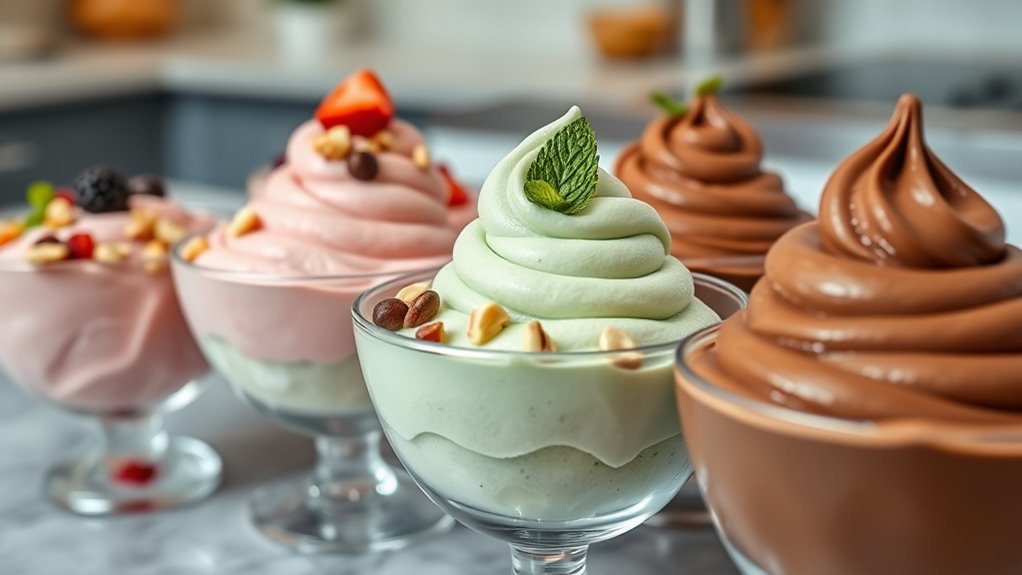

Vegan frozen desserts typically have lower saturated fat and no cholesterol, making them healthier for your heart. They often use plant-based ingredients like coconut or nut milks, which can slightly reduce creaminess and richness compared to dairy ice cream. While you might sacrifice some indulgence, you gain nutritional benefits and align with ethical choices. Want to discover more about how these options stack up and what tradeoffs you can expect? Keep exploring.
Key Takeaways
- Vegan frozen desserts typically contain less saturated fat and no cholesterol compared to dairy ice cream.
- They often use plant-based proteins and natural sweeteners, which can enhance nutritional value but may affect texture.
- Dairy ice creams tend to be richer and creamier due to higher fat content, whereas vegan options may have a lighter mouthfeel.
- Vegan treats avoid animal products, aligning with ethical and environmental considerations, unlike dairy-based desserts.
- Both options can be enjoyed healthily, but vegan desserts generally offer a lower-calorie, heart-friendly alternative with fewer additives.

Have you ever craved a chilly treat that’s both delicious and cruelty-free? If so, vegan frozen desserts might be just what you’re looking for. These treats often use plant-based proteins to create creamy textures without dairy, offering a satisfying experience while aligning with ethical choices. When you opt for vegan options, you’re typically choosing ingredients like coconut milk, almond milk, or cashew cream, which serve as the base for many frozen desserts. These plant-based proteins not only help mimic the richness of traditional dairy but also boost the nutritional profile, adding protein and healthy fats to your snack. This makes vegan frozen desserts more than just a sweet indulgence—they can be a part of a balanced diet.
One of the biggest advantages of vegan frozen desserts is the use of sugar alternatives. Instead of traditional refined sugar, many brands incorporate natural sweeteners like agave syrup, maple syrup, or stevia. These alternatives reduce calorie content and prevent blood sugar spikes, making the treats more suitable for those managing their sugar intake. Plus, they often enhance flavor without overpowering the dessert’s natural ingredients, giving you a satisfying sweetness that doesn’t come at the cost of your health. Using sugar alternatives allows you to enjoy your favorite frozen treats with less guilt, especially if you’re mindful of sugar consumption or trying to avoid processed ingredients.
Vegan frozen desserts use natural sweeteners like agave, maple syrup, or stevia for guilt-free sweetness.
However, it’s worth noting that some vegan frozen desserts may rely heavily on added thickeners and stabilizers to achieve the desired texture, which can sometimes be less natural than traditional dairy-based ice creams. Still, many brands are now focusing on cleaner ingredients, utilizing plant-based proteins and natural sweeteners to create products that are both tasty and nutritious. When you compare vegan options to dairy-based frozen desserts, the nutrition tradeoffs become clear: you might sacrifice some creaminess or richness in favor of a product that’s lower in saturated fat and free from lactose. While dairy ice creams often contain high levels of saturated fat and cholesterol, vegan versions tend to have healthier fats and no cholesterol, making them a heart-friendly choice.
Ultimately, choosing vegan frozen desserts means balancing your desire for a delicious, cold treat with your health and ethical considerations. Thanks to plant-based proteins and sugar alternatives, you can indulge without feeling guilty or compromising your values. Whether you’re seeking a dairy-free option due to allergies or just looking to reduce your environmental footprint, vegan frozen desserts offer a compelling alternative. They might not always match the exact creaminess of traditional ice cream, but they make up for it with their innovative ingredients and health benefits. So next time you’re craving a frozen delight, consider trying a vegan version—you might find it’s just as satisfying, if not more so.
Frequently Asked Questions
Are Vegan Frozen Desserts Suitable for People With Nut Allergies?
Vegan frozen desserts may not be suitable if you have nut allergies because of nut allergy considerations. Many products contain nuts or are processed in facilities with nuts, increasing cross contamination risks. Always check labels carefully and opt for brands that clearly specify nut-free options. If you’re unsure, consult with the manufacturer or choose desserts made from safe, allergy-friendly ingredients to avoid any allergic reactions.
How Do Vegan Frozen Desserts Compare in Price to Dairy Options?
Vegan frozen desserts are generally more expensive than dairy options. The price comparison shows that plant-based ingredients and specialty products tend to cost more due to sourcing and production factors. Affordability factors include brand, ingredients, and where you shop. While they might be pricier, some stores offer sales or store brands that help make vegan frozen desserts more budget-friendly, so you can enjoy a dairy-free treat without overspending.
Can Vegan Frozen Desserts Be Used in Baking Recipes?
Think of vegan ice cream as a secret ingredient in your baking arsenal. Yes, you can use it as a baking substitution to add creamy texture and flavor. Its versatility shines in recipes like cakes, cookies, and smoothies, where it brings moisture and richness. Just keep in mind that its unique consistency might require slight adjustments, but overall, vegan frozen desserts can elevate your baked goods with a dairy-free twist.
What Are the Environmental Impacts of Producing Vegan Versus Dairy Frozen Desserts?
You’ll find that producing vegan frozen desserts generally has a smaller environmental impact than dairy options. They tend to have a lower carbon footprint because they require less land and emit fewer greenhouse gases. Additionally, vegan desserts usually need less water, making them a more sustainable choice. By choosing vegan frozen desserts, you help reduce strain on water resources and decrease overall emissions associated with food production.
Do Vegan Frozen Desserts Contain Added Sugars or Artificial Ingredients?
You might think vegan frozen desserts are super healthy, but they often contain added sugars and artificial ingredients that can surprise you! These sweeteners and chemicals help improve flavor and texture, but they can also turn your treat into a sugar rush or a chemical cocktail. Always check labels, because even vegan options can hide these extras, making them less innocent than they seem.
Conclusion
Choosing vegan frozen desserts means balancing nutrition with your values. While they often skip dairy, they can contain added sugars or processed ingredients. Remember, you are what you eat—so make mindful choices that nourish your body and support your beliefs. Sometimes, you get what you pay for, but with a little research, you can enjoy these treats guilt-free. Ultimately, finding a balance is key, because a healthy diet is a journey, not a destination.