
During pregnancy, enjoying ice cream is generally safe if you choose pasteurized varieties, as they eliminate harmful bacteria like Listeria. Be cautious with homemade recipes that use raw or unpasteurized eggs, as they can carry Salmonella risks. Store-bought and soft-serve options are usually processed safely, but always verify labels and shop practices. If you’d like to know more about choosing safe ice cream during pregnancy, there’s important information you should consider.
Key Takeaways
- Pasteurized ice cream is safe during pregnancy, as it destroys harmful bacteria like Listeria.
- Homemade ice cream should use pasteurized milk or cream to prevent health risks.
- Raw eggs in ice cream recipes can carry Salmonella; use pasteurized eggs or cook eggs thoroughly.
- Store-bought, packaged ice cream is generally safe, but verify labels for pasteurization.
- Soft-serve from some shops may not be pasteurized; inquire about safety practices before consumption.

Pregnancy often brings about cravings for certain foods, and ice cream is a popular choice for many expecting mothers. While indulging in this cold treat can be delightful, it’s vital to consider dairy safety and how it fits into your pregnancy diet. Not all ice cream is created equal, and understanding the nuances can help you enjoy your favorite flavors without unnecessary worries.
During pregnancy, your immune system is a bit more delicate, making you more susceptible to foodborne illnesses. Because of this, you need to be mindful of the types of dairy products you consume. Pasteurized ice cream is generally safe, as the pasteurization process kills harmful bacteria like Listeria, which can pose serious risks during pregnancy. When shopping, always check labels to guarantee the ice cream is made with pasteurized milk and cream. Many brands clearly state this on their packaging, giving you peace of mind. If you’re making homemade ice cream, use pasteurized milk or cream to avoid potential contamination.
During pregnancy, choose pasteurized dairy products to stay safe from foodborne illnesses.
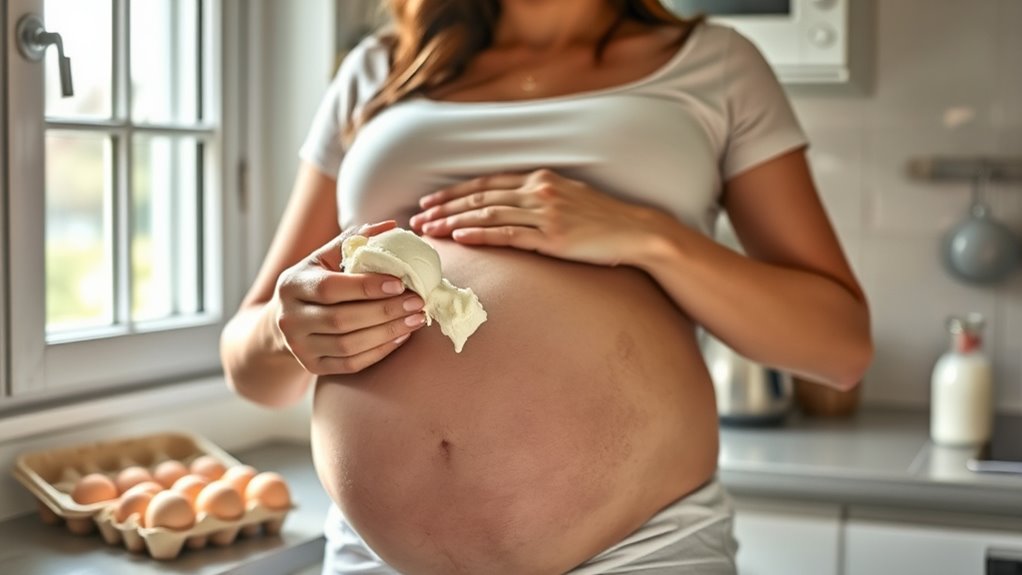
Raw eggs in some ice cream recipes or homemade versions can be be a concern, especially for pregnant women. Raw eggs can harbor Salmonella, which can cause severe illness. Many commercial ice creams avoid this by using pasteurized eggs or egg substitutes, but if you’re experimenting with recipes at home, it’s vital to ensure the eggs are fully cooked or use pasteurized egg products. This step helps you stick to a safe pregnancy diet while still enjoying your favorite frozen treats.
It’s also wise to be cautious about soft-serve ice cream from ice cream shops. While many establishments use pasteurized dairy, some may not, increasing the risk of bacterial contamination. If you’re unsure about their dairy safety practices, it’s better to choose pre-packaged, store-bought ice cream at the supermarket. These products are subject to strict safety standards, making them a safer option during pregnancy.
Additionally, being aware of dairy processing techniques can help you select safe options and enjoy your ice cream comfortably.
Frequently Asked Questions
Are There Safe Ice Cream Options for Pregnant Women?
Yes, there are safe ice cream options for pregnant women. You can choose dairy-free alternatives like almond, coconut, or soy ice cream, which are often pasteurized and free from raw eggs. Always check the label for pasteurization and low sugar content to guarantee safety and health. Opting for these options reduces the risk of foodborne illnesses and helps you enjoy a sweet treat without compromising your pregnancy.
Can I Eat Homemade Ice Cream During Pregnancy?
Imagine you’re back in the days of the Titanic—you can still enjoy homemade ice cream during pregnancy, but safety matters. Use pasteurized dairy or dairy alternatives, and opt for recipes that don’t include raw eggs. By choosing these safe ingredients, you can indulge in your favorite treat without worry. Just follow trusted recipes and verify all ingredients are properly cooked or pasteurized to keep both you and your baby healthy.
What Ingredients Should Pregnant Women Avoid in Ice Cream?
You should avoid ice cream with certain ingredients like artificial flavors and additives, as they may contain chemicals or preservatives that aren’t ideal during pregnancy. Also, steer clear of ice creams with high levels of added sugars or artificial sweeteners, which could affect your health. Always check labels for ingredients, and opt for natural, pasteurized options to reduce any risks. Your health and your baby’s well-being come first.
Is All Ice Cream Made With Pasteurized Milk?
Most ice cream manufacturing uses dairy pasteurization, so the milk and cream are heated to kill harmful bacteria, making it safe for everyone. However, not all ice creams are made with pasteurized dairy—some artisan or homemade varieties might use raw milk. Always check labels or ask about the manufacturing process to guarantee the ice cream you enjoy is made with properly pasteurized milk, especially during pregnancy.
How Can I Tell if Ice Cream Contains Raw Eggs?
Like Sherlock with his magnifying glass, you can detect raw eggs in ice cream by checking ingredient labels carefully. Look for mentions of raw eggs, egg yolks, or custard. Some brands may list “raw eggs” explicitly, while others don’t. If unsure, contact the manufacturer or choose ice cream made with pasteurized eggs. Remember, the safest options are those with clear labels indicating pasteurization or no raw eggs used.
Conclusion
Just like Pandora’s box, the tempting allure of unpasteurized ice cream and raw eggs can hide hidden risks. As a pregnant woman, you hold the power to select safety over indulgence, safeguarding your little one’s future. Remember, the path to health is like the wise owl’s watchful eye—clear and cautious. Trust in pasteurized treats, and you’ll ensure that your sweet cravings don’t open doors to unnecessary dangers. Stay informed, stay safe.