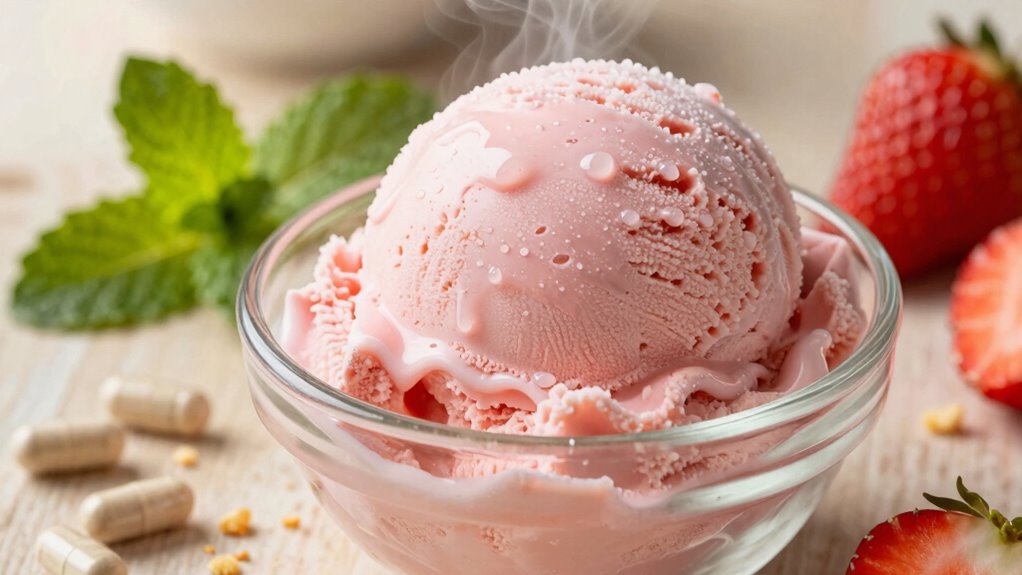

Probiotics can’t fully undo the negative effects of ice cream on your gut, especially because its high sugar and dairy content can cause inflammation, bloating, and digestive discomfort. While they help balance gut bacteria, they won’t fix issues caused by excess sugar or artificial additives. To enjoy ice cream without upsetting your stomach, you need strategies beyond just probiotics. If you want to know how to protect your digestion while indulging, keep exploring these helpful tips.
Key Takeaways
- Probiotics support gut health but can’t fully counteract the inflammation or digestive discomfort caused by dairy and high sugar in ice cream.
- They do not replace the need for dietary modifications like choosing dairy-free or low-sugar options when consuming ice cream.
- Probiotics cannot prevent gut issues triggered by artificial additives, preservatives, or sensitivities to certain ingredients.
- The survival and colonization of probiotics depend on product quality, not just consumption, limiting their effectiveness in real-time digestion.
- Probiotics alone cannot compensate for a diet lacking in fiber or other essential nutrients vital for overall digestive health.
As an affiliate, we earn on qualifying purchases.
Does Ice Cream Harm Your Gut? What You Need to Know

While ice cream might be a tasty treat, it can also impact your gut health in several ways. If you have dairy allergies, consuming ice cream can cause inflammation, bloating, or digestive discomfort because of the milk and cream it contains. Even if you aren’t allergic, the high sugar content in many ice creams can disrupt your gut bacteria balance, leading to issues like gas or irregularity. Excess sugar feeds harmful bacteria and yeast, which can weaken your digestive system over time. Additionally, some ice creams contain artificial additives or preservatives that may further irritate your gut. If you’re sensitive or trying to improve your gut health, it’s wise to enjoy ice cream in moderation and opt for dairy-free or lower-sugar options. Proper filtration and maintenance of your digestive system can also help manage these impacts more effectively. Being mindful of gut flora and its health is essential for overall digestion and well-being. Incorporating probiotic-rich foods can support a healthy balance of bacteria but shouldn’t be relied upon solely to counteract the effects of less healthy treats. For example, choosing ice creams with natural ingredients can minimize exposure to irritants and additives that may harm your gut. Maintaining a balanced diet and hydration are also key factors in supporting gut health and reducing potential discomfort.
How Do Probiotics Support Your Digestive Health?

Probiotics play a crucial role in supporting your digestive health by introducing beneficial bacteria into your gut. These friendly microbes help balance your gut flora, which is essential for proper digestion and nutrient absorption. Consuming fermented foods like yogurt, kefir, sauerkraut, or kimchi can naturally boost your probiotic intake. When you add probiotics to your diet, they can help crowd out harmful bacteria, reduce inflammation, and promote regular bowel movements. This improvement in gut flora enhances overall gut function and can even strengthen your immune system. Understanding repair fundamentals can help you better recognize when your digestive health might be at risk and seek appropriate solutions. While probiotics aren’t a cure-all, they provide a supportive environment for your digestive system, helping you maintain a healthier gut balance and potentially reducing issues like bloating or discomfort.
Why Can Ice Cream Cause Gut Issues? Common Problems Explained

Ice cream can cause gut issues because it often contains high levels of lactose, which some people have difficulty digesting. If you’re dairy intolerant, consuming ice cream may lead to bloating, gas, or diarrhea. Additionally, the sugar content in many ice creams can exacerbate problems by feeding harmful bacteria in your gut.
Ice cream’s high lactose and sugar levels can upset digestion and cause discomfort.
Common issues include:
- Lactose intolerance symptoms—due to dairy, causing discomfort.
- Digestive upset—from excessive sugar aggravating your gut flora.
- Inflammation—triggered by high sugar levels and dairy, worsening symptoms.
These factors can disrupt your digestion, especially if your gut is sensitive. Limiting intake or choosing dairy-free, low-sugar options can help reduce these problems and promote better gut health.
Can Probiotics in Ice Cream or Supplements Help Your Gut?

Probiotic strains in ice cream and supplements can potentially support your gut, but their effectiveness depends on the specific types and amounts. Not all dietary sources deliver the same benefits, so it’s important to choose products with proven strains. Consider what strains are included and whether they’re backed by research to help your gut health.
Probiotic Strains in Products
While adding probiotics to foods like ice cream might seem like a tasty way to support your gut, not all strains are equally effective or survive the journey through your digestive system. Different probiotic strains vary in their ability to colonize and provide health benefits. When choosing a product, consider these factors:
- Strain specificity: Not all strains offer the same health benefits; look for scientifically studied ones like Lactobacillus rhamnosus or Bifidobacterium bifidum.
- Viability: Probiotics must remain alive through manufacturing, storage, and digestion, which can be compromised by artificial additives and flavorings.
- Quantity: Ensure the product contains an adequate number of colony-forming units (CFUs) to be effective, usually in the billions.
- Technology used in probiotics can influence their color fidelity and ability to survive processing.
These factors influence whether the probiotics can truly support your gut health.
Effectiveness of Dietary Sources
Although adding probiotics to ice cream or supplements can seem like an easy way to boost your gut health, their effectiveness depends on several factors. The probiotic strains must survive digestion and reach your intestines. Dietary sources like yogurt or fortified foods can help, but dairy allergies and lactose intolerance may limit options. Some people can’t tolerate traditional dairy probiotics, reducing their benefits. Here’s a quick comparison:
| Source | Suitable for dairy allergies? | Suitable for lactose intolerance? |
|---|---|---|
| Yogurt | No | Yes (if lactose-free) |
| Ice Cream with probiotics | No (dairy-based) | No (dairy-based) |
| Dairy-free probiotics | Yes | Yes |
| Supplements | Yes | Yes |
| Fermented foods | Yes | Yes |
Choosing the right source depends on your sensitivities and needs. Additionally, understanding probiotic strains and their specific benefits can help you make more informed choices.
How Can You Enjoy Ice Cream Without Upsetting Your Stomach?

To enjoy ice cream without upsetting your stomach, choose dairy alternatives like coconut or almond milk-based options. Practice portion control to prevent overloading your digestive system and include gut-friendly foods like yogurt or fiber-rich fruits alongside your treat. These steps can help you savor ice cream while keeping your gut happy. Additionally, understanding lactose intolerance can help you make informed choices about what to include in your diet for optimal gut health. Incorporating fermented products such as kefir or sauerkraut can further support your digestive well-being.
Choose Dairy Alternatives Wisely
If dairy products upset your stomach, choosing the right alternatives can help you enjoy ice cream without discomfort. For those with dairy sensitivities or lactose intolerance, plant-based options are key. Look for products made from:
- Almond or cashew milk, which are naturally lactose-free and gentle on digestion.
- Coconut milk, offering creamy texture without dairy.
- Oat milk, providing a mild flavor and better digestibility for some individuals.
Additionally, understanding water chemistry can help you select products that are less likely to cause bloating or digestive issues. Proper ingredient labeling is essential to avoid added sugars or artificial ingredients that could upset your gut. Always check labels for added sugars or artificial ingredients that could upset your gut. Opt for brands specifically designed for sensitivities, and consider trying homemade dairy-free ice cream recipes. These choices allow you to indulge without triggering symptoms, making your treat both enjoyable and gut-friendly. Being aware of food sensitivities can further help you make informed choices that support your digestive health. Incorporating fermented foods into your diet can also promote a healthy gut microbiome, potentially improving your overall digestion. Moreover, selecting gut-friendly ingredients can further enhance your ability to enjoy treats without discomfort.
Practice Portion Control Regularly
Practicing portion control is essential for enjoying ice cream without upsetting your stomach. When you focus on portion control, you prevent overloading your digestive system and reduce the risk of discomfort. Use mindful eating techniques to slow down and truly savor each bite, which helps you recognize when you’re satisfied. Smaller servings allow you to indulge without overdoing it, making it easier to enjoy ice cream occasionally. Keep a measured portion ready beforehand or share with friends to avoid mindless eating. By paying attention to how much you consume, you give your gut a break and minimize potential issues like bloating or indigestion. Additionally, understanding the local food traditions related to portion sizes can help you enjoy treats responsibly while respecting Italian culinary customs. Incorporating food preservation methods, such as freezing or storing leftovers properly, can help you manage portions more effectively and reduce waste. Utilizing proper storage techniques is crucial to maintaining the quality of your treats and avoiding spoilage. Mindful portioning also supports cold medication strategies by preventing unnecessary discomfort caused by overeating. Embracing sustainable travel practices by choosing eco-friendly methods of shopping for treats or supporting local artisans can also enhance your mindful enjoyment. Consistently practicing portion control supports both your enjoyment and your gut health in the long run.
Incorporate Gut-Friendly Foods
Incorporating gut-friendly foods into your diet can make enjoying ice cream much easier on your stomach. Start by adding fermented beverages like kefir or kombucha, which introduce beneficial probiotics that support digestion. Next, include fiber-rich snacks such as nuts, seeds, or whole grains, aiding in maintaining healthy gut bacteria. Ultimately, consider incorporating prebiotic foods like garlic or onions, which nourish your existing probiotics. These strategies help create a balanced gut environment, making it less likely that ice cream will cause discomfort. Additionally, choosing probiotic-rich foods can directly enhance your gut flora, further promoting digestion and reducing the chances of upset stomachs. Maintaining a balanced diet with a variety of gut-friendly foods can help sustain a healthy microbiome, making it easier to enjoy treats without adverse effects. Combining these foods with moderation and good portion control can allow you to indulge occasionally without upsetting your stomach. Remember, a healthy gut is key to enjoying your favorite treats without the unwanted side effects.
What Probiotics Can’t Do for Your Digestion?

While probiotics can support your gut health, they aren’t a catch-all solution for digestion issues. They don’t replace the need for digestive enzymes or a high fiber intake, which are essential for proper digestion. Probiotics help balance bacteria but can’t break down complex foods on their own. To envision this, imagine:
| Digestive Support | What Probiotics Can’t Do |
|---|---|
| Digestive enzymes | Break down tough fiber |
| Fiber intake | Replace the physical process of digestion |
You need enough fiber to keep things moving and digestive enzymes to assist in breaking down food. Probiotics alone won’t handle these tasks, so don’t rely solely on them to improve your digestion.
Practical Tips for Balancing Ice Cream Indulgence and Gut Wellness

Balancing ice cream indulgence with gut wellness is all about moderation and smarter choices. To enjoy your favorite treat without upsetting your gut, focus on flavor combinations that are lighter and easier to digest. For example, opt for fruit-based flavors like berry or citrus, which are gentler on your stomach. Consider seasonal variations—during summer, choose frozen yogurt with fresh fruit, and in winter, enjoy warming spices like cinnamon or ginger in your ice cream. Here are some practical tips:
Choose lighter, seasonal ice cream flavors to enjoy without upsetting your gut.
- Limit portion sizes to prevent overloading your digestive system.
- Incorporate probiotic-rich toppings or side dishes to support gut health.
- Experiment with seasonal flavor combinations to satisfy your cravings without sacrificing wellness.
These strategies help you indulge mindfully while maintaining gut balance.
When Should You Talk to a Doctor About Gut Problems and Your Diet?

If you notice persistent or severe gut issues despite making mindful indulgences, it’s time to consult a healthcare professional. Pay attention to symptom severity—if your discomfort, bloating, or diarrhea worsen or don’t improve over time, don’t ignore it. Chronic or intense symptoms may signal underlying health conditions that require proper diagnosis and treatment. A medical consultation can help identify the root cause of your gut problems and guide appropriate dietary adjustments. Early intervention can prevent complications and improve your overall gut health. Don’t wait until symptoms become unbearable; seeking professional advice ensures you get personalized care tailored to your needs. Remember, timely medical attention is key when gut issues persist despite your efforts to manage them through diet.
Frequently Asked Questions
Are There Specific Ice Cream Ingredients That Are More Gut-Friendly?
If you want gut-friendly ice cream, look for options with natural ingredients. Avoid those with dairy additives and artificial sweeteners, as they can upset your gut balance. Instead, choose ice cream made from real milk or plant-based alternatives without added preservatives. These ingredients are gentler on your digestive system. Reading labels helps you pick better choices for gut health while still enjoying a tasty treat.
Can Certain Types of Probiotics Improve Ice Cream Digestion?
Yes, certain probiotic strains can improve ice cream digestion. Strains like Lactobacillus acidophilus and Bifidobacterium bifidum are known for their digestion enhancement properties. By adding these probiotics to your diet, you may help your gut better process dairy and other ingredients in ice cream. Just remember, probiotics aren’t a guaranteed fix, but they can support your overall gut health and make digestion smoother.
How Does Lactose Intolerance Affect Gut Health When Eating Ice Cream?
Lactose intolerance impacts your gut health by making lactose digestion difficult, leading to symptoms like bloating, gas, and diarrhea when you eat ice cream. This condition can disrupt your gut microbiome, reducing beneficial bacteria that aid digestion. To protect your gut, consider lactose-free ice cream options or incorporate probiotics that support your microbiome. Managing lactose intake helps maintain a balanced gut and improves overall digestive health.
Are Dairy-Free or Plant-Based Ice Creams Better for Gut Health?
Dairy-free and plant-based ice creams are generally better for your gut health, especially if you’re lactose intolerant or sensitive. These options offer dairy free benefits, reducing digestive discomfort and inflammation. Plus, plant-based options often contain fiber and natural ingredients that support gut bacteria. If you’re looking to enjoy ice cream without upsetting your gut, choosing dairy-free alternatives helps you indulge while promoting better digestive health.
What Are Signs That Ice Cream Is Upsetting My Gut?
If ice cream upsets your gut, you might notice symptoms like bloating, stomach pain, or diarrhea. These signs could be due to dairy allergies or lactose intolerance, especially if dairy-based ice cream is involved. Sugar sensitivity can also cause similar issues, leading to discomfort after eating. Pay attention to how your body reacts, and consider trying dairy-free or low-sugar options to see if your symptoms improve.
Conclusion
So, next time you reach for that ice cream, remember—probiotics can’t work miracles. They won’t magically undo the sugar and dairy’s effects on your gut. Ironically, your favorite treat might be the one thing probiotics can’t promise to fix. Enjoy your ice cream, but don’t rely on it to keep your gut happy. Sometimes, the best gut health comes from moderation—and a little bit of common sense.