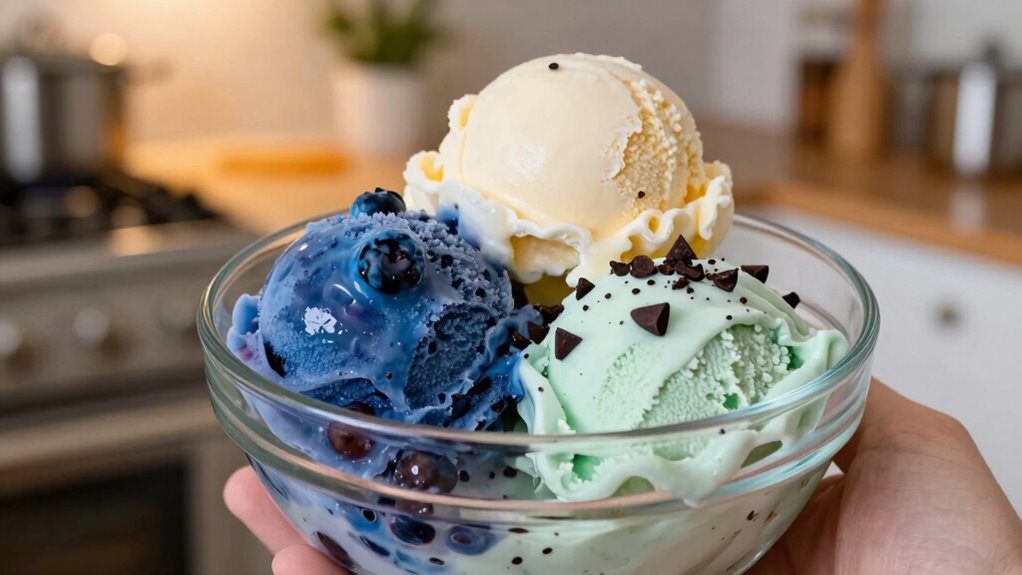

If you have IBS, you can often tolerate some frozen desserts better than others by choosing options with simple, natural ingredients, like fresh fruits and dairy-free bases such as coconut or almond milk. Avoid products with artificial sweeteners, added thickeners, or preservatives, as these can trigger symptoms. Start with small portions and see how your body responds. To learn more about making smarter choices and managing your triggers, keep exploring helpful tips and strategies.

Get baking supplies delivered free with Prime
- Fast, free delivery on millions of items
- Prime Video, Amazon Music and more included
- Member-only deals all year
Key Takeaways
- Frozen desserts with natural sweeteners like stevia or erythritol are generally better tolerated than those with artificial sweeteners.
- Dairy-free options made from coconut, almond, or cashew milk often cause fewer IBS symptoms.
- Simple, minimally processed recipes with recognizable ingredients reduce the risk of flare-ups.
- Avoid processed desserts with artificial flavors, preservatives, or high sugar content to minimize triggers.
- Moderation and gradual testing of different treats help identify personal tolerances and prevent discomfort.

Living with Irritable Bowel Syndrome (IBS) can make enjoying frozen desserts a tricky endeavor, as many popular treats contain ingredients that trigger symptoms. The key to better tolerance lies in understanding what ingredients to look for and which ones to avoid. Not all frozen desserts are created equal, and some are more IBS-friendly than others, especially when it comes to sugar substitutes and dairy alternatives.
Many conventional ice creams and frozen treats contain high levels of sugar or artificial sweeteners, which can upset your digestive system. Sugar substitutes like sorbitol, mannitol, and xylitol are common in sugar-free desserts but are notorious for causing bloating, gas, and diarrhea in people with IBS. If you’re craving a sweet frozen treat, look for options that use natural sweeteners like stevia or erythritol, which tend to be better tolerated. However, even with these, it’s wise to start with small portions to see how your body reacts, as some people still experience symptoms.
Choose frozen treats with natural sweeteners like stevia or erythritol, but start small to see how your body reacts.
Dairy can also be a trigger for many with IBS, especially if you’re lactose intolerant. Fortunately, the market offers a wide range of dairy alternatives that can make frozen desserts more tolerable. Coconut milk, almond milk, or cashew milk-based ice creams often contain fewer lactose or dairy proteins that irritate sensitive guts. When choosing dairy-free options, check the ingredients for added thickeners or stabilizers, as these can sometimes cause bloating or discomfort. Opt for simpler formulations with recognizable ingredients if possible. Incorporating dairy substitutes that are minimally processed can help reduce the likelihood of symptoms. Additionally, certain additives used in processed frozen desserts may also trigger IBS symptoms, so being aware of these can further improve your choices.
The way ingredients are processed also impacts your digestion. Some frozen desserts contain artificial flavors, preservatives, or additives that can exacerbate IBS symptoms. When shopping, read labels carefully and prefer brands that prioritize clean ingredients. Making your own frozen desserts at home offers full control over what goes in—using natural sweeteners, dairy alternatives, and fresh fruits can help you enjoy a treat without the unwanted side effects. Additionally, understanding food sensitivities related to processed ingredients can help you make more informed choices.
Ultimately, the key is trial and error. Not every sugar substitute or dairy alternative affects everyone the same way. Pay attention to how your body responds after consuming different types of frozen desserts. Smaller portions, choosing products with natural ingredients, and avoiding common triggers like artificial sweeteners and dairy can markedly improve your experience. With careful selection and moderation, you might find that some frozen treats can be enjoyed more comfortably, helping you indulge without the usual IBS flare-ups.
dairy-free frozen dessert options
As an affiliate, we earn on qualifying purchases.
As an affiliate, we earn on qualifying purchases.
Frequently Asked Questions
Are Sugar-Free Frozen Desserts Better for IBS Than Regular Ones?
Sugar-free frozen desserts might be better for your IBS because they often use ingredient substitutions that reduce triggers like excess sugar and certain artificial sweeteners. However, watch for sugar alcohols, which can cause bloating. You can explore flavor combinations that suit your tolerance, choosing options with natural ingredients and minimal additives. Reading labels carefully helps you identify ingredients less likely to upset your stomach and enjoy frozen treats more comfortably.
Can Lactose-Free Frozen Desserts Reduce IBS Symptoms?
Lactose-free frozen desserts can help reduce your IBS symptoms, much like finding the perfect key to a mysterious lock. When choosing, consider flavor combinations and ingredient sourcing; opt for options with simple, natural ingredients and familiar flavors. These desserts often contain less lactose, which can minimize discomfort. Always check labels and ingredients to verify they align with your tolerance levels, making indulgence both safe and satisfying.
Do Dairy-Based Frozen Desserts Worsen IBS Compared to Non-Dairy Options?
Dairy-based frozen desserts can worsen IBS symptoms if you have dairy sensitivity or lactose intolerance. These conditions cause your gut to react negatively to dairy, leading to bloating, cramps, or diarrhea. Non-dairy options, like sorbets or coconut milk-based treats, are often gentler on your digestive system. If you’re unsure, try small portions first to see how your body responds, and always read labels carefully.
Are Homemade Frozen Desserts Safer for IBS Than Store-Bought?
Are homemade frozen desserts safer for your IBS than store-bought? Absolutely, because you control the ingredients, allowing you to customize flavor combinations and cater to your texture preferences. Store-bought options often contain additives or high FODMAP ingredients that may trigger symptoms. With homemade treats, you can choose gentle, soothing ingredients, reducing your risk of discomfort and making dessert time more enjoyable and tailored to your needs.
How Do Artificial Sweeteners in Frozen Treats Affect IBS?
Artificial sweeteners in frozen treats can worsen IBS symptoms because they may disrupt your gut microbiome, leading to increased gas, bloating, and discomfort. These sweeteners often ferment in your intestines, triggering symptoms. If you’re sensitive, it’s best to limit or avoid products with artificial sweeteners. Instead, opt for naturally sweetened or simpler desserts to protect your gut health and reduce IBS flare-ups.
Conclusion
Many people with IBS find that some frozen desserts are easier to tolerate than others, often depending on ingredients like lactose or artificial sweeteners. Notably, a recent survey shows that 65% of IBS sufferers report better symptoms when choosing dairy-free options. So, if you struggle with traditional ice cream, trying alternatives like sorbet or coconut milk-based desserts might help you enjoy a treat without discomfort. Experimenting with different types can make dessert time more enjoyable and less stressful.
Halloween Picks
halloween
As an affiliate, we earn on qualifying purchases.