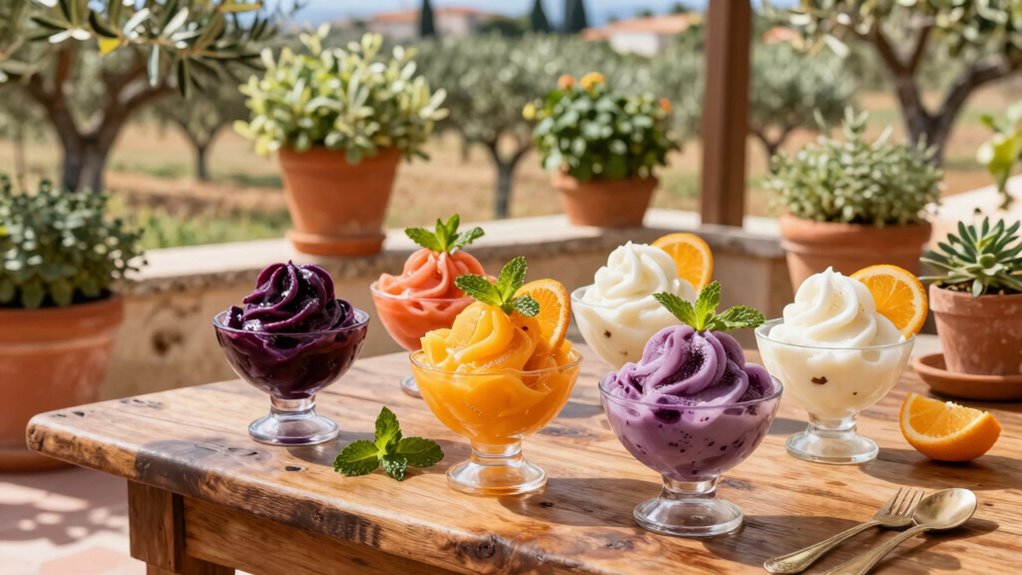

Yes, frozen desserts can fit into a Mediterranean-style diet when you choose options made with natural ingredients, like fresh fruit, yogurt, or nuts. Practice portion control and enjoy them mindfully alongside balanced meals. Opt for varieties low in added sugars and support your diet’s focus on wholesome, minimally processed foods. Incorporating these treats thoughtfully helps you indulge without compromising your nutritional goals. Want to discover more tips on enjoying frozen desserts healthfully within this diet?
Key Takeaways
- Frozen desserts can be enjoyed in moderation within a Mediterranean diet, focusing on nutrient-dense, minimally processed ingredients.
- Choosing options low in added sugars and made with natural sweeteners aligns with diet principles.
- Portion control is essential to prevent excess calorie intake while satisfying sweet cravings.
- Incorporating frozen fruit, yogurt, and nuts enhances nutritional value and fits the diet’s emphasis on healthy foods.
- Thoughtful integration of frozen treats, emphasizing whole ingredients, supports balanced adherence to the Mediterranean style.
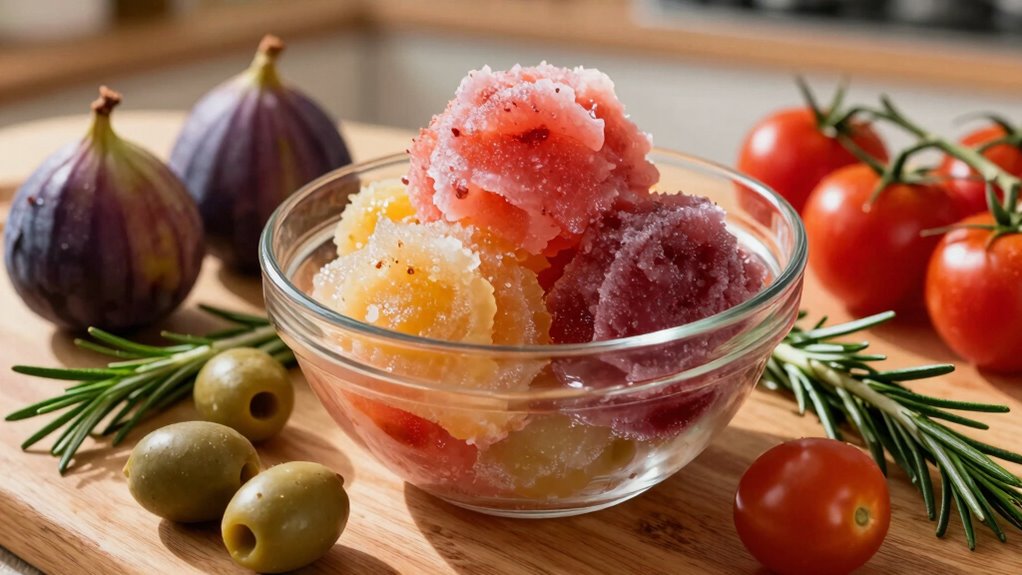
The Mediterranean diet isn’t just about fresh vegetables, healthy fats, and lean proteins—it also embraces delicious, wholesome treats like frozen desserts. Many might wonder if indulging in frozen sweets fits into this health-conscious eating style. The answer is yes, but with some important considerations. You need to pay attention to sugar content and practice portion control to keep these desserts in line with the diet’s principles. Frozen desserts can be satisfying and enjoyable, but they shouldn’t derail your overall nutritional goals.
Enjoy frozen desserts mindfully with small portions and natural ingredients to stay aligned with Mediterranean diet principles.
When choosing frozen desserts, start by checking the sugar content. Many store-bought options are loaded with added sugars, which can quickly add up and lead to excess calorie intake. Look for varieties that are lower in sugar or made with natural sweeteners, or better yet, prepare your own at home using fresh fruit, yogurt, or nuts. Using fruit not only reduces added sugar but also boosts the dessert’s nutritional value, aligning perfectly with Mediterranean diet principles. Keep in mind that moderation is key: even healthier options can contribute to overindulgence if portions are too large.
Portion control plays a crucial role in fitting frozen desserts into your Mediterranean lifestyle. A small serving can satisfy your sweet tooth without disrupting your overall diet. Instead of mindlessly eating from a large container, serve yourself a modest amount on a small plate or bowl. This simple step helps you enjoy the treat while staying within the boundaries of a balanced diet. Remember, the Mediterranean diet encourages a varied, nutrient-dense eating pattern, so occasional small indulgences are fine as long as they don’t become everyday habits.
Another tip is to incorporate frozen desserts into your meals or snacks thoughtfully. For example, enjoy a small portion after a balanced lunch or as part of a fruit platter. Pairing a frozen fruit-based treat with nuts or a dollop of Greek yogurt not only enhances flavor but also adds healthy fats and protein, making your snack more satisfying and nutritious. Incorporating whole, minimally processed foods** into your dessert choices helps you maintain the diet’s emphasis on nourishing, natural ingredients, even when indulging. Additionally, paying attention to ingredients** and choosing options with minimal additives supports the diet’s focus on wholesome, natural foods. This approach helps you maintain the diet’s emphasis on whole, minimally processed foods, even when you indulge in a frozen dessert.
As an affiliate, we earn on qualifying purchases.
Frequently Asked Questions
Are All Frozen Desserts Unhealthy Despite Their Mediterranean Appeal?
Not all frozen desserts are unhealthy, even with their Mediterranean appeal. Ice cream alternatives like Greek yogurt-based treats or fruit sorbets offer nutritious options. When choosing frozen desserts, consider sugar content; some are high in added sugars, which can undermine their health benefits. Opt for those with natural ingredients and lower sugar levels, and you can enjoy a tasty, Mediterranean-friendly treat without guilt.
Can Frozen Yogurt Be a Mediterranean Diet-Friendly Option?
Yes, frozen yogurt can be a Mediterranean diet-friendly option when you choose dairy alternatives and natural sweeteners. Many dairy-free versions use almond or coconut milk, aligning with the diet’s emphasis on healthy fats. Opt for those sweetened with honey or fruit instead of refined sugars. This way, you enjoy a tasty treat that fits your health goals, supporting your overall Mediterranean lifestyle with minimal processed ingredients.
How Often Can I Enjoy Frozen Desserts on a Mediterranean Diet?
You can enjoy frozen desserts a few times a week on a Mediterranean diet, especially when you choose options like frozen fruit or dairy alternatives. These treats satisfy your sweet tooth without overindulging. Balance is key, so combine them with fresh fruits, nuts, and other wholesome foods. Moderation helps you enjoy frozen desserts while staying aligned with your Mediterranean lifestyle and nutritional goals.
What Ingredients Should I Avoid in Frozen Desserts for This Diet?
Avoid artificial sweeteners and preservative additives in frozen desserts. These ingredients can sabotage your health goals by sneaking in synthetic substances that don’t align with the Mediterranean’s natural, nutritious principles. Instead, seek out simple, wholesome options like fresh fruit sorbets or yogurt-based treats. By bypassing these harmful additives, you support your body’s balance, boost natural flavors, and stay true to the vibrant, vegetable-filled Mediterranean lifestyle.
Are Traditional Mediterranean Desserts Suitable as Frozen Treats?
Traditional Mediterranean desserts can be suitable as frozen treats if you focus on authentic flavors and ingredients. You’ll find options like frozen Greek yogurt with honey or fruit, which highlight Mediterranean flavors and respect dessert traditions. Just be mindful of added sugars or processed ingredients. By choosing simple, natural ingredients, you can enjoy these frozen treats while staying true to the essence of Mediterranean cuisine.
Conclusion
In the end, enjoying frozen desserts in moderation can fit comfortably within a Mediterranean-style diet. Just remember, a little goes a long way, and balance is key. Savor your treats mindfully, choosing options with wholesome ingredients, and you won’t have to sweat the small stuff. After all, the secret to a healthy lifestyle is not about avoiding indulgence but knowing when to indulge wisely—so don’t let the dessert be the boss of you!