Eating ice cream exposes your teeth to both cold and sugar, which can harm your enamel over time. The sugar feeds bacteria that produce acids, gradually eroding the protective enamel layer. Cold temperatures may cause sensitivity, especially if your enamel is already weakened. To limit damage, enjoy ice cream in moderation, rinse your mouth afterward, and maintain good oral hygiene. Continuing on, you’ll discover more simple ways to protect your teeth while still enjoying treats.
Key Takeaways
- Excessive sugar from ice cream feeds bacteria, producing acids that erode tooth enamel over time.
- Cold temperature can cause sensitivity if enamel is already weakened or thinned.
- Enamel erosion signs include increased tooth sensitivity and higher cavity risk.
- Rinsing with water and practicing good oral hygiene after eating ice cream helps protect enamel.
- Moderation and regular dental checkups are essential to prevent and detect enamel damage early.
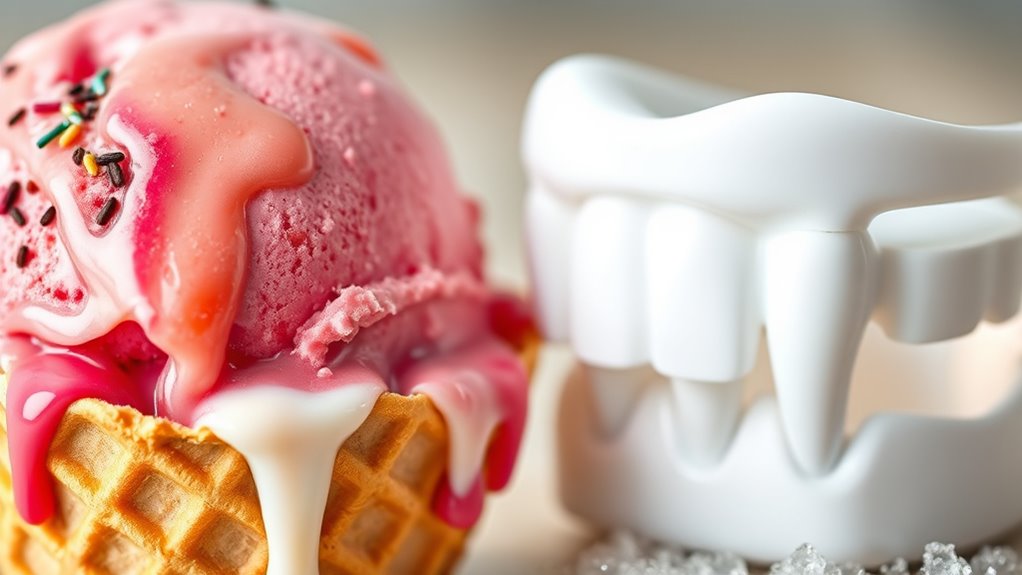
Have you ever wondered how enjoying a cold, creamy scoop of ice cream affects your dental health? When you indulge in this sweet treat, you’re consuming more than just flavor; you’re also introducing a notable amount of sugar into your mouth. Sugar consumption from ice cream can be tricky because it feeds the bacteria in your mouth, leading to acid production that attacks your teeth. Over time, this acid can contribute to enamel erosion, weakening the protective outer layer of your teeth. Enamel erosion isn’t immediate, but repeated exposure to sugary, sticky ice cream can gradually wear down your enamel, making your teeth more sensitive and prone to cavities.
Enjoying ice cream introduces sugar that can erode and sensitize your teeth over time.
The cold temperature of ice cream can also pose a challenge. While the cold itself doesn’t directly harm your enamel, it can cause discomfort if your teeth are already sensitive from enamel erosion. When your enamel becomes compromised, even the chill of ice cream can trigger pain or discomfort. This sensitivity is often a sign that your enamel has started to thin, possibly due to frequent sugar exposure and acid attacks. Eating ice cream regularly, especially if it’s sugary and sticky, can accelerate this process, making your teeth less resilient against everyday habits like brushing or biting into harder foods.
It’s important to understand that the combination of sugar and cold temperatures makes ice cream a double-edged sword for dental health. The sugar feeds bacteria that produce acids, and the cold can heighten sensitivity if your enamel is already weakened. To minimize damage, you might consider enjoying ice cream in moderation and pairing it with a glass of water to rinse away residual sugar afterward. Chewing sugar-free gum after indulging can also help increase saliva flow, which neutralizes acids and helps protect your enamel. Furthermore, maintaining good oral hygiene by brushing twice daily with fluoride toothpaste and flossing regularly can help reinforce your enamel and reduce the risk of erosion caused by frequent sugar intake.
Ultimately, the key to enjoying ice cream without harming your dental health lies in moderation and good habits. Being mindful of your sugar consumption, especially when it’s combined with cold treats like ice cream, can considerably reduce the risk of enamel erosion. Regular dental checkups are also essential—they allow your dentist to spot early signs of enamel thinning and provide personalized advice to keep your smile healthy and strong. So, enjoy your favorite ice cream, but do so wisely, knowing the impact it can have on your teeth and how to protect them.
Frequently Asked Questions
Can Eating Ice Cream Cause Permanent Enamel Damage?
Eating ice cream can contribute to enamel erosion if you frequently expose your teeth to sugar and acids found in it. The sugar feeds bacteria that produce acids, which attack your enamel over time. While an occasional treat isn’t likely to cause permanent damage, regular or excessive consumption increases your risk. To protect your enamel, limit sugar exposure, rinse your mouth afterward, and maintain good oral hygiene.
How Quickly Does Sugar From Ice Cream Affect Dental Decay?
Sugar from ice cream can start affecting your teeth within minutes, as your saliva quickly absorbs it and begins the decay process. The faster sugar is absorbed, the sooner harmful acids form, attacking enamel and promoting decay. You can minimize this impact by rinsing your mouth after eating ice cream, drinking water, or waiting a bit before brushing. Acting promptly helps slow down sugar absorption and protects your dental health.
Are There Healthier Ice Cream Options for Dental Health?
Yes, you can choose healthier ice cream options for your dental health. Look for varieties with lower sugar content to reduce decay risk, and consider dairy alternatives like coconut or almond milk-based ice creams, which often have less sugar and fewer acids that harm enamel. These choices help you enjoy a treat while protecting your teeth, especially when combined with good oral hygiene practices.
Does Rinsing With Water After Ice Cream Help Protect Teeth?
Rinsing your mouth with water after eating ice cream helps protect your teeth by encouraging saliva production, which naturally neutralizes acids and washes away sugar. Mouth rinsing dilutes lingering residue, reducing the risk of enamel erosion and cavities. You should do this promptly after enjoying ice cream, especially if it’s sugary. Regular rinsing supports your oral health by maintaining a balanced pH and promoting saliva flow, essential for healthy teeth.
How Often Should I Visit the Dentist if I Eat Ice Cream Regularly?
You should visit the dentist at least twice a year, especially if you eat ice cream regularly. Regular dental check-up frequency helps catch early signs of enamel erosion and decay caused by sugar. If your ice cream consumption habits are high, consider more frequent visits. Maintaining good oral hygiene and discussing your habits with your dentist guarantees your teeth stay healthy and protected from potential damage.
Conclusion
So, next time you enjoy ice cream, remember how sugar and enamel interact. Will indulging occasionally harm your teeth, or is moderation enough to keep your smile bright? By being mindful of how often and how much you indulge, you can savor your favorite treat without risking cavities. Balance is key—enjoy your ice cream, but don’t forget to brush and rinse afterward. After all, protecting your enamel keeps your smile healthy and sweet for years to come.