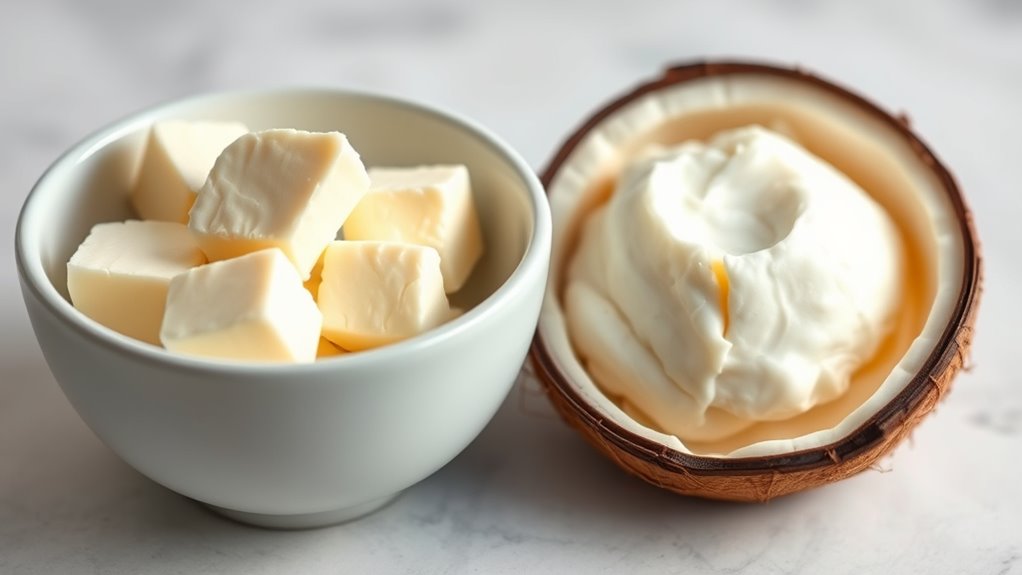

Coconut fat is high in saturated fats called MCTs, which may support energy and metabolism, while dairy fat offers a mix of saturated, monounsaturated fats, plus nutrients like calcium and vitamin D. From a health perspective, moderation is key, and how these fats fit into your overall diet matters. Environmentally, coconut farming tends to have a lower footprint but can impact ecosystems if not managed responsibly, whereas dairy production has a higher resource and emissions cost. To understand how these differences might affect your lifestyle, keep exploring further.

Get baking supplies delivered free with Prime
- Fast, free delivery on millions of items
- Prime Video, Amazon Music and more included
- Member-only deals all year
Key Takeaways
- Coconut fat is high in medium-chain triglycerides (MCTs), which may support quick energy and metabolism.
- Dairy fat contains essential nutrients like calcium, vitamin D, and high-quality protein beneficial for bone health.
- Coconut fat’s saturated fats may be less harmful than those in dairy, but ongoing research is needed.
- Dairy fat’s cholesterol content raises concerns about cardiovascular health, while coconut fat does not contain cholesterol.
- Overall health impacts depend on dietary context; sustainability considerations also influence consumer choices.
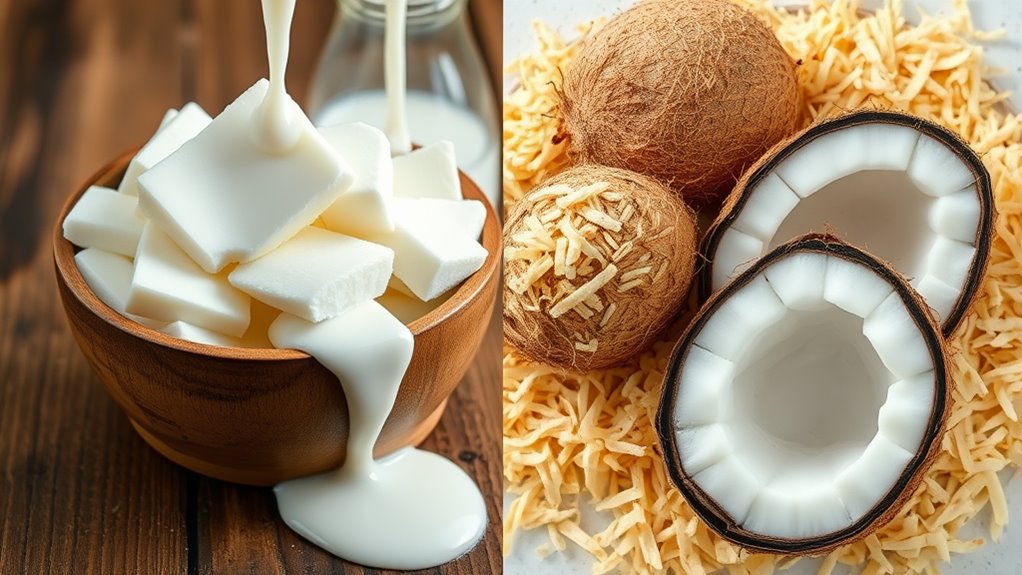
When choosing fats for your diet, understanding the differences between coconut fat and dairy fat is essential. These fats not only influence your health but also have broader environmental implications. Coconut fat, derived from the meat of mature coconuts, is often promoted as a plant-based alternative to animal fats. Its popularity stems from its natural origin and its reputation as a vegan-friendly option. Unlike dairy fat, which comes from animal sources like cows, goats, or sheep, coconut fat is plant-based, making it appealing to those seeking to reduce animal product consumption. This plant-based aspect can also align with sustainable eating habits, as coconuts generally require fewer resources to produce than dairy. However, the environmental impact of coconut farming varies depending on farming practices, with some regions facing deforestation issues and habitat loss due to increased coconut cultivation. Regular monitoring of farming practices is important to ensure sustainability.
Dairy fat, on the other hand, is a byproduct of milk and involves raising livestock, which considerably impacts the environment. Producing dairy requires large amounts of water, land, and feed, and it contributes to greenhouse gas emissions, particularly methane from cattle. This environmental footprint is a critical consideration if you’re aiming to make eco-friendly choices. While dairy fats offer nutritional benefits like calcium, vitamin D, and high-quality protein, their environmental costs are often greater compared to plant-based alternatives like coconut fat. The debate over sustainability often influences consumers to explore plant-based fats as a more environmentally conscious option, especially given the growing awareness of climate change and resource depletion.
Nutritionally, coconut fat differs from dairy fat in composition. Coconut fat is rich in saturated fats, particularly medium-chain triglycerides (MCTs), which are absorbed quickly and may support energy metabolism. Dairy fat contains a mix of saturated fats, monounsaturated, and polyunsaturated fats, along with cholesterol. Some health experts suggest that the saturated fats in coconut may be less harmful than those in dairy, but research is ongoing. If you’re considering health implications, it’s essential to look at the overall diet rather than isolated fats.
As an affiliate, we earn on qualifying purchases.
Frequently Asked Questions
How Do Coconut and Dairy Fats Affect Cholesterol Levels Differently?
Coconut fat tends to raise your LDL cholesterol but may also increase your HDL, aiding cholesterol modulation positively. Dairy fats, especially from full-fat sources, can raise both LDL and HDL levels, but their effect on heart health varies based on individual factors. You should consider how each fat influences your cholesterol balance and overall heart health, making mindful choices to support cardiovascular well-being.
Are There Specific Populations That Should Avoid Coconut or Dairy Fats?
If you have lactose intolerance or a high heart disease risk, you should avoid dairy fats, as they contain lactose and saturated fats that may worsen these conditions. Coconut fats, while plant-based, are high in saturated fats, so if you’re concerned about heart health, limit intake regardless of your lactose tolerance. Always consult a healthcare professional to tailor dietary choices to your specific health needs.
What Is the Environmental Impact of Producing Coconut Versus Dairy Fats?
You might wonder about the environmental impact of producing coconut versus dairy fats. Coconut farming often involves sustainable practices and requires less land use impact, making it more eco-friendly. Dairy farming, on the other hand, demands significant land, water, and energy, contributing to higher emissions and environmental degradation. By choosing coconuts, you support sustainable farming and reduce your ecological footprint, whereas dairy production impacts land use and resource consumption more heavily.
Can Coconut or Dairy Fats Influence Weight Loss Efforts?
Coconut and dairy fats can influence your weight loss efforts because of their calorie density and satiety effects. Coconut fat contains medium-chain triglycerides, which may boost metabolism and help you feel full longer, aiding weight loss. Dairy fats, rich in conjugated linoleic acid, might support fat burning too. However, consuming these fats in moderation is key, as overeating high-calorie foods can hinder your progress.
How Do Processing Methods Alter the Health Effects of Each Fat Type?
Processing impact substantially alters the health modification of coconut and dairy fats. When these fats undergo refining, bleaching, or deodorizing, they can lose beneficial nutrients and introduce unhealthy trans fats or additives. For you, choosing minimally processed options preserves natural nutrients and reduces health risks. So, always check labels and opt for less processed fats to support your health goals and minimize potential negative effects from processing changes.
Conclusion
So, as you consider coconut fat and dairy fat, it’s interesting how their effects often mirror each other, almost as if nature intended a balance. You might find that choosing one over the other isn’t just about health but about timing and context, like a coincidence guiding your choices. Ultimately, moderation and understanding your body’s responses matter more than any label. Perhaps, in this dance of fats, it’s your own harmony that truly counts.
Halloween Picks
halloween
As an affiliate, we earn on qualifying purchases.