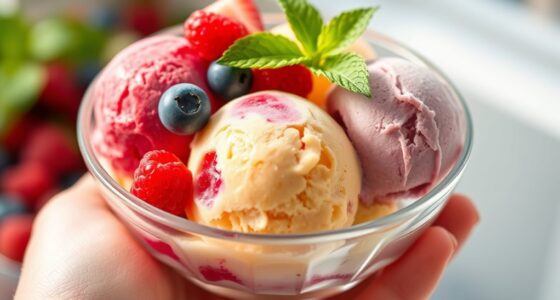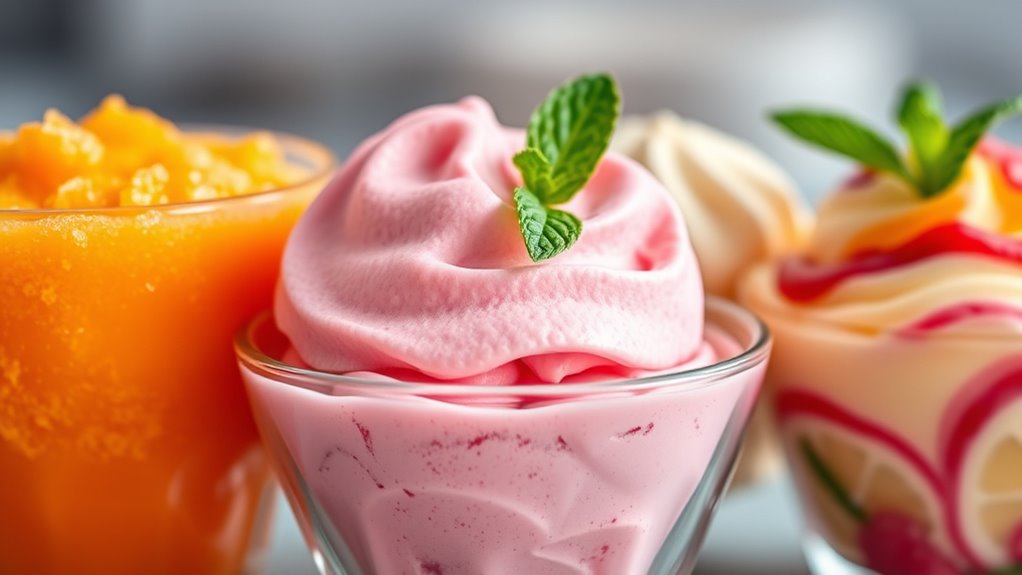

If you’re comparing sorbet, sherbet, gelato, and ice cream, you’ll find sorbet usually has the fewest calories from fat but is high in sugar, making it a lighter but calorie-dense option. Sherbet has moderate fat and sugar, offering a balance. Gelato contains more fat and less sugar, resulting in more calories, while ice cream often has the highest fat and calorie content overall. To learn more about how these treats stack up, keep exploring the details behind each!
Key Takeaways
- Sorbet generally has fewer calories from fat but is high in sugar, making it calorie-dense despite its lighter perception.
- Sherbet contains moderate fat from dairy and high sugar, offering a balance but still relatively calorie-rich.
- Gelato has higher butterfat content, resulting in more calories, but usually has lower sugar than sorbet.
- Ice cream tends to be the most calorie-dense due to high fat from cream and variable sugar levels.
- Overall, sorbet has the fewest calories from fat, while ice cream has the highest total calorie content.

When choosing a frozen treat, understanding the calorie content can help you make healthier decisions. Among the factors to contemplate are sugar content and fat levels, which directly influence the calorie count and nutritional profile of each dessert. Knowing how these elements vary across sorbet, sherbet, gelato, and ice cream enables you to select options that align with your dietary goals.
Sorbet is often perceived as a lighter choice because it contains no dairy, relying primarily on fruit juice, water, and sugar. Its sugar content tends to be high to compensate for the lack of fat, which enhances flavor and texture. Since it doesn’t include significant fat, sorbet generally has fewer calories from fat but can still be calorie-dense due to its sugar levels. If you’re watching your overall fat intake, sorbet might seem appealing, but keep an eye on sugar content to avoid excess calories that can add up quickly.
Sherbet strikes a balance, containing a small amount of dairy—usually milk or cream—along with fruit juice and sugar. Its sugar content remains relatively high, but the presence of dairy introduces some fat, typically resulting in a creamier texture than sorbet. The fat levels are modest compared to ice cream or gelato, making sherbet a middle ground in calorie content. This combination means it can be somewhat more filling and satisfying without as many calories from fat, but its sugar level still warrants attention if you’re limiting sugar intake.
Gelato is known for its rich texture and intense flavor, achieved through higher butterfat content and less air incorporation during churning. The increased fat levels contribute considerably to its calorie count, making gelato more calorie-dense than sorbet or sherbet. Despite its creamy richness, gelato usually has a lower sugar content than sorbet because the emphasis is on the dairy fat to deliver flavor. If you want a more indulgent treat without excessive sugar, gelato offers that balance, but its higher fat levels mean you’ll consume more calories per serving.
Ice cream generally contains the highest fat levels among these treats, often made with heavy cream and whole milk. Its sugar content can vary widely depending on the flavor, but many commercial options are quite sweet. The combination of high fat and sugar levels results in a calorie-rich dessert. While ice cream feels indulgent and satisfying, it’s easy to overconsume, so portion control is key if you’re mindful of calorie intake.
Frequently Asked Questions
Which Frozen Treat Has the Highest Fat Content?
You’ll find that gelato has the highest fat content among these frozen treats, enhancing its rich, creamy texture. This higher fat level boosts its nutrient density and creates a smoother, more intense flavor profile. If you’re seeking a treat with a more decadent taste, gelato’s fat content makes it stand out. Keep in mind, though, that its richness also means it’s more calorie-dense compared to sorbet, sherbet, or standard ice cream.
Are Sugar Levels Different Across Sorbet, Sherbet, Gelato, and Ice Cream?
You’ll find that sugar content variations differ among sorbet, sherbet, gelato, and ice cream. Sorbet and sherbet generally use natural sugars from fruit, but sherbet often has added sugars, making it sweeter. Gelato and ice cream tend to contain more added sugars for flavor and texture. So, if you’re watching sugar levels, natural versus added sugars play a key role, and the amount varies depending on the treat type.
How Do Portion Sizes Affect Calorie Intake?
You can control your calorie intake by practicing portion control and paying attention to serving size. When you choose smaller servings, you naturally consume fewer calories, which helps manage your weight and overall health. Always check the serving size on packaging or in restaurants, and avoid going back for seconds. Proper portion control makes a big difference in your daily calorie intake and supports your healthy eating habits.
Do Homemade Versions Have the Same Calorie Differences?
When you whip up homemade recipes, you control the ingredients, so calorie variations can be minimal or significant depending on what you add. While store-bought options often have consistent calorie counts, homemade versions can be a mixed bag—sometimes lighter, sometimes richer. Think of it as painting with a broader palette; your choices shape the final calorie content, making your homemade treats uniquely tailored and potentially healthier.
Which Type Is Best for a Low-Calorie Diet?
If you’re aiming for a low-calorie diet, sorbet is your best choice, especially when you opt for dairy alternatives like coconut or almond milk to reduce calories further. It also offers plenty of flavor variations, so you can enjoy different tastes without guilt. Unlike traditional ice cream, sorbet typically contains fewer fats and calories, making it a satisfying, lighter dessert option perfect for weight management.
Conclusion
Now that you’ve seen how sorbet, sherbet, gelato, and ice cream stack up calorie-wise, you can make smarter choices. Think of each as a different brushstroke on your dessert palette—some lighter, some richer. By understanding their calorie counts, you can indulge mindfully, savoring your favorites without guilt. Remember, moderation is the key to enjoying these sweet treats as part of a balanced, joyful life. Your perfect scoop awaits—choose wisely!