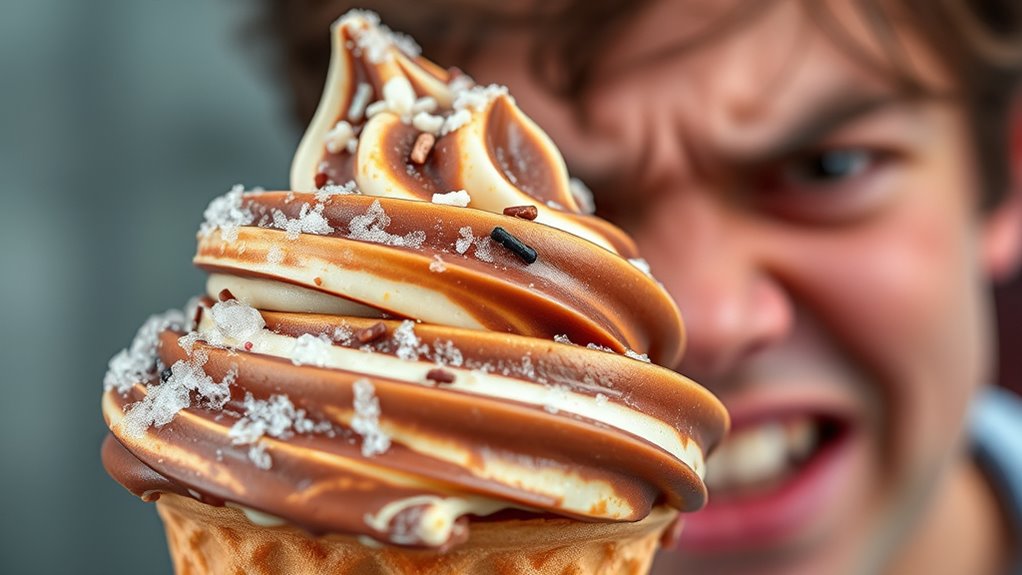

When you eat ice cream quickly, a sudden brain freeze can hit due to rapid cold transfer to the roof of your mouth, causing blood vessels to constrict and then dilate, which triggers nerve signals as pain. To prevent this, take small bites, soften the ice cream, or pace yourself. If you want to enjoy your treat without discomfort, understanding the causes and tips to avoid brain freeze will help you master the technique perfectly.
Key Takeaways
- Brain freeze occurs when cold substances rapidly cool the palate, causing blood vessel constriction and nerve signals interpreted as pain.
- Consuming cold treats quickly or in large bites increases the risk of brain freeze.
- Higher sugar content in ice cream can lower its freezing point, making it colder and more likely to trigger brain freeze.
- To prevent, eat slowly, take smaller bites, and allow ice cream to warm slightly in your mouth before swallowing.
- Drinking warm water afterward can help warm the palate and reduce brain freeze discomfort.

Have you ever wondered why your head suddenly aches after eating a spoonful of ice cream too quickly? That sharp, fleeting pain is known as brain freeze, or the scientific term, sphenopalatine ganglioneuralgia. It happens because of how your body responds to the rapid cold exposure inside your mouth. When you take a big, fast bite or sip, especially of very cold ice cream, the temperature drops suddenly in your mouth’s roof, the palate. This causes blood vessels in that area to constrict and then rapidly dilate as they try to warm back up. This swift change triggers nerves that send signals to your brain, which interprets them as pain—your brain freeze.
Your personal flavor preferences and the sugar content of the ice cream you choose can influence how quickly you experience this discomfort. Many people prefer richer, sweeter flavors, often loaded with high sugar content. These sugary varieties tend to be colder because sugar acts as a sweetener that’s often added in large amounts to enhance flavor and texture. The more sugar in your ice cream, the better it tends to taste, but it also means you might be more prone to experiencing brain freeze. That’s because sugar’s presence can lower the freezing point, making the ice cream colder and more likely to cause that quick, intense chill in your mouth. If you favor flavors like chocolate, caramel, or fruit-based options, you might notice different reactions depending on how sweet or icy those flavors are.
Understanding your flavor preferences can help you prevent brain freeze. For instance, if you love super cold, sugary ice creams, try taking smaller bites or letting the ice cream sit on your tongue for a few seconds before swallowing. This slows down the rate of cold transfer to your palate, reducing the shock to your blood vessels. If you prefer milder or less sweet options, you might naturally experience less intense or less frequent brain freezes. Another tip is to avoid eating ice cream straight from the freezer with a big spoon—let it soften just a bit first, so it’s less likely to cause rapid cooling. Drinking warm water afterward can also help warm your palate quickly and alleviate the pain.
Ultimately, knowing your flavor preferences and the sugar content of your favorite ice cream can help you enjoy your treat without the sudden headache. Savor it slowly, take small bites, and listen to your body’s signals. Brain freeze may be brief, but with these simple strategies, you can minimize its occurrence and keep your ice cream experience as enjoyable as it should be.
Frequently Asked Questions
Can Brain Freeze Cause Any Long-Term Health Issues?
Brain freeze doesn’t cause any long-term health issues. When you experience a brain freeze, it’s a temporary headache caused by rapid cold exposure to the roof of your mouth. Your body quickly adjusts, and the pain subsides. So, there’s no need to worry about long-term health effects. Just enjoy your cold treats responsibly, and you’ll avoid discomfort without any lasting health concerns related to brain freeze.
Does Eating Cold Foods Slow Down Brain Function Temporarily?
Eating cold food can cause a temporary dip in your brain temperature, but it won’t turn your brain into an ice cube or slow your brain function considerably. When you consume cold foods, your body quickly adjusts to maintain normal temperature, so any slowdown is minimal and short-lived. Enjoy your cold treats, knowing they won’t freeze your brain or impair your mental abilities for long!
Are Some People More Prone to Brain Freeze Than Others?
Yes, you might be more prone to brain freeze because of your genetic predisposition and pain sensitivity. Some people have nerve responses that trigger pain more easily, making them experience brain freeze faster and more intensely. Your genetic makeup influences how your nerves react to cold stimuli, so if you have heightened pain sensitivity, you could notice brain freeze more often and with greater discomfort than others.
Can Brain Freeze Be Used to Diagnose Neurological Conditions?
You might wonder if brain freeze can be used for neurological diagnosis. While some researchers explore how brain response to cold stimuli reveals nerve function, it’s not a reliable method for diagnosing neurological conditions. For example, in a hypothetical case, abnormal brain responses to cold could suggest nerve issues, but brain freeze mainly reflects normal reflexes rather than underlying health. So, it’s not a standard tool for neurological diagnosis.
Does the Temperature of Ice Cream Affect the Severity of Brain Freeze?
Yes, the temperature of ice cream affects the severity of brain freeze. When you eat colder ice cream, its lower temperature can cause a more intense and quicker brain freeze. Warmer ice cream, being less cold, tends to result in milder or delayed brain freeze. To minimize discomfort, choose ice cream at a slightly warmer temperature or eat it slowly, reducing the rapid cooling that triggers severe brain freeze.
Conclusion
Next time you enjoy a cold treat, remember that your brain’s quick response is a surprising coincidence—ice cream’s chill triggers that sudden freeze. By eating slowly or warming the roof of your mouth, you might just prevent that sharp pain. It’s funny how something as simple as a scoop of ice cream can remind you of how our bodies and minds connect in unexpected ways, turning a sweet moment into a lesson in mindful indulgence.