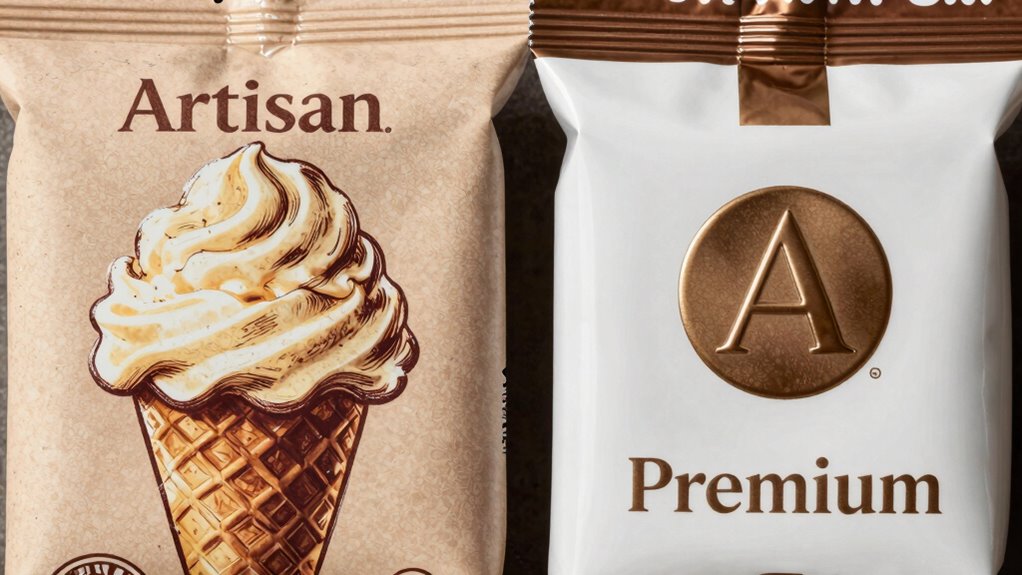

When you see “artisan” on frozen dessert packs, it usually means the product is crafted with traditional methods, natural ingredients, and a focus on authenticity, appealing to your desire for genuine, handcrafted flavors. “Premium,” on the other hand, emphasizes high quality, exclusivity, and indulgence, often with sleek packaging and luxurious ingredients. Both labels target different values—authenticity versus luxury—so understanding these differences can help you choose the perfect treat for your preferences. Keep discovering more to make smarter choices.

Get baking supplies delivered free with Prime
- Fast, free delivery on millions of items
- Prime Video, Amazon Music and more included
- Member-only deals all year
Key Takeaways
- “Artisan” emphasizes handcrafted, traditional methods, natural ingredients, and cultural authenticity in frozen desserts.
- “Premium” highlights superior ingredients, luxurious flavors, elegant packaging, and exclusivity.
- “Artisan” products focus on authenticity and craftsmanship, appealing to consumers seeking genuine experiences.
- “Premium” products target customers seeking indulgence, sophistication, and status.
- Packaging for “artisan” brands often features rustic or artisanal design, while “premium” uses sleek, elegant visuals.

When choosing between artisan and premium frozen dessert pack labels, understanding how each appeals to consumers can make all the difference. These labels communicate different stories and values, influencing purchasing decisions in subtle yet significant ways. If you’re aiming to position your product as authentic and handcrafted, emphasizing artisanal craftsmanship is key. This approach suggests a focus on quality, tradition, and unique techniques, often implying that your frozen desserts are made with care and attention to detail. Consumers who see “artisan” on a package typically expect small-batch production, natural ingredients, and a connection to local or heritage methods. By highlighting artisanal craftsmanship, you tap into a desire for authenticity, making your product stand out in a crowded market. Incorporating indigenous knowledge into your branding can further enhance the storytelling behind your product’s craftsmanship and cultural significance. Additionally, showcasing the storytelling aspect of your brand can deepen consumer engagement and foster loyalty. A cultural narrative can also help differentiate your product in a competitive landscape by emphasizing its unique origins and traditional techniques. Recognizing the importance of cultural authenticity can strengthen your brand’s credibility and resonate more deeply with consumers seeking genuine products. Moreover, emphasizing the heritage techniques used in production can further reinforce the artisanal image and appeal to consumers valuing tradition.
On the other hand, “premium” branding strategies cast a broader, more aspirational image. When you label your frozen desserts as premium, you’re signaling that your product offers superior quality, exclusivity, and a luxurious experience. The term appeals to consumers willing to pay extra for sophistication and refinement, often associating it with better ingredients, innovative flavors, or elegant presentation. Premium branding strategies focus on creating a perception of value that justifies a higher price point, emphasizing the product’s exclusivity through sleek, elegant packaging, and refined messaging. This label suggests that your frozen dessert isn’t just good; it’s the best available, often aligning with high-end lifestyles.
While both labels aim to convey quality, they do so through different lenses. “Artisan” emphasizes craftsmanship, tradition, and authenticity, appealing to buyers seeking genuine, handcrafted products. “Premium” leans into exclusivity, luxury, and superior quality, targeting consumers looking for an indulgent experience. When designing your packaging and marketing, consider which narrative aligns best with your brand identity and target audience. Combining elements of artisanal craftsmanship with premium branding strategies can also be effective, creating a product that feels both authentic and luxurious.
In essence, the choice between “artisan” and “premium” labels shapes how your frozen desserts are perceived and can influence consumer behavior dramatically. Recognize what your target audience values most—whether it’s authenticity or exclusivity—and craft your packaging and messaging accordingly. By understanding these distinctions, you can better position your product for success and forge a strong connection with your customers.
Products Worth Considering

KitchenAid Artisan 5-Quart Tilt-Head Stand Mixer, Almond Cream

Instant Pot Vortex Plus 6-Quart Air Fryer

De'Longhi Magnifica Duo Fully Automatic Espresso Machine with Milk Frother, Silver
As an affiliate, we earn on qualifying purchases.
Frequently Asked Questions
Can a Product Be Both Artisan and Premium Simultaneously?
Yes, a product can be both artisan and premium simultaneously. You’ll find that handcrafted quality often aligns with artisan branding, emphasizing craftsmanship and unique ingredients. Combining this with luxury branding elevates the product’s status, making it both authentic and exclusive. When a frozen dessert embodies handcrafted quality and is marketed as a luxury item, it seamlessly fits into both artisan and premium categories, appealing to consumers seeking exceptional, high-end treats.
Do These Labels Affect the Price Significantly?
Think of these labels like a secret handshake— they influence pricing considerably. When you see “artisan,” it signals handcrafted quality, boosting perceived value, while “premium” suggests exclusivity. These branding strategies shape marketing perceptions, often leading consumers to pay more. In my experience, a product labeled “artisan” can command a 20-30% higher price, proving how powerful these terms are in setting expectations and prices.
Are There Specific Regulations for Using “Artisan” or “Premium”?
Yes, there are regulations for using “artisan” and “premium.” You need to meet specific standards for artisanal craftsmanship, which often include traditional methods and small-batch production. For “premium,” you must adhere to strict quality standards, ensuring your product stands out in taste and ingredients. These labels are regulated to prevent misleading claims, so you should verify compliance with local food labeling laws to use them legally and accurately.
How Do Consumer Perceptions Differ Between the Two Labels?
You likely perceive “artisan” as a sign of higher quality and craftsmanship, leading to heightened taste expectations. “Premium” often suggests a more luxurious, refined product, boosting your brand trust. These labels influence how you judge flavor and quality; “artisan” might evoke more authentic, handcrafted qualities, while “premium” emphasizes superior ingredients. Your perceptions shape your willingness to pay more and your overall satisfaction with the product.
Do All Brands Use These Terms Consistently?
Not all brands use “artisan” and “premium” consistently, which can confuse you. Some brands leverage marketing strategies to emphasize brand authenticity, making their products seem more authentic or luxurious. They might use these terms loosely to attract customers, but the actual quality or authenticity varies. It’s important to look beyond labels and assess the ingredients, brand reputation, and marketing claims to truly understand what you’re buying.
Conclusion
Remember, labels can be like a shining sign, but the real treasure lies in what’s inside. “Don’t judge a book by its cover,” they say, and the same goes for frozen desserts. Whether it’s “artisan” or “premium,” take a moment to read the ingredients and savor the experience. Sometimes, the simplest choice can turn out to be the sweetest reward—just like finding a hidden gem in a sea of options.