To create an allergy-friendly kitchen, you should identify and label allergen-containing foods, use dedicated tools and storage, and wash hands thoroughly before handling allergen-free items. Keep separate utensils, cutting boards, and cookware for allergens, and regularly clean surfaces and appliances. Careful meal planning and ingredient checks help prevent accidental exposure. Educating everyone at home about allergy safety and emergency steps guarantees a safer environment, and if you continue exploring, you’ll discover how to effectively implement these strategies.
Key Takeaways
- Clearly label allergen-containing foods and store them separately to prevent accidental cross-contact.
- Use dedicated utensils, cutting boards, and cookware for allergen-free meal preparation.
- Regularly clean surfaces, appliances, and tools with soap and water to reduce allergen traces.
- Carefully read ingredient labels and verify ingredients when shopping or preparing meals.
- Educate household members on allergy management and keep emergency medications accessible.
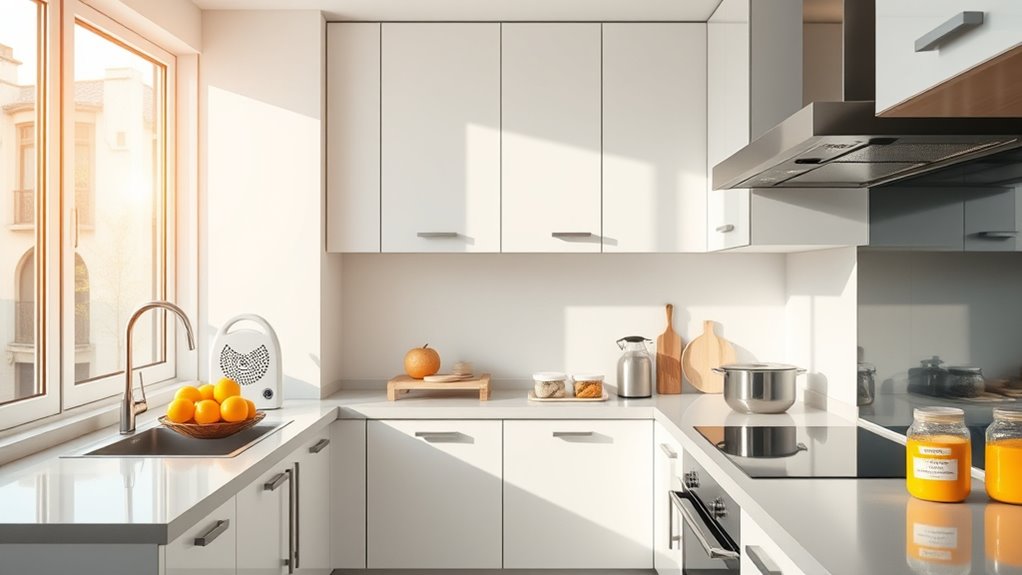
Have you ever wondered how to make your kitchen safe for everyone with allergies? Creating an allergy-friendly environment starts with food allergy awareness. Understanding the specific allergies that affect your family or guests is essential. Once you know which foods pose risks, you can implement targeted kitchen safety tips to minimize exposure and prevent accidental reactions. The goal is to create a space where everyone feels safe and confident eating without fear.
Start by clearly identifying and separating allergen-containing foods. Use distinct containers, labels, and storage areas for common allergens like nuts, shellfish, dairy, and gluten. This prevents cross-contact, which can happen easily during food prep or storage. Always wash your hands thoroughly before handling allergen-free foods, and encourage others in your household to do the same. This simple step markedly reduces the chances of transferring allergens from one surface or utensil to another.
Incorporate dedicated utensils, cutting boards, and cookware for allergen-free foods. For example, keep separate knives and spatulas for handling nuts or dairy, and don’t share these tools between allergen and non-allergen items. Regularly cleaning surfaces and appliances with soap and water is another essential kitchen safety tip. This practice removes traces of allergens that might linger on countertops, stovetops, or sinks, further reducing risk. Consider using color-coded cloths or sponges for different cleaning tasks to prevent cross-contamination.
When planning meals or snacks, always check ingredient labels carefully, even if you’ve used the product before. Manufacturers sometimes change formulations, and a missed allergen could cause a serious reaction. Keep a list of safe and unsafe foods handy for quick reference, especially when shopping or preparing meals. If you’re hosting or cooking for someone with allergies, communicate openly about ingredients and cooking methods. Transparency helps everyone feel comfortable and lessens the chance of accidental exposure.
A key part of food allergy awareness is training everyone in your household or that of your guests. Teach family members about the importance of avoiding cross-contact and recognizing allergy symptoms. Keep emergency medication, like antihistamines or epinephrine auto-injectors, accessible and ensure everyone knows how to use them.
Frequently Asked Questions
How Often Should Kitchen Surfaces Be Disinfected for Allergy Safety?
You should disinfect kitchen surfaces daily to maintain allergy safety. Incorporate cleaning schedules that emphasize regular surface sanitation, especially after preparing food or handling allergens. Use allergen-safe cleaning products and guarantee you thoroughly wipe down counters, cutting boards, and appliances. Consistent cleaning helps prevent cross-contamination and minimizes allergen exposure, creating a safer environment for everyone. Make surface sanitation a routine part of your kitchen maintenance to reduce allergy risks effectively.
What Are the Best Storage Solutions for Allergy-Prone Ingredients?
Secure your supplies with smart storage solutions. Use airtight containers to seal and safeguard allergy-prone ingredients, preventing cross-contamination. Label everything clearly, so you swiftly spot specific items and avoid accidental exposure. Store allergen-heavy foods separately from others, creating a clutter-free, cautious kitchen. By combining clever containers and clear labels, you cultivate a clean, controlled environment, reducing risks and reassuring you that allergy safety always comes first.
Can Air Purifiers Effectively Reduce Allergens in the Kitchen?
Air purifiers can effectively reduce allergens in your kitchen, especially if they use advanced allergen filtration technology. Their effectiveness depends on the unit’s quality and proper placement. Choose an air purifier with HEPA filters, which trap tiny particles like pollen, dust, and pet dander. Regularly run it during cooking and cleaning to maintain cleaner air, making your allergy-prone environment safer and more comfortable.
How to Prevent Cross-Contact During Meal Preparation?
Think of cross-contact prevention like fencing in a garden—carefully separating plants to keep pests out. To prevent cross-contact, always wash hands and utensils thoroughly, use separate cutting boards for allergen-free foods, and clean surfaces between tasks. Being allergen-aware helps you spot potential risks early, just like a gardener notices pests before they ruin the crop. Staying vigilant ensures a safer, allergen-free meal for everyone.
Are Natural Cleaning Products Safe for Allergy-Friendly Kitchens?
Natural cleaning products can be safe for allergy-friendly kitchens if you choose options with simple, recognizable ingredients and avoid harsh chemicals. Always read labels carefully, and store your natural cleaners separately from food ingredients to prevent cross-contamination. Proper ingredient storage guarantees that your natural cleaning supplies don’t accidentally come into contact with allergens, helping you maintain a safe and allergy-conscious environment while keeping your kitchen clean and fresh.
Conclusion
By creating an allergy-friendly kitchen, you not only reduce risks but also set the stage for safer, happier meals. Imagine accidentally discovering a hidden spice jar that’s been a troublemaker, only to realize your careful setup keeps everyone safe. It’s a small coincidence that can make a big difference, turning your kitchen into a sanctuary. With these simple steps, you’re building a space where allergy concerns fade into the background, making every meal a worry-free experience.