The safe window for thawing, scooping, and refreezing perishable foods is generally within 1 to 2 days once they’re properly refrigerated at or below 40°F. If food stays out at room temperature longer than two hours, bacteria can rapidly grow, making it unsafe to refreeze. To keep your food safe and high quality, it’s important to handle and store it correctly. Continuing will help you understand more about proper food safety practices.
Key Takeaways
- Thawed food should be used or refrozen within 1–2 days if kept at or below 40°F.
- Food left out at room temperature over two hours should not be refrozen.
- Repeated thawing and refreezing can degrade quality and increase bacterial risk.
- Proper refrigeration is essential to maintain the safety window for refreezing.
- Always verify that food remains cold and hasn’t been left out longer than two hours before refreezing.

Have you ever wondered why certain foods must be thawed, scooped, and refrozen within a specific timeframe? It all comes down to food safety and following proper refrigeration guidelines. When you handle perishable items like meats, seafood, or prepared dishes, knowing how long they’re safe to stay in different states helps prevent foodborne illnesses. The key lies in understanding the “thaw-scoop-refreeze” window, which is the period during which safely shifting food from one stage to another remains effective without risking bacterial growth.
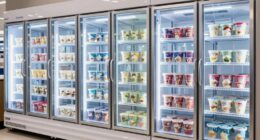
Once you thaw food, it enters a vulnerable zone where bacteria can multiply rapidly if not handled correctly. The general rule of thumb, according to food safety experts, is that perishable foods should be kept in the refrigerator at or below 40°F (4°C). Within this temperature range, food can typically be kept safely for a limited time—usually 1 to 2 days for most raw meats and seafood. If you don’t plan to cook or consume the thawed food within this window, it’s best to refreeze it promptly. This helps preserve quality and minimizes the risk of bacteria thriving.
Thawed foods should be kept at or below 40°F for only 1–2 days before refreezing.
Refreezing food isn’t always ideal, but it’s a safe option when done within the proper timeframe. The USDA recommends refreezing thawed food if it has been kept refrigerated at the right temperature and has not sat out at room temperature for more than two hours. The reason is that bacteria can start to grow once the food warms above the safe temperature zone, even if it’s subsequently cooled again. Consequently, if you scoop out part of a thawed item and plan to refreeze the rest, confirm that the remaining portion has stayed cold and hasn’t been left out longer than two hours.
It’s essential to understand that repeated thawing and refreezing can affect food quality, leading to textural changes and moisture loss. Furthermore, the longer food stays in the danger zone (40°F to 140°F or 4°C to 60°C), the greater the risk for bacteria such as Salmonella or Listeria to multiply. To stay within safe refrigeration guidelines, always thaw foods in the refrigerator, microwave, or cold water—never at room temperature. Remember, once the food is refrozen, it may lose some of its original quality, but as long as it was handled properly, it remains safe to eat.
Being aware of food safety principles and proper handling times ensures that you minimize health risks while maintaining food quality.
Frequently Asked Questions
Can Repeated Thawing and Refreezing Affect Food Safety?
Repeated thawing and refreezing can affect food safety by increasing bacterial growth and reducing food quality. When you thaw food, bacteria can multiply if it stays in the temperature danger zone too long. Refreezing doesn’t kill bacteria but can damage the food’s texture and flavor. To keep food safe, avoid multiple thaw-and-refreeze cycles, and always thaw food safely in the fridge or microwave.
How Does Temperature Fluctuation Impact the Thaw‑Scoop‑Refreeze Window?
When it comes to temperature fluctuations, you can’t afford to let your food walk a tightrope. Sudden changes in temperature stability, especially during thawing, can shorten the safe window for refreezing. Stick to proper thawing methods—like refrigeration or cold water—and avoid leaving food out. This way, you keep food safe, maintain quality, and prevent bacteria from taking hold. Don’t let temp shifts spoil your plans!
Are There Different Guidelines for Seafood Versus Poultry?
Yes, there are different guidelines for seafood versus poultry when it comes to marine safety and culinary practices. You should thaw seafood in the refrigerator or cold water, avoiding room temperature, and cook it promptly. Poultry requires similar careful handling, but you need to guarantee it’s cooked to a higher internal temperature for safety. Always follow specific guidelines for each to prevent contamination and ensure safe, quality dishes.
What Signs Indicate Food Has Been Unsafe During the Thawing Process?
Think of thawing like a delicate dance—you’ll notice food has gone bad if it smells sour or rotten, like a forgotten gym sock. Watch for color changes; if poultry turns gray or seafood looks dull and slimy, that’s a red flag. These signs mean bacteria may have grown, making the food unsafe. Always trust your senses—don’t risk it if anything seems off.
Does the Type of Packaging Influence the Refreezing Safety Window?
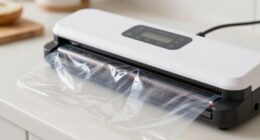
Yes, packaging materials and storage containers influence the refreezing safety window. If you use airtight, moisture-proof packaging, you reduce the risk of bacterial growth during thawing, allowing a safer window for refreezing. Avoid porous or damaged containers, as they can introduce bacteria or cause freezer burn. Properly sealed storage containers help maintain quality and safety, giving you more confidence in refreezing food within recommended timeframes.
Conclusion
Remember, time is of the essence when it comes to thawing, scooping, and refreezing. If you follow the safe window guidelines, you’ll avoid risking food safety and waste. Keep in mind the saying, “A stitch in time saves nine.” Acting promptly and within the recommended timeframe guarantees your food stays fresh and safe. Don’t delay—your health and your wallet will thank you for catching it early.