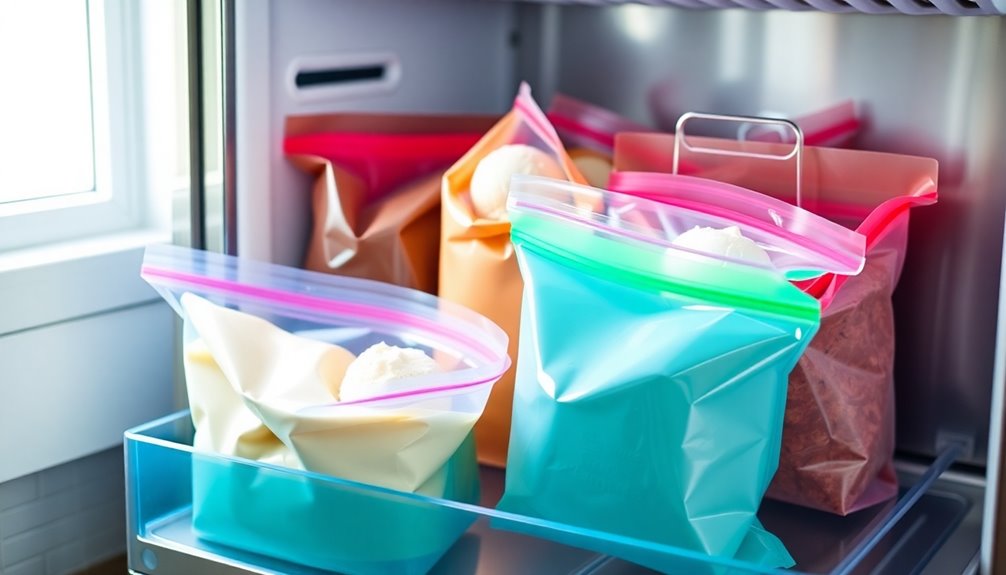

Storing ice cream in freezer bags has its perks and pitfalls. On the plus side, they prevent freezer burn and mold well to save space. You can also maintain moisture and minimize ice crystals. However, they can be less convenient than traditional containers and might not keep ice cream scoopable. There’s also a risk of leaks and temperature fluctuations if the seal weakens. Want to know the best practices and alternatives for ice cream storage? Keep going!
Key Takeaways
- Freezer bags help prevent freezer burn, maintaining the flavor and texture of ice cream for longer periods.
- They create an airtight seal, minimizing moisture loss and ice crystal formation.
- However, they can be less convenient than traditional containers due to the sealing process required.
- Improperly sealed bags may still develop ice crystals, compromising ice cream quality.
- Freezer bags are prone to punctures, which can lead to spills and contamination.
Advantages of Using Freezer Bags for Ice Cream Storage
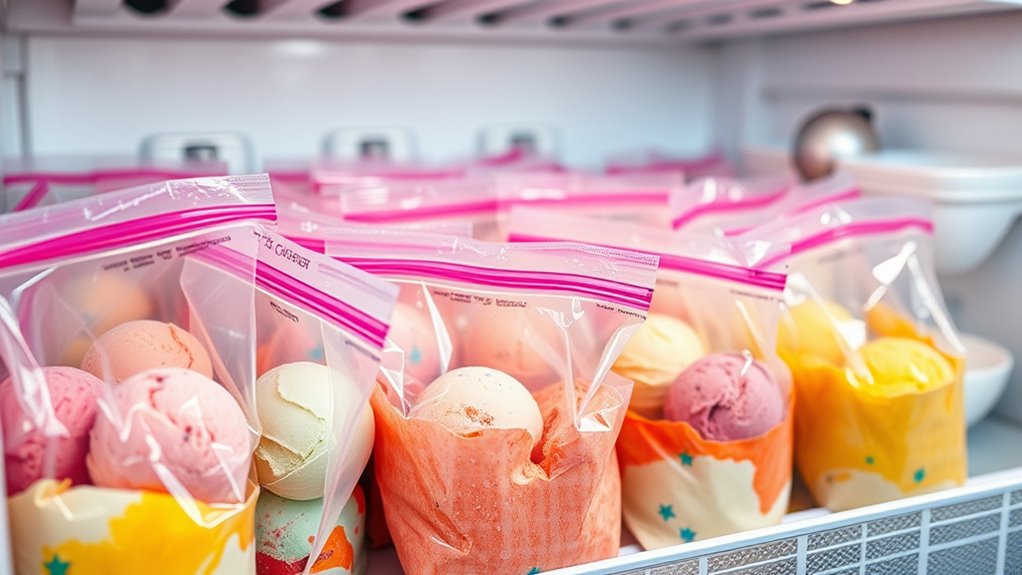
When it comes to storing ice cream, using freezer bags offers multiple advantages that can enhance your experience.
First, they help prevent freezer burn, preserving the flavor and texture of your favorite treats. The nearly airtight seal of freezer bags retains moisture, minimizing ice crystals that form from evaporation in the freezer.
Using freezer bags minimizes ice crystals and prevents freezer burn, ensuring your ice cream stays flavorful and creamy.
Additionally, they provide extra insulation, shielding your ice cream containers from temperature fluctuations caused by frequent door openings.
Using freezer bags also allows for more efficient use of freezer space, as they easily mold to fit varying shapes and sizes.
For even better results, combining freezer bags with plastic wrap under the lid can create an airtight seal, extending the shelf life of both homemade and store-bought ice cream.
Disadvantages of Freezer Bag Storage
While freezer bags offer advantages for ice cream storage, there are notable downsides to contemplate.
First, they mightn’t keep your ice cream at a scoopable temperature, as tests show no difference in texture or ease of scooping.
You’ll also find them less convenient than traditional containers since you need to press out air and seal them properly, which can feel like a hassle.
Over time, improperly sealed freezer bags can still develop ice crystals, ruining the flavor and texture.
Additionally, their lack of rigidity makes them prone to punctures, leading to spills and contamination.
Finally, for long-term storage, freezer bags can wear out and lose their sealing capability, risking your ice cream’s quality.
How Freezer Bags Prevent Ice Crystal Formation

Freezer bags effectively minimize ice crystal formation in your ice cream by providing nearly airtight seals that limit air exposure.
When you store your ice cream in these bags, you reduce moisture evaporation, which is essential for maintaining that creamy texture. By pressing out excess air before sealing, you also help keep moisture content intact, preventing freezer burn.
Plus, the insulating properties of freezer bags protect your ice cream from temperature fluctuations caused by frequent freezer door openings. This protection creates a barrier against dry air, a major contributor to ice crystal development.
With less porous materials than cardboard cartons, freezer bags enhance ice cream preservation, ensuring its flavor and texture remain delightful over time.
Comparing Flexibility and Space Efficiency
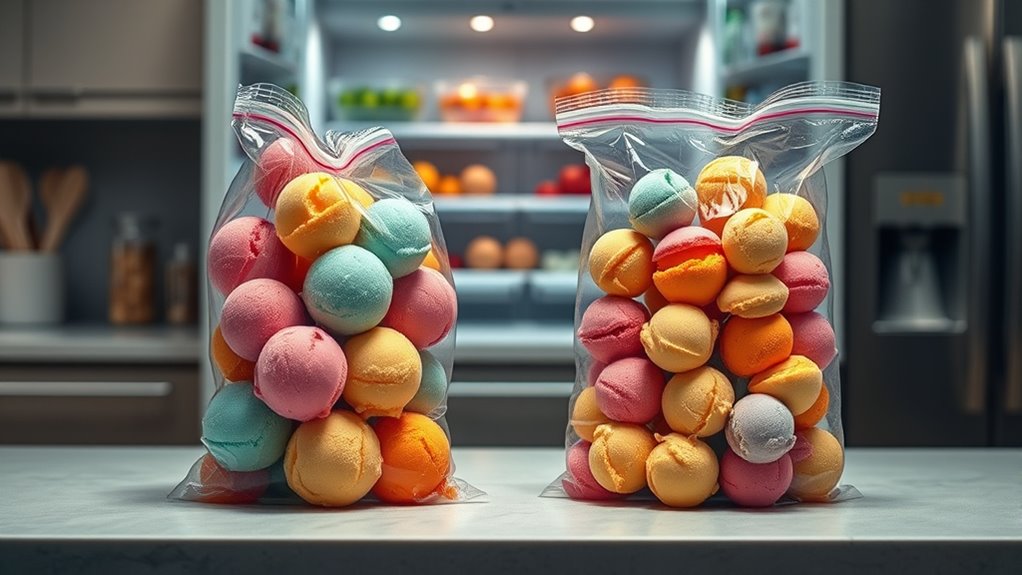
When you store ice cream in freezer bags, you’ll notice how much more flexible they’re compared to rigid containers.
This flexibility allows you to maximize your freezer space and easily stack or organize different flavors.
Plus, with various sizes available, you can adjust your storage solutions to fit any amount of ice cream you have on hand.
Space-Saving Storage Solutions
Maximizing space in your freezer can feel like a puzzle, but using freezer bags offers an incredibly flexible solution. These bags can mold around your ice cream containers, optimizing every nook of your freezer. Unlike rigid containers, they can be flattened for easy storage after use. Plus, pressing out air before sealing helps prevent freezer burn, keeping your ice cream’s flavor intact.
| Feature | Freezer Bags | Rigid Containers |
|---|---|---|
| Space Efficiency | High | Low |
| Flexibility | Excellent | Limited |
| Labeling Convenience | Easy | Moderate |
Flexibility in Container Sizes
Choosing the right container size for your ice cream can make all the difference in both convenience and storage.
Freezer bags come in various sizes, letting you pick the perfect option for your frozen food, whether you need a single serving or several pints. Their flexibility allows you to store them in tight spaces or those awkward corners of your freezer, maximizing efficiency over rigid plastic containers.
Plus, once you remove the air, you can flatten the bags, saving even more space. Smaller portions in freezer bags freeze faster, reducing texture degradation.
You can also use multiple bags for different flavors, preventing cross-contamination and making it easier to grab your favorite without wrestling with larger containers.
Easy Organization and Access
While you might struggle with bulky containers when trying to find your favorite ice cream flavor, freezer bags offer a practical solution for easy organization and access. Their flexibility allows them to conform to various shapes, optimizing space in your freezer. Additionally, maintaining a clean home can enhance your overall enjoyment of treats like ice cream by fostering a pleasant environment. Incorporating proper food storage practices can also help you organize your meals, ensuring you have delicious options ready at hand.
Plus, you can press out air before sealing to reduce freezer burn and maintain quality. Additionally, proper food storage practices can help prolong the life of your ice cream and other frozen goods.
Here are some benefits of using freezer bags:
- Space Efficiency: Stackable and compact, they free up shelf space for other items.
- Custom Labels: Easily label each bag for quick identification of flavors.
- Portion Control: Divide ice cream into smaller sections for easy serving.
- Better Visibility: Flat storage enables you to see all your delicious options at once.
With food-grade materials, you can enjoy your ice cream worry-free! Additionally, the rise of sustainable fashion emphasizes the importance of using eco-friendly materials, which can inspire similar practices in food storage solutions.
Risks of Leaks and Temperature Fluctuations
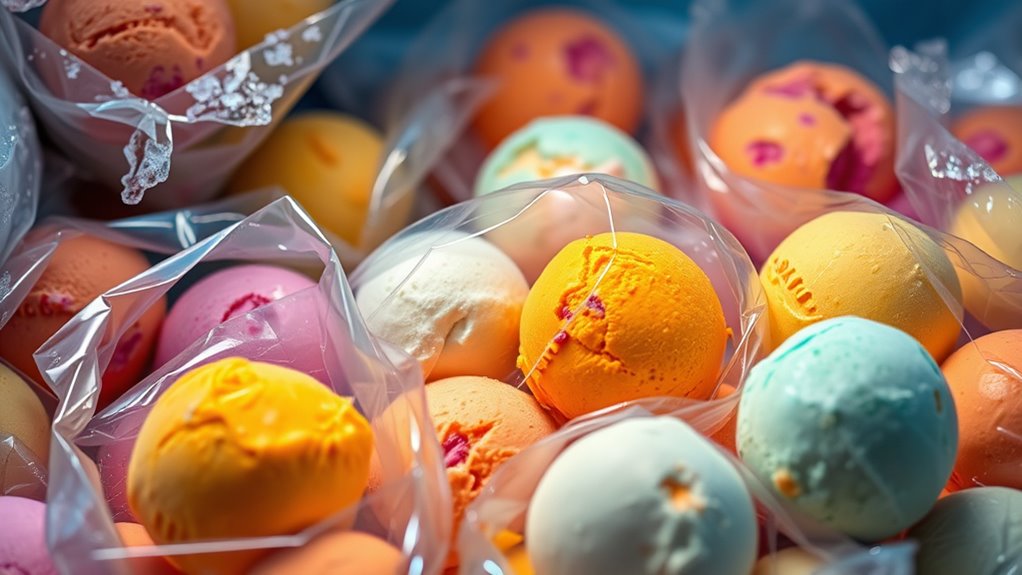
When storing ice cream in freezer bags, you must be aware of the risks associated with leaks and temperature fluctuations. If the bags aren’t sealed properly, they can leak, risking contamination of your ice cream and other items in the freezer.
Additionally, frequent access to the freezer can cause temperature fluctuations, leading to ice crystal formation that affects ice cream quality. An unsealed bag allows moisture and air in, contributing to freezer burn and diminishing flavor.
To combat these risks, guarantee your freezer maintains a consistent temperature of 0°F (-18°C) or lower. Regularly check the seals and integrity of your bags; compromised ones can lead to thawing and refreezing cycles that ruin ice cream’s texture and taste.
Best Practices for Storing Ice Cream in Freezer Bags
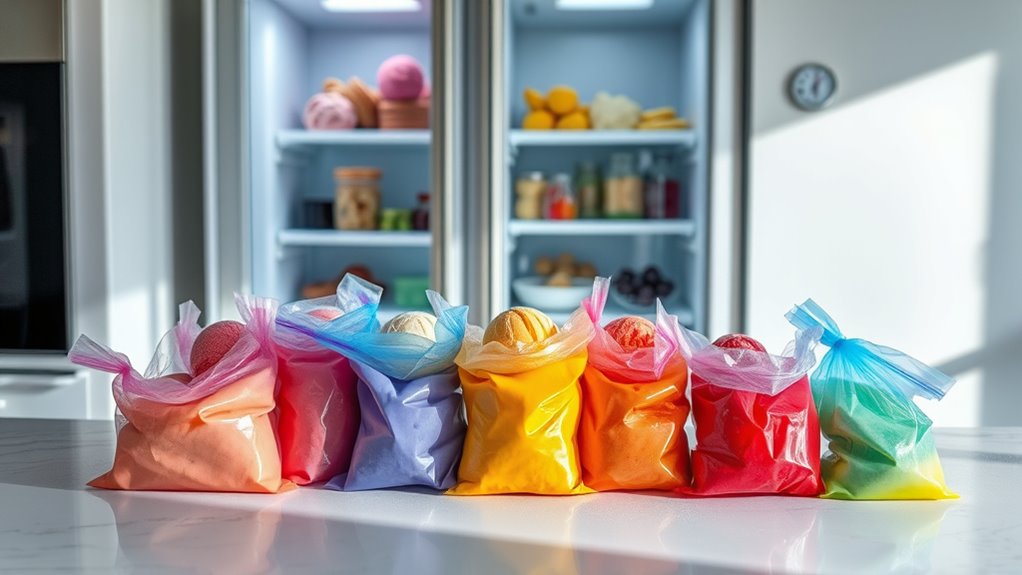
To keep your ice cream fresh, it’s essential to create an airtight seal when using freezer bags.
This not only helps insulate the ice cream but also greatly reduces the risk of freezer burn.
Airtight Seal Importance
An airtight seal is essential for keeping your ice cream fresh and delicious, as it greatly reduces the risk of freezer burn.
By minimizing air exposure, you protect the flavor and texture of your favorite treat.
Here are some best practices for achieving that perfect seal with freezer bags:
- Press out excess air before sealing to create a vacuum-like environment.
- Use high-quality freezer bags designed for long-term storage.
- Consider layering plastic wrap under the lid of the container for extra protection.
- Seal tightly after each use to maintain freshness and extend shelf life.
Insulation Benefits Explained
Achieving an airtight seal not only protects your ice cream from air exposure but also enhances its insulation. Using freezer bags provides an extra layer of protection, reducing exposure to dry air that can lead to freezer burn. By pressing out air before sealing, you keep your ice cream at a softer, scoopable temperature. Here are some best practices for maximizing insulation with freezer bags:
| Benefit | Description | Tips |
|---|---|---|
| Moisture Retention | Retains moisture better than cardboard | Use plastic wrap under lid |
| Ice Crystal Reduction | Minimizes ice crystal formation | Seal tightly before freezing |
| Temperature Stability | Protects against temperature fluctuations | Store away from door |
| Flavor Preservation | Maintains flavor quality | Label bags with date/contents |
Reducing Freezer Burn Risk
While freezer burn can ruin your favorite ice cream, following best practices for storage can help keep it delicious.
Here are some tips to reduce freezer burn risk when using freezer bags:
- Press out air: Before sealing your freezer bags, push out as much air as possible to limit exposure to dry air.
- Add a plastic wrap layer: Wrap the ice cream tub in plastic wrap before placing it in the freezer bag for added protection.
- Seal tightly: Confirm the freezer bags are sealed properly to minimize moisture evaporation.
- Use insulation: Consider placing a plastic bag around the freezer bag for extra insulation, maintaining a consistent temperature and preventing freezer burn.
These steps will help keep your ice cream creamy and enjoyable!
Alternative Storage Solutions for Ice Cream
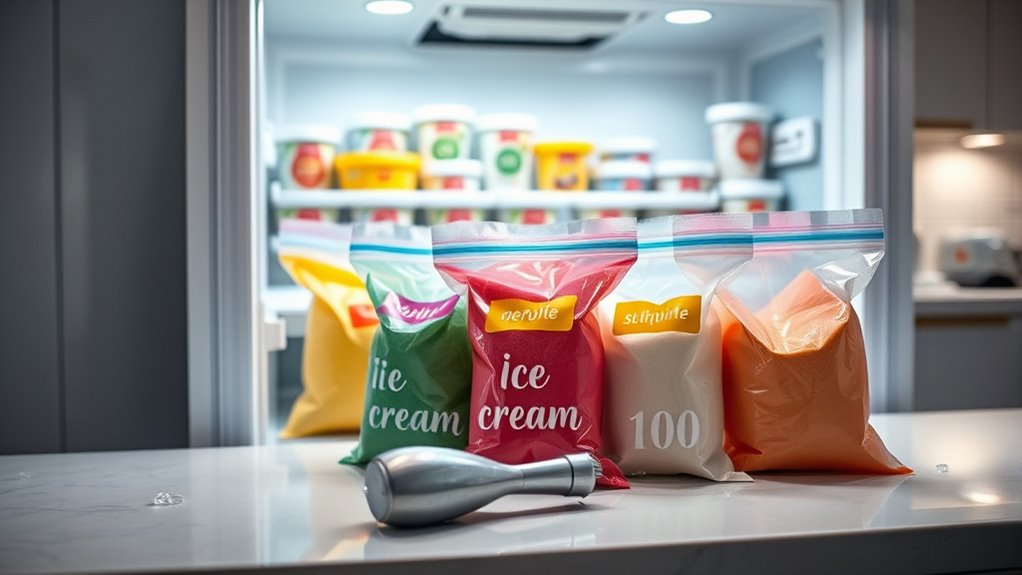
If you want to keep your ice cream fresh and flavorful, exploring alternative storage solutions is key.
Consider using plastic wrap under the lid of your ice cream container along with freezer bags to create an airtight seal that minimizes air exposure.
For homemade ice cream, transferring it to smaller containers helps reduce texture degradation and makes scooping easier.
Insulating your ice cream tubs with freezer bags can protect against temperature fluctuations from frequent door openings, reducing ice crystal formation.
Combining these methods, like using freezer-safe containers alongside bags, can give you the best results in retaining that creamy texture and delightful flavor you love.
Embrace these strategies to enjoy your favorite treats longer!
Maintaining Ice Cream Quality Over Time
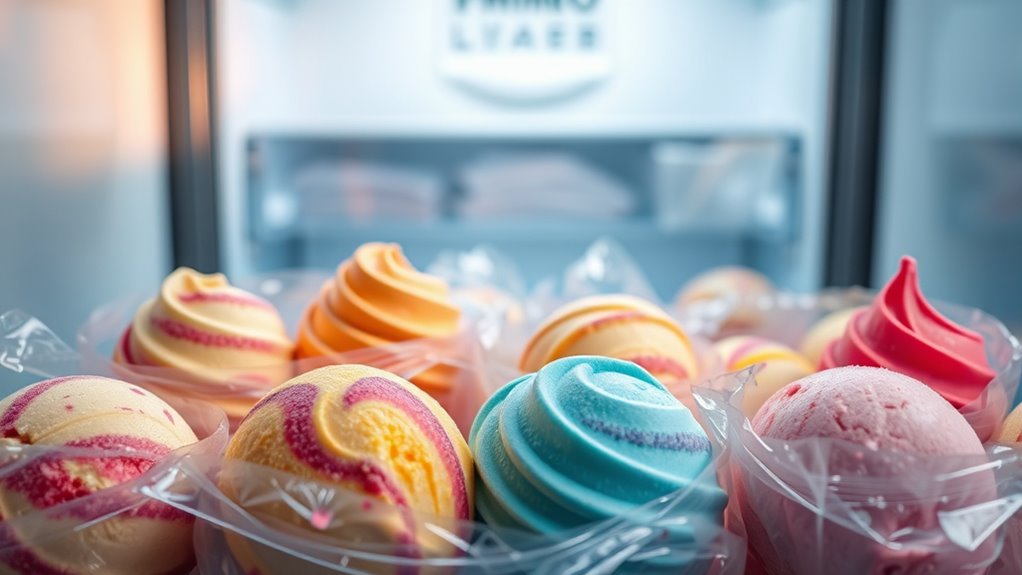
To maintain ice cream quality over time, it’s vital to minimize air exposure and temperature fluctuations. Using freezer bags can greatly enhance the preservation of your ice cream.
Here are some tips to guarantee it stays delicious and scoopable:
- Seal It Tight: Use freezer bags to create a nearly airtight seal, reducing moisture exposure.
- Layer Up: Wrap the ice cream container with plastic wrap before sealing it in the freezer bag for extra protection.
- Store Flat: Lay the freezer bags flat in the freezer to help maintain even temperature and avoid texture changes.
- Avoid Frequent Opening: Limit how often you open the freezer to maintain a consistent temperature.
Final Thoughts on Ice Cream Storage Options

When it comes to storing ice cream, choosing the right method can make all the difference in maintaining its taste and texture. Freezer bags are a fantastic option, offering an airtight seal that minimizes moisture exposure and prevents freezer burn. They also provide insulation against temperature fluctuations, ideal for warmer climates. Combining freezer bags with traditional storage methods, like plastic wrap, can enhance your ice cream’s quality even more.
| Pros of Freezer Bags | Cons of Freezer Bags |
|---|---|
| Prevents freezer burn | Scooping may be tricky |
| Maintains flavor | Requires extra steps |
| Insulates well | Limited to certain sizes |
| Preserves texture | May not fit all tubs |
| Easy to seal | Can be less durable |
Choose wisely for your favorite food products!
Frequently Asked Questions
What Is the Best Container to Store Ice Cream in the Freezer?
When you’re looking for the best container to store ice cream in the freezer, consider using a plastic freezer bag. It creates an almost airtight seal, keeping moisture in and preventing freezer burn.
You’ll also want to use smaller containers to limit air exposure, which helps maintain texture. Make sure the containers are food-grade and BPA-free for safety.
Keeping your ice cream at a consistent temperature of 0°F (-18°C) will preserve its quality too.
Does Putting Ice Cream in a Plastic Bag Keep It Soft?
Did you know that nearly 30% of ice cream lovers experience freezer burn?
You might think that putting ice cream in a plastic bag will keep it soft, but the reality is that it doesn’t make much difference. While it may help prevent freezer burn and preserve flavor, you won’t find it any easier to scoop.
For a softer treat, just let it sit at room temperature for a few minutes before digging in!
What’s the Science Behind Ice Cream in a Bag?
The science behind ice cream in a bag lies in its ability to create an airtight seal.
When you use a freezer bag, you minimize air exposure, which helps retain moisture and prevents freezer burn. By pressing out the air before sealing, you reduce moisture evaporation, keeping your ice cream creamy.
The bag’s insulation also shields the ice cream from temperature fluctuations, ensuring it stays soft and delicious for longer.
Are Freezer Bags Better Than Storage Bags?
Yes, freezer bags are better than regular storage bags for a few reasons.
They’re designed to handle low temperatures, providing a stronger seal that keeps air out. This helps prevent freezer burn, preserving the flavor and texture of your food.
Plus, their thicker material resists punctures, making them ideal for items with sharp edges.
You’ll also find they save space, as you can lay them flat in your freezer.
Conclusion
In the end, storing your scrumptious scoops in freezer bags can be a smart solution, but it’s not without its snags. By balancing benefits and drawbacks, you can make a more mindful choice. Whether you opt for freezer bags or seek superior storage solutions, always prioritize preserving that perfect texture and tantalizing taste. So, stay savvy and satisfied with your ice cream storage, ensuring every delightful bite remains a creamy, cool treat!