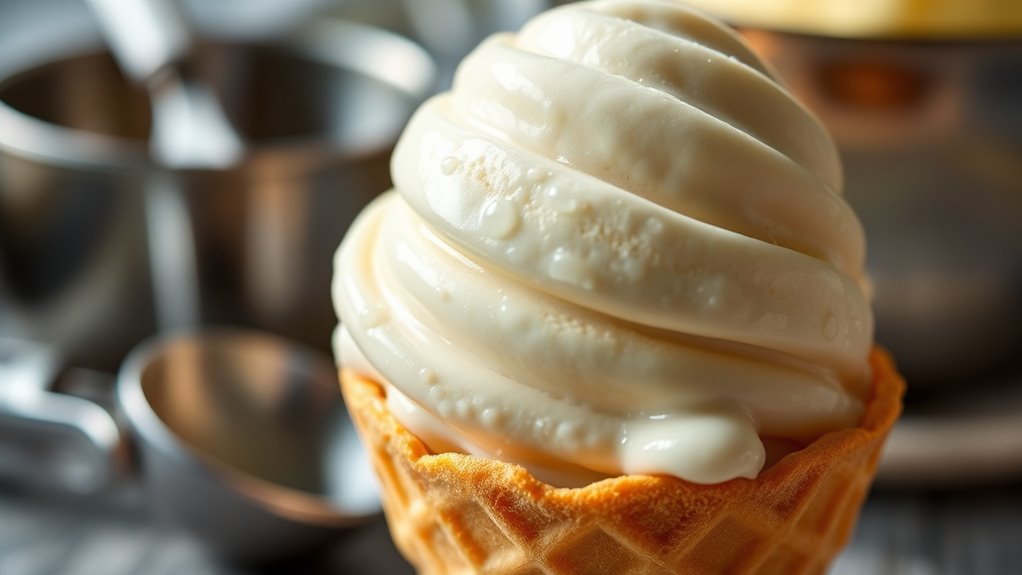

Serving ice cream at the right temperature is key to enjoying its best flavor and texture. If it’s too cold, it’ll be too hard to scoop and may crack; too warm, and it’ll melt quickly, losing creaminess. Ideal serving temps are between 6°F and 10°F (-14°C to -12°C). To improve your experience, learn how proper storage and handling can make every scoop perfect and delightful. Keep going to discover how to master this art.
Key Takeaways
- Serving ice cream between 6°F and 10°F ensures optimal softness for easy scooping and maintains its creamy texture.
- Proper serving temperature prevents quick melting, preserving flavor and preventing a watery or icy consistency.
- Allowing ice cream to soften slightly at room temperature improves scoopability without compromising quality.
- Using warmed utensils or scoops helps achieve smooth servings and reduces breakage during serving.
- Promptly returning unused portions to the freezer at the right temperature maintains texture and flavor integrity.
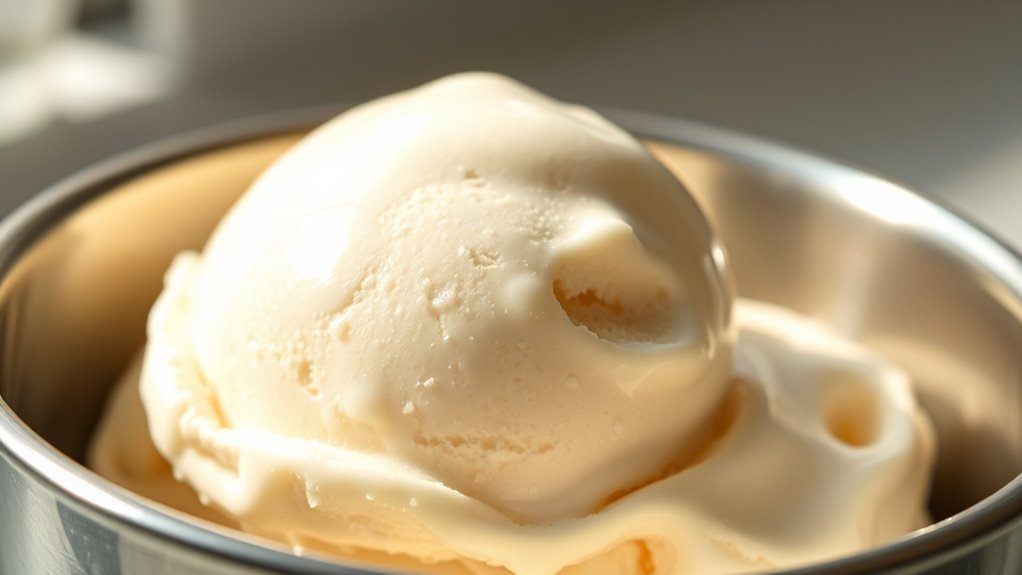
Serving ice cream at the right temperature is essential to delivering the best possible experience. When you get it right, each scoop feels creamy, smooth, and just right in your mouth. The key to achieving this begins with proper ice cream storage. If your ice cream isn’t stored correctly, it can become excessively hard or melt too quickly once served. Ideally, you want to keep your ice cream at a consistent, cold temperature—around -20°F (-29°C)—to prevent it from developing ice crystals or becoming too soft. Proper ice cream storage ensures it maintains its texture and flavor, making it easier to scoop and serve at the ideal scooping temperature. Understanding the ideal scooping temperature is equally important. Generally, ice cream should be served between 6°F and 10°F (-14°C to -12°C). At this temperature range, the ice cream is soft enough to scoop easily but still firm enough to hold its shape. If you try to scoop ice cream straight from the freezer at around -20°F (-29°C), it’ll be rock-hard, requiring excessive force and risking breakage or mess. Conversely, if it’s too warm—say, closer to freezing point—it’ll be overly soft, melting quickly and losing its appealing texture. Achieving this balance means paying attention to both storage and serving conditions. To reach the ideal scooping temperature, you can take your ice cream out of the freezer a few minutes before serving. Let it sit at room temperature for a couple of minutes to soften slightly. This makes scooping easier and prevents breakage or uneven portions. If you’re serving multiple guests, consider using a heated scoop or warming your serving utensils slightly; it helps glide through the ice cream smoothly, ensuring each scoop is perfectly rounded and presentable. Remember, the goal is to serve ice cream at a temperature that highlights its creaminess without melting too fast. Maintaining the right temperature also involves handling the ice cream properly. Avoid leaving it out too long or exposing it to warm air, which can speed up melting. When you’re done serving, promptly return any unused ice cream to the freezer to preserve its quality. In short, good ice cream storage combined with paying attention to the ideal scooping temperature makes all the difference. It transforms a simple dessert into a delightful experience, satisfying every time you serve it. Proper temperature management ensures the best texture and flavor, elevating your serving experience.
As an affiliate, we earn on qualifying purchases.
Frequently Asked Questions
What Are the Best Tools for Measuring Ice Cream Temperature Accurately?
To measure ice cream temperature accurately, you should use a digital thermometer or an infrared thermometer. A digital thermometer provides precise readings when you insert the probe into the ice cream, ensuring you’re at the right temperature. Infrared thermometers are quick and non-contact, ideal for checking surface temperatures. Both tools help you maintain peak ice cream quality, so you can serve it at just the right chilled consistency every time.
How Does Freezer Temperature Affect Ice Cream Texture and Flavor?
Did you know that improper freezer settings can cause ice cream to develop larger ice crystals, affecting texture? When your freezer is too cold or too warm, it alters ice crystal formation, making the ice cream crumbly or icy. Keeping your freezer at the right temperature slows ice crystal growth, ensuring the flavor stays rich and the texture smooth. Proper freezer settings are key to enjoying creamy, delicious ice cream every time.
Can Serving Ice Cream Too Cold Cause Digestion Issues?
Serving ice cream too cold can cause digestive discomfort, especially if you’re sensitive to cold foods. When ice cream is overly chilled, your stomach might have a harder time breaking it down, leading to bloating or cramping. If you have ice cream sensitivity, eating it at the right temperature helps prevent digestive issues. So, let it soften slightly before enjoying, and you’ll avoid discomfort and still savor every bite.
How Long Should Ice Cream Sit Out Before Serving for Optimal Temperature?
You wonder how long ice cream should sit out before serving for the perfect temperature. Follow the temperature guidelines of about 5 to 10 minutes at room temperature, depending on the scoop size and ambient warmth. During this serving duration, the ice cream softens just enough to guarantee a creamy, enjoyable texture without melting. Keep an eye on it, and you’ll serve ice cream at its ideal, mouthwatering consistency every time.
Are There Specific Storage Tips to Maintain Ideal Serving Temperature?
To maintain ideal serving temperature, you should focus on proper ice cream storage and temperature control. Keep your ice cream consistently frozen at around -20°C (-4°F) in a deep freezer, avoiding frequent temperature fluctuations. Use airtight containers to prevent ice crystal formation and minimize exposure to warm air. Regularly check your freezer’s temperature, and don’t leave ice cream out for too long, as melting affects texture and flavor.
Conclusion
Serving ice cream at the right temperature isn’t just about taste—it’s about enhancing the entire experience. Some believe that perfectly chilled ice cream reveals its true flavors and texture, making every bite more enjoyable. By paying attention to temperature, you’re not just serving dessert; you’re crafting moments of joy. Remember, a little patience and the right technique can turn a simple treat into a memorable indulgence. Trust the process, and savor every perfect scoop.