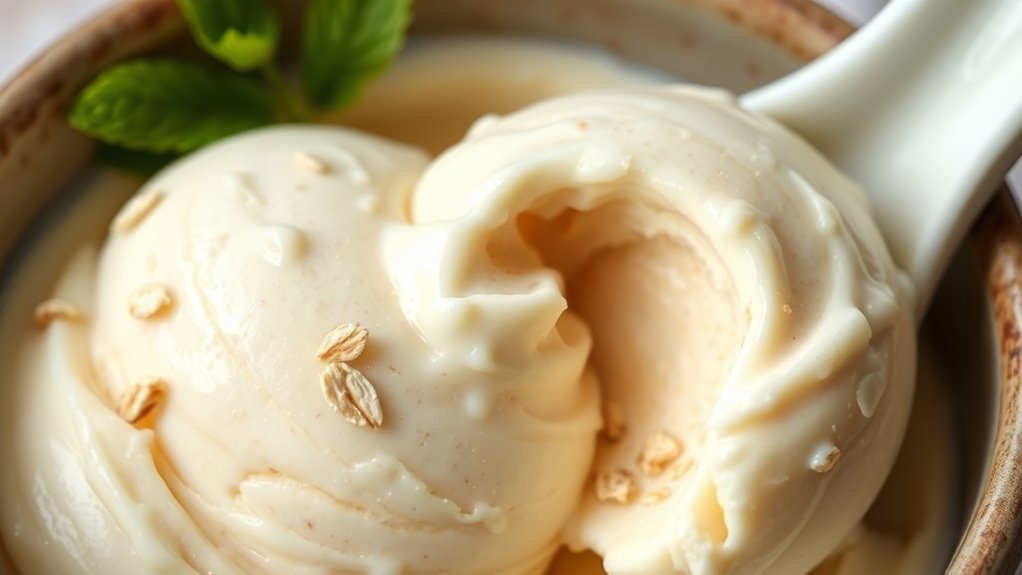

To achieve creamy oat milk ice cream at home, start with full-fat oat milk for richness and consider adding coconut milk or cream for extra smoothness. Use a stabilizer like cornstarch or arrowroot to prevent crystallization, and blend ingredients thoroughly. Freeze in a shallow dish, stirring every 30 minutes during the first few hours, or use an ice cream maker for the best texture. Keep it simple or add your favorite mix-ins, and you’ll discover more tips ahead.
Key Takeaways
- Use full-fat oat milk and add coconut milk or cream for extra richness.
- Incorporate stabilizers like arrowroot powder or cornstarch during cooking to improve texture.
- Stir the mixture every 30 minutes during freezing to prevent ice crystal formation.
- Blend ingredients thoroughly for a smooth, velvety base before freezing.
- Use an ice cream maker or shallow dish with frequent stirring to achieve a creamy, scoopable consistency.
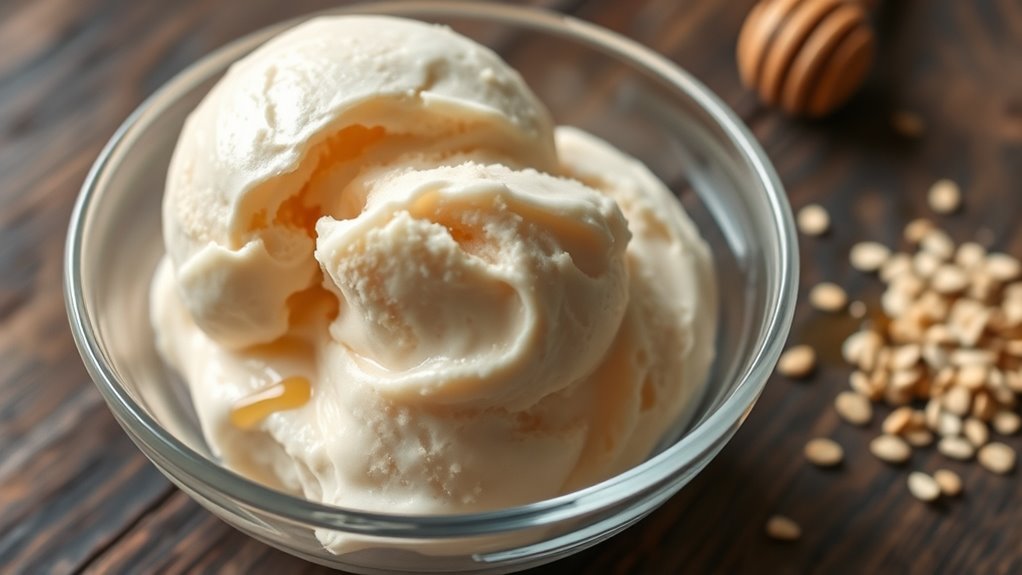
If you love creamy, dairy-free ice cream, making oat milk ice cream at home is easier than you might think. Oat milk has become a popular dairy alternative because of its naturally smooth texture and neutral flavor, which makes it a perfect base for creating rich, scoopable ice cream. When you craft your own at home, you control the ingredients, ensuring no artificial additives or preservatives sneak in. Plus, experimenting with flavor combinations allows you to customize your ice cream to suit your taste buds, from classic vanilla to inventive blends like salted caramel or matcha.
One of the key steps in achieving a creamy consistency is selecting the right ingredients. Using full-fat oat milk provides a richer base, but you can enhance this with a small amount of coconut milk or coconut cream for extra creaminess. Incorporating a stabilizer such as a bit of arrowroot powder or cornstarch during cooking can help prevent ice crystals, ensuring your ice cream remains smooth and scoopable after freezing. When blending, make sure to mix the ingredients thoroughly to achieve a uniform mixture, which is *vital* for a velvety texture.
Flavor combinations play a significant role in elevating your oat milk ice cream. You can keep things simple with vanilla bean or chocolate, but don’t shy away from more adventurous pairings. Think about adding fresh fruit purées, spices like cinnamon or cardamom, or even swirls of fruit jams or caramel sauce. These additions not only boost flavor but also contribute to a richer mouthfeel. When adding mix-ins, fold them in after the base has cooled slightly to prevent melting or separation during freezing.
Another tip for creaminess involves the freezing process itself. Transfer your mixture to a shallow dish to promote quick, even freezing, and stir every 30 minutes during the first few hours. This technique helps break up ice crystals, resulting in a smoother texture. If you prefer a softer consistency, let the ice cream sit at room temperature for a few minutes before scooping. For an extra luxurious finish, you can even churn your mixture in an ice cream maker, which continually incorporates air into the mixture, mimicking the texture of store-bought frozen desserts.
Frequently Asked Questions
Can I Use Flavored Oat Milk for Ice Cream?
Yes, you can use flavored oat milk for ice cream, but keep in mind it might affect the final flavor. Flavored oat milk adds extra sweetness and taste, so you may want to adjust your ice cream flavoring or sweeteners accordingly. It can give your ice cream a unique twist, but guarantee the flavor complements your chosen flavoring to avoid overpowering the final product.
How Long Does Homemade Oat Milk Ice Cream Stay Fresh?
Think of your homemade oat milk ice cream as a fleeting summer breeze—delicate and best enjoyed soon. It stays fresh for about 1 to 2 months in freezer storage, but for ideal flavor and texture, consume within 2 weeks. After this, the shelf life diminishes, risking freezer burn and flavor loss. Keep it tightly sealed, and remember, ice cream’s true magic fades with time.
Can I Add Mix-Ins Like Nuts or Fruit?
Yes, you can definitely add mix-ins like nuts or fruit to your homemade oat milk ice cream. Adding these enhances texture and creates exciting flavor combinations. Stir them in during the last few minutes of churning or just before freezing to prevent sinking. Just keep in mind that moist mix-ins like fruit might affect the ice cream’s texture, so consider drying them slightly or choosing drier options for the best results.
Is There a Vegan Substitute for Eggs?
Think of egg alternatives as your secret ingredients, seamlessly binding your vegan ice cream together like a well-placed stitch in a cozy quilt. You can use mashed bananas, flaxseed or chia seeds mixed with water, or commercial vegan binders, which act as the glue for your creamy creation. These options keep your ice cream smooth, rich, and dairy-free, ensuring every scoop delights without sacrificing texture or flavor.
What’s the Best Way to Store Leftover Ice Cream?
You should store your leftover ice cream in an airtight storage container to prevent freezer burn and absorb odors. Keep the freezer at a consistent temperature, ideally around -18°C (0°F), to maintain its texture. Before sealing, press a piece of plastic wrap directly on the surface of the ice cream to prevent ice crystals. Label it with the date, so you use it within 1-2 months for the best quality.
Conclusion
Making oat milk ice cream at home is simpler than you think. With the right ingredients and techniques, you can achieve that perfect creamy texture every time. Imagine Sarah, who struggled with ice cream that’s too icy, but after trying these tips, now she’s enjoying rich, smooth scoops whenever she wants. So, go ahead—grab your ingredients and get creative. You’ll be surprised how delicious and satisfying homemade oat milk ice cream can be!