To measure overrun in your kitchen, start by weighing your ice cream base before churning. After freezing, measure the final volume or weight of the churned ice cream. Compare the initial weight to the final volume to determine how much air was incorporated. Proper calculation helps you adjust your process for creamier, more consistent ice cream. Keep monitoring and refining your technique to perfect your results—there’s more to master if you stay engaged.
Key Takeaways
- Use a graduated container to measure the ice cream volume before and after churning.
- Weigh the ice cream after freezing to compare with the initial base weight.
- Calculate overrun percentage by comparing volume increase to original ingredient weight.
- Ensure all measuring tools are calibrated for accuracy before measurement.
- Record and analyze overrun data to adjust churning process for desired texture and consistency.
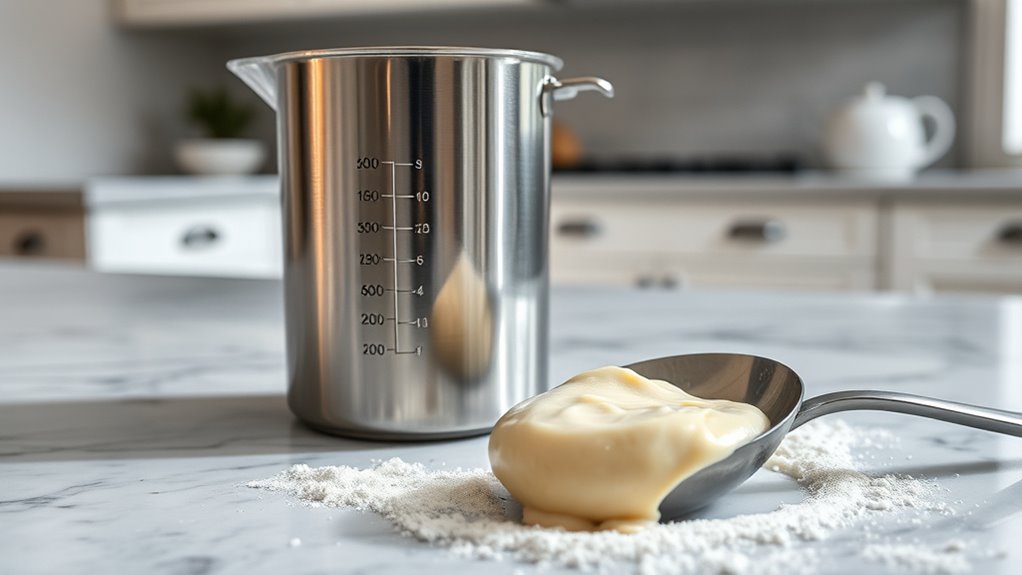
Ever wondered how much air is in your homemade ice cream? Understanding overrun, which is the percentage of air incorporated during churning, is essential to creating the perfect texture. To measure overrun accurately, you’ll need to employ proper calibration techniques and guarantee ingredient accuracy. These steps help you get consistent results and prevent surprises in your final product.
First, it’s vital to calibrate your equipment correctly. Use a precise scale to measure your ingredients and a graduated container to measure the volume of your ice cream base before and after churning. Calibration techniques involve checking the accuracy of your measuring tools regularly. For example, verify that your scale reads zero when empty and accurately measures known weights. Similarly, confirm your measuring cups and containers are marked correctly. This attention to detail guarantees that when you measure ingredients, you’re working with true quantities, which directly impacts the overrun calculation.
Ingredient accuracy is equally important. Use fresh, high-quality ingredients and measure them carefully. Precise ingredient quantities affect the density of your ice cream base, influencing how much air can be incorporated. For instance, if your milk or cream is too cold or too warm, it can affect the whipping process and the amount of air trapped. Make sure to follow your recipe closely and measure each component with care. This consistency allows you to compare results over multiple batches and identify what adjustments are needed to optimize overrun.
Once your equipment is calibrated and your ingredients are accurate, you can proceed to measure the volume of your ice cream after churning. Record this volume carefully, then compare it to the original weight or volume of your base. The difference indicates how much air you’ve incorporated. For example, if your base weighed 1,000 grams and the finished ice cream measures 1,200 grams in volume, you can calculate the overrun percentage. This process helps you understand if your churning process is adding too much or too little air, which affects creaminess and scoopability.
kitchen digital scale for baking
As an affiliate, we earn on qualifying purchases.
As an affiliate, we earn on qualifying purchases.
Frequently Asked Questions
How Often Should I Measure Overrun During Cooking?
You should measure overrun variability regularly during cooking, ideally every 15 to 20 minutes. Using reliable measuring techniques helps you catch changes early, ensuring consistent results. Frequent checks allow you to adjust ingredients or timing if overrun deviates from your target, preventing surprises. Staying attentive to overrun fluctuations helps maintain quality and consistency in your dishes, making your cooking process more predictable and successful.
Can Overrun Affect the Final Taste of My Dish?
Overrun can definitely affect the final taste of your dish by impacting overrun consistency. When overrun is uneven, it can cause flavor preservation issues, making certain ingredients overpower others. If you don’t measure overrun properly, you might end up with a dish that’s too airy or dense, altering the intended flavor profile. Maintaining consistent overrun helps guarantee your dish tastes just as you want, with balanced flavors and ideal texture.
What’s the Ideal Overrun Percentage for Different Recipes?
The ideal overrun percentages vary by recipe, typically around 20-30% for ice cream and 10-15% for whipped toppings. For better overrun consistency, aim for these ranges to make certain the texture remains smooth and fluffy. Adjust your overrun carefully depending on the desired final product, as too high overrun can make items airy and less flavorful, while too low can make them dense and heavy.
Are There Tools Specifically Designed to Measure Overrun?
Yes, there are tools designed to measure overrun, like specialized measuring equipment and overrun indicators. Imagine you’re making ice cream; using an overrun indicator helps you precisely monitor air incorporation during churning. These tools give you accurate readings, ensuring consistent texture and quality. By investing in reliable measuring equipment, you can fine-tune your recipes and achieve perfect results every time.
How Does Overrun Impact the Nutritional Value of Food?
Overrun affects the nutritional value of food by diluting nutrient density, making it less nutritious per serving. When air is added during freezing, it can lead to ingredient loss and reduce the overall nutritional density. As a result, you might consume less of the key nutrients you need. Controlling overrun helps preserve ingredients and maintains the food’s nutritional quality, ensuring you’re getting the most health benefits from your frozen treats.
Conclusion
Now that you know how to measure overrun in your kitchen, you can guarantee your recipes turn out just right. Think of it like tuning a guitar—you want the strings to be perfectly pitched, not too tight or loose. By paying attention to overrun, you’re in control of your dish’s texture and quality. With practice, you’ll master this skill like a seasoned chef, making every meal a delicious success.