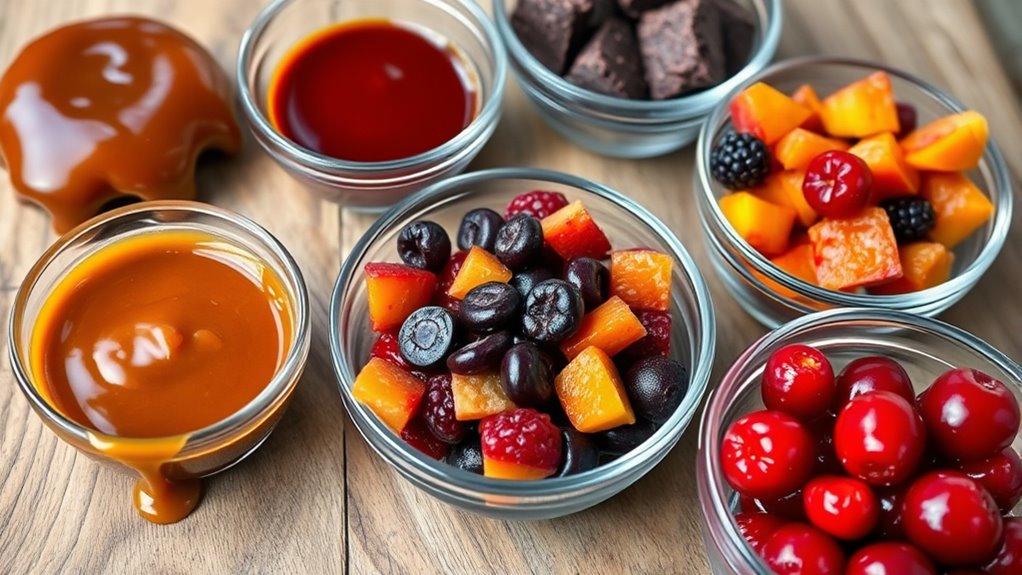

Homemade toppings like caramel, fudge, and fruit compotes are easy to make and add extra flavor to your favorite desserts and breakfasts. You can customize sweetness levels using alternatives like honey, maple syrup, agave nectar, or stevia for healthier options. Store them in airtight containers to keep them fresh and extend their shelf life, often refrigerating or freezing for longer storage. For tips on perfecting and preserving these toppings, keep exploring below.
Key Takeaways
- Customize homemade caramel, fudge, and fruit compotes with natural sweeteners like honey, maple syrup, agave nectar, or stevia for healthier options.
- Use airtight containers to store toppings, refrigerate or freeze for extended freshness, and reheat gently before serving.
- Properly cool fruit compotes before storing to prevent spoilage and maintain flavor and texture.
- Label stored toppings with date to track freshness and discard any with signs of spoilage or changes in appearance or smell.
- Experiment with ingredients and storage techniques to create personalized, delicious toppings for various desserts and meals.
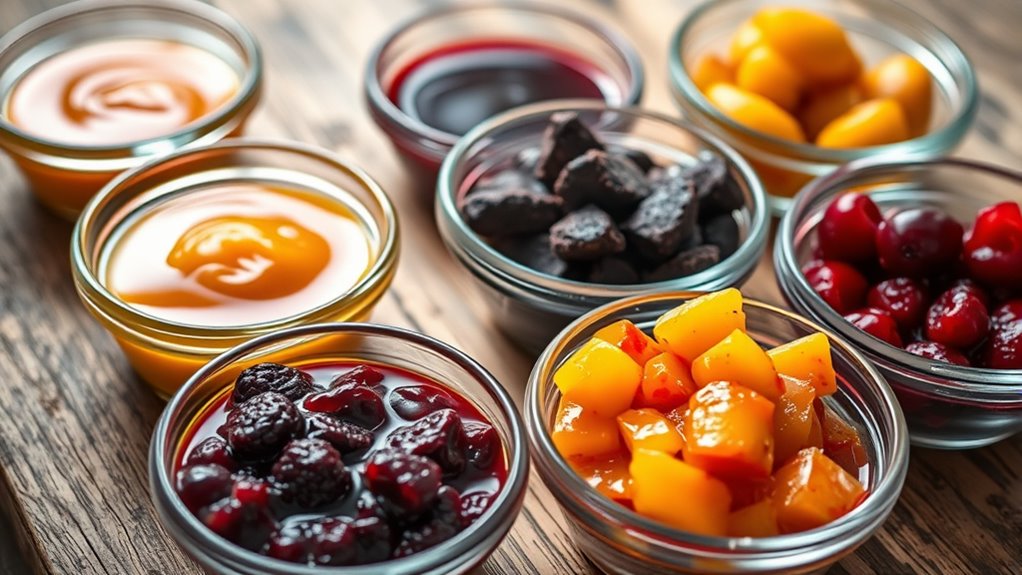
Homemade toppings are a simple and delicious way to elevate your meals and customize them to your taste. Whether you’re drizzling caramel over ice cream, spreading fudge on toast, or spooning fruit compote onto pancakes, these toppings add flavor and personality to your dishes. Making your own toppings also gives you control over ingredients, helping you create healthier options without sacrificing sweetness or texture. When it comes to caramel, fudge, and fruit compotes, you can experiment with sugar alternatives, which are especially helpful if you’re watching your sugar intake or prefer natural sweeteners. Popular choices include honey, maple syrup, agave nectar, or stevia, each offering different flavors and sweetness levels. Just keep in mind that sugar alternatives may affect the consistency and shelf life of your toppings, so it’s crucial to follow tested recipes and adjust as needed. Proper storage techniques, such as airtight containers and appropriate refrigeration, are essential to maintaining freshness and preventing spoilage. Additionally, understanding the sugar content of your toppings can help you manage your dietary goals and enjoy your homemade creations guilt-free. Storing homemade toppings properly is key to maintaining their freshness and flavor. For caramel and fudge, store them in airtight containers at room temperature for up to a week, or refrigerate them for longer shelf life. When refrigerating, bring the toppings to room temperature before serving to restore their ideal texture. Fruit compotes should be cooled completely before transferring to containers, then kept in the fridge for up to a week. If you’re making larger batches, consider portioning them into smaller jars or containers to prevent contamination and make serving easier. Label each container with the date so you can keep track of freshness. Freezing is also an option for longer storage—just use freezer-safe containers, and thaw them in the fridge before use to maintain the best flavor and texture. To guarantee your homemade toppings stay in top shape, follow a few simple storage tips. Keep your caramel and fudge away from moisture, as humidity can cause them to become sticky or develop mold. Fruit compotes should be sealed tightly to prevent spoilage and oxidation. When reheating toppings, do so gently to avoid altering their consistency or burning the sugars. If you notice any changes in smell, appearance, or texture, it’s best to discard them to avoid any health risks. With proper storage, your homemade toppings can be enjoyed over multiple occasions, adding a personalized touch to desserts, breakfast dishes, or snacks. By experimenting with sugar alternatives and mastering storage tips, you’ll create flavorful, versatile toppings that enhance your culinary creations while aligning with your dietary preferences.
Frequently Asked Questions
How Long Do Homemade Toppings Stay Fresh?
Homemade toppings like caramel, fudge, and fruit compotes typically stay fresh for about 1 to 2 weeks when stored properly in an airtight container in the fridge. To extend their shelf life, follow preservation tips such as keeping them chilled, avoiding cross-contamination, and ensuring containers are sealed tightly. If you notice mold, off smells, or changes in texture, it’s best to discard them for safety.
Can I Make Toppings Gluten-Free?
Yes, you can make toppings gluten-free by using gluten-free ingredients like cornstarch instead of flour, or gluten-free chocolate and fruit. To prevent cross-contamination, always check labels and clean utensils thoroughly. Store your homemade gluten-free toppings in airtight containers, and they’ll stay fresh for about a week. By taking these precautions, you guarantee your toppings remain safe and delicious for anyone with gluten sensitivities.
Are There Vegan Options for Caramel and Fudge?
Did you know that the plant-based market is growing rapidly, with a 27% increase in vegan products in recent years? You can easily find vegan caramel and dairy-free fudge options. These vegan caramel and dairy-free fudge toppings are made with coconut milk, agave, or maple syrup, making them perfect for those avoiding animal products. You’ll enjoy delicious, cruelty-free toppings that satisfy your sweet tooth without compromising your values.
How Do I Prevent Toppings From Crystallizing?
To prevent toppings from crystallizing, you should maintain a smooth syrup consistency by avoiding stirring once the sugar dissolves. Keep the heat steady and add a small amount of acid, like lemon juice, to inhibit sugar crystallization. Using a wet brush to wash down any sugar crystals on the sides of your pan also helps. These steps ensure your caramel, fudge, or fruit compote stays silky and free of unwanted crystals.
What’s the Best Way to Store Homemade Fruit Compotes?
Storing your homemade fruit compote properly keeps its charm intact. You should transfer it to an airtight container and refrigerate it promptly, ideally within two hours of preparation. For serving suggestions, warm it slightly or serve cold, depending on your preference. If an ingredient substitution is needed, consider using a different sweetener or fruit to suit your taste. Always label your container with the date, ensuring freshness and flavor retention.
Conclusion
So, next time you’re craving a fancy dessert, skip the store-bought toppings. Instead, whip up your own caramel, fudge, or fruit compotes—you know, the ones you probably thought were too complicated. Turns out, making them at home is a breeze, and your taste buds will thank you. Who knew that a simple homemade topping could turn a basic treat into something genuinely special? Irony: the secret ingredient was just a little effort all along.